
Why Use a Real Estate Investment Analysis Spreadsheet?
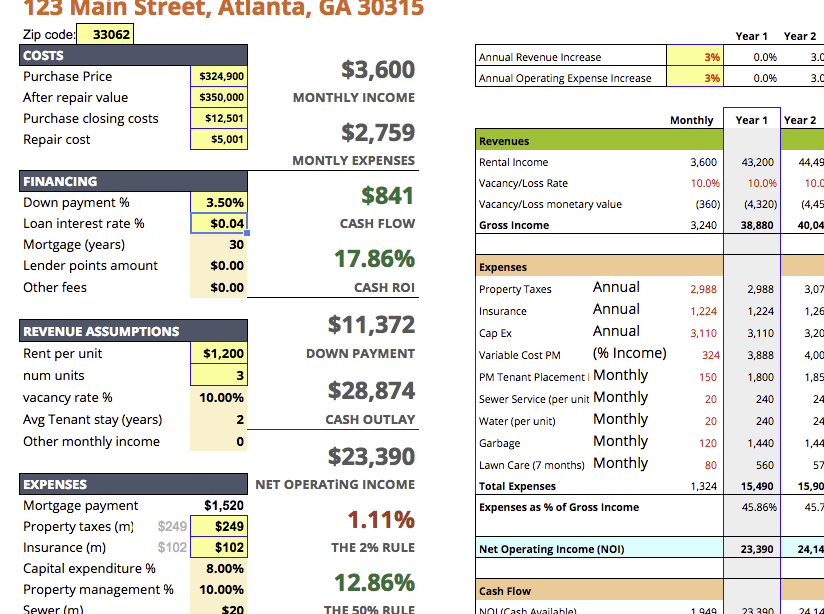
Investing in real estate can be a lucrative venture, but it requires careful planning and analysis. Jumping in without understanding the numbers can lead to significant financial losses. That's where a real estate investment analysis spreadsheet comes in. This powerful tool allows you to evaluate potential properties, forecast cash flow, and estimate returns, all before you commit a single dollar.
Think of it as your personal financial advisor for real estate. It helps you make informed decisions based on data, not just gut feelings. A well-designed spreadsheet can quickly highlight the strengths and weaknesses of a potential deal, allowing you to negotiate better terms or walk away from a bad investment.
Key Components of a Real Estate Investment Analysis Spreadsheet
A comprehensive spreadsheet should include several crucial sections to provide a complete picture of the investment. Here's a breakdown of the essential elements:
Property Information
This section captures the basic details of the property you're considering. This includes:
- Address: The property's location is crucial for assessing its potential value and rental income.
- Property Type: Is it a single-family home, duplex, apartment building, or commercial space? Different property types have different investment profiles.
- Purchase Price: The agreed-upon price for the property.
- Square Footage: Helps determine the price per square foot, a useful metric for comparison.
- Year Built: Older properties may require more maintenance and repairs.
Income Section
This section focuses on the revenue generated by the property, primarily through rental income. Key inputs include:
- Monthly Rent: The expected rent you'll receive from tenants. Research comparable properties in the area to estimate this accurately.
- Vacancy Rate: An estimate of the percentage of time the property will be vacant. Factor in market conditions and property management effectiveness.
- Other Income: This can include income from laundry facilities, parking fees, or storage units.
Expense Section
This is where you detail all the costs associated with owning and operating the property. Accurate expense estimation is critical for realistic cash flow projections. Common expenses include:
- Property Taxes: Local property taxes can significantly impact your profitability.
- Insurance: Coverage for fire, liability, and other potential risks.
- Property Management Fees: If you hire a property manager, factor in their fees, typically a percentage of the monthly rent.
- Maintenance and Repairs: Budget for routine maintenance and unexpected repairs.
- Utilities: Depending on the lease agreement, you may be responsible for some or all utilities.
- HOA Fees: If the property is in a homeowners association, include the monthly fees.
- Capital Expenditures (CapEx): These are major expenses like roof replacement, HVAC system repairs, or renovations. Allocate a portion of the cost each month to account for these future expenses.
Financing Section
This section outlines the details of your mortgage or loan. Key inputs include:
- Loan Amount: The amount you're borrowing to finance the purchase.
- Interest Rate: The annual interest rate on the loan.
- Loan Term: The length of the loan in years (e.g., 30 years, 15 years).
- Down Payment: The percentage of the purchase price you're paying upfront.
Analysis and Metrics
This is where the spreadsheet performs calculations and provides key metrics to help you evaluate the investment. Important metrics include:
- Net Operating Income (NOI): This is calculated by subtracting operating expenses from gross income. It represents the property's profitability before debt service.
- Cash Flow: This is the NOI minus debt service (mortgage payments). It represents the actual cash you'll have left over each month.
- Capitalization Rate (Cap Rate): This is the NOI divided by the property's purchase price. It's a measure of the property's return on investment, assuming you paid cash.
- Cash on Cash Return: This is the annual cash flow divided by the total cash invested (down payment, closing costs, etc.). It's a measure of the return on your invested capital.
- Internal Rate of Return (IRR): This is a more sophisticated metric that takes into account the time value of money and the expected cash flows over the entire investment period.
- Return on Investment (ROI): This calculates the total return of the investment relative to the initial investment.
Building Your Own Real Estate Investment Analysis Spreadsheet
You can create your own spreadsheet using software like Microsoft Excel or Google Sheets. There are also many pre-built templates available online, both free and paid. When building or choosing a template, consider the following:
Start Simple
Begin with the essential components mentioned above. You can always add more complexity as you become more comfortable with the analysis.
Use Formulas
Leverage the power of spreadsheet formulas to automate calculations. This will save you time and reduce the risk of errors. For example, use formulas to calculate NOI, cash flow, and various return metrics.
Be Realistic with Your Assumptions
The accuracy of your analysis depends on the accuracy of your inputs. Research market conditions, property values, and expenses to make realistic assumptions. Don't overestimate rental income or underestimate expenses.
Stress Test Your Assumptions
Once you've built your spreadsheet, test different scenarios to see how the investment performs under various conditions. For example, what happens if the vacancy rate increases or if property taxes rise? This will help you understand the risks and potential rewards of the investment.
Consider a Sensitivity Analysis
A sensitivity analysis allows you to see how changes in key variables, like rent or expenses, impact the overall profitability of the investment. This can help you identify the most critical factors driving the investment's success or failure.
Beyond the Spreadsheet: Due Diligence is Key
While a real estate investment analysis spreadsheet is a powerful tool, it's not a substitute for thorough due diligence. Always conduct your own research, inspect the property carefully, and consult with professionals like real estate agents, property managers, and attorneys before making any investment decisions.
A spreadsheet can help you analyze the numbers, but it's up to you to verify the information and assess the overall risk and potential of the investment opportunity.

0 Comments