
What is Federal Student Loan Deferment?
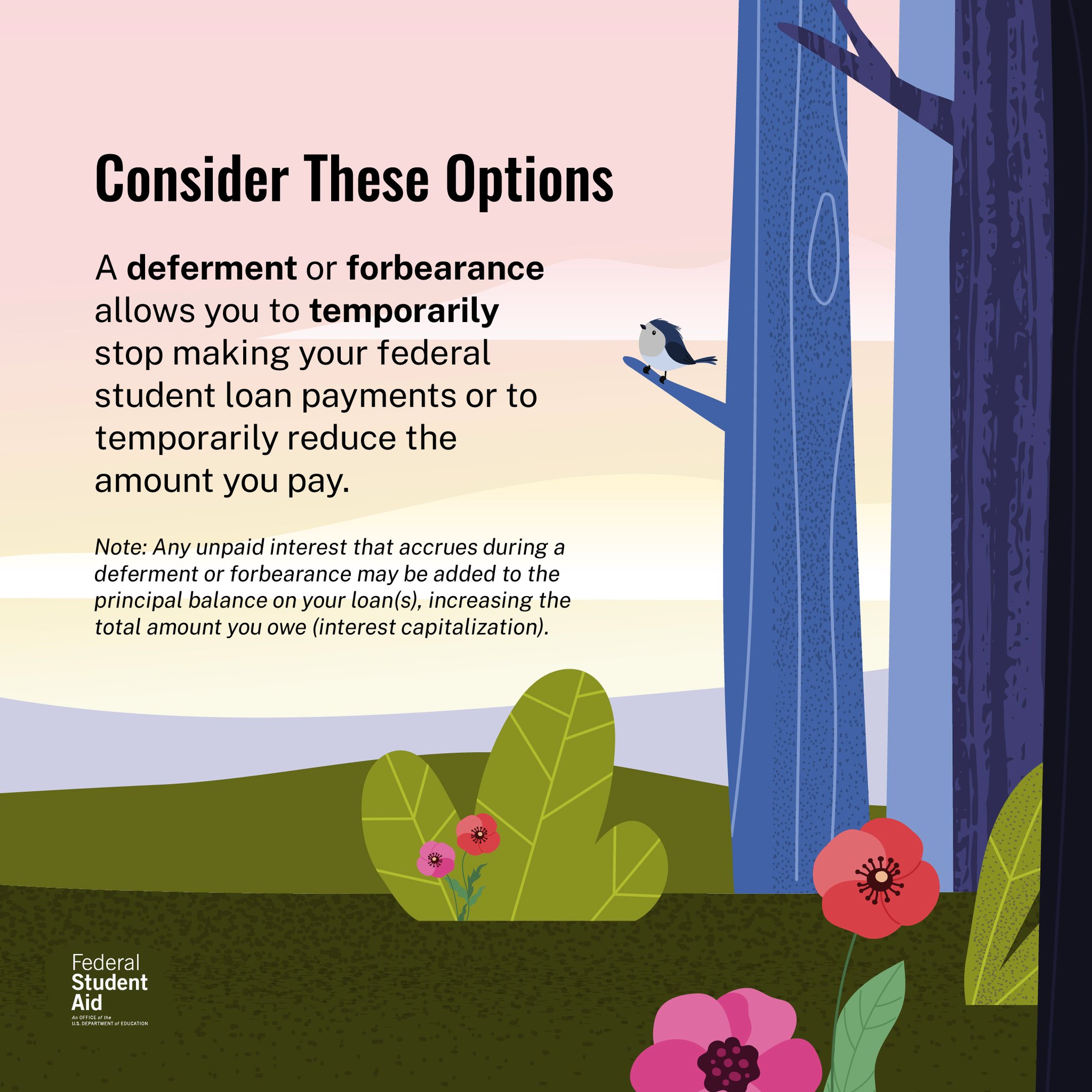
Federal student loan deferment is a temporary postponement of your loan payments. During deferment, you are generally not required to make any payments on your principal or interest. While your payments are paused, interest may continue to accrue, depending on the type of loan you have. Understanding your deferment options is crucial for managing your student debt effectively, especially during times of financial hardship.
Who is Eligible for Federal Student Loan Deferment?
Eligibility for federal student loan deferment depends on the specific deferment type and your individual circumstances. Generally, you must have a federal student loan to qualify. Common eligibility requirements include:
- Being enrolled at least half-time in a qualifying educational institution.
- Experiencing economic hardship.
- Serving in the military.
- Undergoing cancer treatment or being a cancer survivor.
Types of Federal Student Loan Deferment
There are several types of deferment options available for federal student loan borrowers. Each has specific requirements and may apply to different situations. Here's a breakdown of the most common types:
In-School Deferment
If you're enrolled at least half-time in an eligible college or career school, you may be eligible for an in-school deferment. This allows you to postpone your loan payments while you're focused on your education. You'll need to provide documentation from your school to confirm your enrollment status.
Economic Hardship Deferment
This deferment is available if you're experiencing financial difficulties. You may qualify if you're receiving benefits from a federal or state public assistance program, such as Supplemental Security Income (SSI) or Temporary Assistance for Needy Families (TANF). You can also qualify if you're working full-time and your monthly income is less than 150% of the poverty guideline for your family size, or if you meet other criteria indicating economic hardship, such as having high medical expenses.
Military Deferment
Several deferment options are available for active duty military personnel. These include:
- Military Service Deferment: Available to borrowers serving on active duty during a war or other military operation or national emergency, and for the 180-day period following the end of such service.
- Post-Active Duty Student Deferment: Available to borrowers who are called to active duty for more than 30 days and are within 13 months of completing that service.
Cancer Treatment Deferment
Borrowers undergoing cancer treatment or who have completed cancer treatment may be eligible for a deferment. This aims to provide financial relief during a challenging time. Documentation from a medical professional is generally required.
Parent PLUS Loan Deferment
If you have a Parent PLUS loan, you may be eligible for a deferment while the student for whom you borrowed is enrolled at least half-time in an eligible school. You can also defer payments for an additional six months after the student graduates or drops below half-time enrollment.
How to Apply for Federal Student Loan Deferment
The application process for deferment typically involves the following steps:
- Contact your loan servicer: Your loan servicer is the company that handles the billing and other services for your federal student loans. You can find their contact information on the Federal Student Aid website or on your loan statements.
- Obtain the deferment application: Your loan servicer will provide you with the appropriate deferment application form. These forms are also often available on the servicer's website or the Federal Student Aid website.
- Complete the application: Fill out the application form accurately and completely. You'll need to provide information about your loan(s), your eligibility for the specific deferment type, and any required documentation.
- Gather supporting documentation: Depending on the type of deferment you're applying for, you may need to provide supporting documentation, such as proof of enrollment, documentation of economic hardship, or military orders.
- Submit the application: Submit the completed application and supporting documentation to your loan servicer. Make sure to keep a copy of everything for your records.
- Follow up: Contact your loan servicer to confirm that they received your application and to check on its status.
Important Considerations Before Deferring Your Loans
While deferment can provide temporary relief, it's important to understand the potential consequences:
Interest Accrual
For subsidized loans, the government pays the interest that accrues during deferment. However, for unsubsidized loans, interest continues to accrue during deferment. This means that the total amount you owe will increase over time. When you resume making payments, the accrued interest will be capitalized, meaning it will be added to your principal balance. This can significantly increase your total repayment amount.
Impact on Loan Forgiveness Programs
Deferment can impact your eligibility for certain loan forgiveness programs, such as Public Service Loan Forgiveness (PSLF) and Income-Driven Repayment (IDR) forgiveness. While some deferment periods may count towards forgiveness, others may not. It's crucial to understand how deferment will affect your progress towards forgiveness before making a decision.
Alternatives to Deferment
Before choosing deferment, consider other options that may be more beneficial in the long run. These include:
- Income-Driven Repayment (IDR) Plans: IDR plans, such as Income-Based Repayment (IBR), Pay As You Earn (PAYE), and Saving on a Valuable Education (SAVE), can lower your monthly payments based on your income and family size. After a certain number of years (typically 20 or 25), the remaining balance is forgiven.
- Forbearance: Forbearance is another option that allows you to temporarily postpone or reduce your loan payments. Like deferment, interest typically continues to accrue during forbearance. Unlike some deferment options, interest accrues on both subsidized and unsubsidized loans during forbearance.
- Loan Consolidation: Consolidating your federal student loans can simplify your repayment by combining multiple loans into a single loan with a fixed interest rate. This can also make you eligible for certain repayment plans and forgiveness programs.
Where to Find More Information
For more information about federal student loan deferment options, visit the following resources:
- Federal Student Aid Website: studentaid.gov
- Your Loan Servicer's Website: Contact your loan servicer directly for information specific to your loan(s).
- U.S. Department of Education: ed.gov
Navigating the world of student loans can be complex, but understanding your deferment options and other repayment alternatives can help you manage your debt effectively and achieve your financial goals. Always consult with your loan servicer to discuss your specific situation and determine the best course of action for you.

0 Comments