
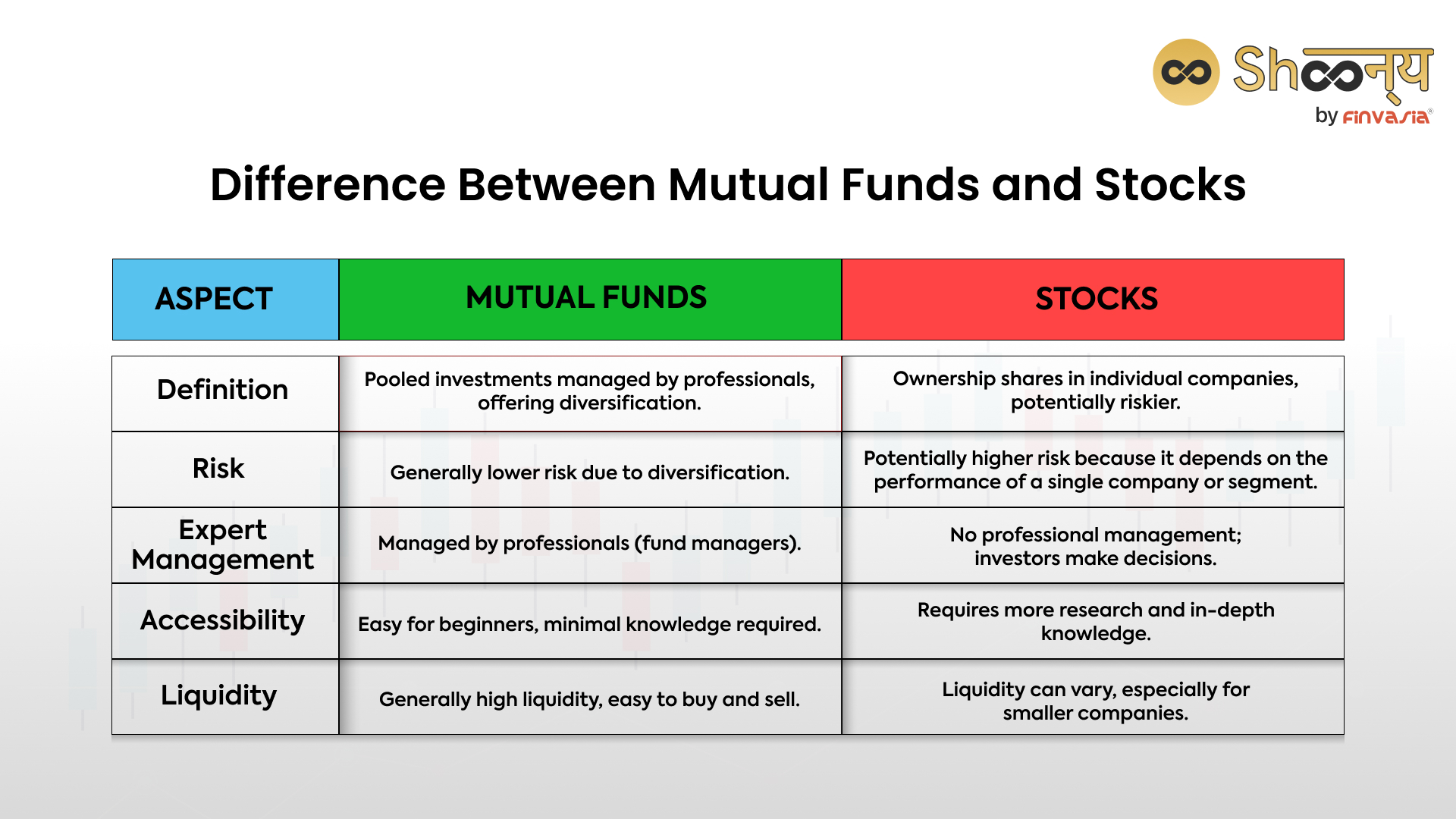
Stocks vs. Mutual Funds: What's the Difference?
When it comes to investing your hard-earned money, the options can seem overwhelming. Two of the most common investment vehicles are stocks and mutual funds. While both offer the potential for growth, they operate in fundamentally different ways. Understanding the nuances of each is crucial for making informed investment decisions that align with your financial goals and risk tolerance. This article will delve into the key differences between stocks and mutual funds, helping you navigate the world of investing with greater confidence.
What are Stocks?
A stock represents ownership in a publicly traded company. When you buy a share of stock, you're essentially buying a small piece of that company. As a shareholder, you have the potential to profit from the company's success. If the company performs well, its stock price may increase, allowing you to sell your shares for a profit. You may also receive dividends, which are periodic payments made to shareholders out of the company's earnings. However, it's important to remember that stock prices can fluctuate significantly based on a variety of factors, including company performance, economic conditions, and investor sentiment.
Types of Stocks
There are different types of stocks, primarily categorized as:
- Common Stock: This is the most common type of stock and provides shareholders with voting rights in company matters.
- Preferred Stock: Preferred stock typically doesn't come with voting rights, but it often offers a fixed dividend payment, which is paid out before dividends to common stockholders.
Furthermore, stocks can be classified based on company size (market capitalization), growth potential, and industry sector.
What are Mutual Funds?
A mutual fund is a type of investment vehicle that pools money from many investors to purchase a diversified portfolio of stocks, bonds, or other assets. The fund is managed by a professional fund manager who makes investment decisions on behalf of the fund's investors. When you invest in a mutual fund, you're buying shares of the fund itself, not direct ownership of the underlying assets. The value of your shares will fluctuate based on the performance of the fund's portfolio.
Types of Mutual Funds
Mutual funds come in various forms, each with a distinct investment objective and risk profile:
- Stock Funds: Primarily invest in stocks, aiming for capital appreciation.
- Bond Funds: Primarily invest in bonds, seeking income and stability.
- Balanced Funds: Invest in a mix of stocks and bonds, providing a balance between growth and income.
- Index Funds: Track a specific market index, such as the S&P 500, offering broad market exposure at a low cost.
- Sector Funds: Focus on a specific industry sector, such as technology or healthcare.
- Money Market Funds: Invest in short-term, low-risk debt securities, aiming to preserve capital.
Key Differences: Stocks vs. Mutual Funds
While both stocks and mutual funds offer investment opportunities, they differ significantly in several key aspects:
Diversification
Stocks: Investing in individual stocks can be risky because your returns are tied to the performance of a single company. If that company struggles, your investment could suffer significantly. Diversification is key to mitigating this risk, but it requires investing in a wide range of stocks across different industries.
Mutual Funds: Mutual funds offer instant diversification because they invest in a basket of assets. This diversification helps to reduce risk, as the performance of any single investment will have a limited impact on the overall fund's performance.
Management
Stocks: Investing in individual stocks requires you to do your own research and make your own investment decisions. This can be time-consuming and requires a certain level of financial knowledge.
Mutual Funds: Mutual funds are managed by professional fund managers who have expertise in analyzing markets and making investment decisions. This can be a significant advantage for investors who lack the time or knowledge to manage their own portfolios.
Liquidity
Stocks: Stocks are generally highly liquid, meaning they can be bought and sold quickly on the open market. This allows you to access your money relatively easily.
Mutual Funds: Mutual funds are also relatively liquid, although it may take a few days to receive your money after selling your shares. The price at which you sell your shares will be based on the fund's net asset value (NAV) at the end of the trading day.
Cost
Stocks: The cost of investing in individual stocks typically includes brokerage commissions and other transaction fees.
Mutual Funds: Mutual funds typically charge management fees, which are expressed as an expense ratio. This fee covers the cost of managing the fund and is deducted from the fund's assets. Some mutual funds may also charge sales loads (commissions) or redemption fees.
Control
Stocks: When you invest in individual stocks, you have complete control over your investment decisions. You can choose which stocks to buy and sell, and when to do so.
Mutual Funds: When you invest in a mutual fund, you're giving up some control over your investment decisions. The fund manager makes the investment decisions on your behalf, based on the fund's stated investment objective.
Which is Right for You?
The choice between stocks and mutual funds depends on your individual circumstances, including your risk tolerance, investment goals, and time horizon. If you're comfortable with taking on more risk and have the time and knowledge to research individual companies, investing in stocks may be a good option. However, if you prefer a more diversified and hands-off approach, mutual funds may be a better choice. Consider your own investment style and consult with a financial advisor to determine the best investment strategy for your needs.

0 Comments