
Understanding the Internet of Things (IoT)
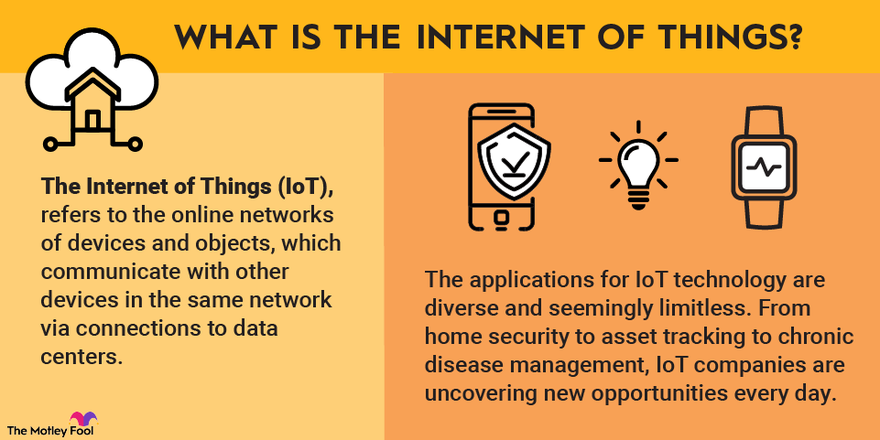
The Internet of Things (IoT) is revolutionizing the way we interact with the world around us. Simply put, IoT refers to the network of physical devices – vehicles, home appliances, and more – embedded with sensors, software, and other technologies that enable them to connect and exchange data with other devices and systems over the internet. This interconnectedness allows for a vast array of applications, from smart homes that optimize energy consumption to industrial machinery that predicts maintenance needs.
The Growth of the IoT Market
The IoT market is experiencing exponential growth. Factors driving this growth include:
- Decreasing Costs of Sensors and Connectivity: The cost of sensors and internet connectivity has significantly decreased, making it more affordable to deploy IoT solutions.
- Increased Adoption of Cloud Computing: Cloud platforms provide the infrastructure needed to store and process the massive amounts of data generated by IoT devices.
- Advancements in Artificial Intelligence (AI) and Machine Learning (ML): AI and ML algorithms are used to analyze IoT data, providing valuable insights and enabling automation.
- Demand for Automation and Efficiency: Businesses are increasingly adopting IoT solutions to automate processes, improve efficiency, and reduce costs.
This rapid growth presents significant investment opportunities in the stock market.
IoT Companies in the Stock Market: Key Players
Several publicly traded companies are at the forefront of the IoT revolution. These companies operate in various sectors, including:
- Semiconductors: Companies that design and manufacture the chips that power IoT devices.
- Software: Companies that develop the software platforms and applications that enable IoT functionality.
- Networking: Companies that provide the connectivity infrastructure for IoT devices.
- Industrial Automation: Companies that integrate IoT into industrial processes.
- Consumer Electronics: Companies that manufacture smart home devices and other connected consumer products.
Here are a few examples of companies involved in the IoT ecosystem (this is NOT investment advice, always do your own research):
- Semiconductor Companies: Intel (INTC), Qualcomm (QCOM), Texas Instruments (TXN)
- Software Companies: Microsoft (MSFT), Amazon (AMZN), Google (GOOGL)
- Networking Companies: Cisco Systems (CSCO), Ericsson (ERIC)
- Industrial Automation Companies: Siemens (SIE.DE), Honeywell (HON)
How to Invest in the IoT Stock Market
Investing in the IoT stock market requires careful research and consideration. Here are some strategies to consider:
Direct Investment in IoT Companies
This involves purchasing shares of individual companies that are directly involved in the IoT ecosystem. It requires thorough due diligence to identify companies with strong growth potential and solid financial performance. Consider factors such as:
- Company's Market Position: Is the company a leader in its respective IoT sector?
- Growth Rate: Is the company experiencing strong revenue growth?
- Financial Health: Does the company have a healthy balance sheet and strong cash flow?
- Competitive Landscape: How does the company compare to its competitors?
- Innovation: Is the company investing in research and development to stay ahead of the curve?
Investing in IoT ETFs
Exchange-Traded Funds (ETFs) offer a diversified way to invest in the IoT market. These ETFs typically track an index of companies that are involved in the IoT ecosystem. Investing in an IoT ETF can reduce risk by spreading your investment across multiple companies. Examples of IoT ETFs include:
- Global X Internet of Things ETF (SNSR): This ETF invests in companies that are involved in the development and manufacturing of IoT devices, software, and connectivity solutions.
- Defiance Next Gen Connectivity ETF (FIVG): While not solely focused on IoT, this ETF includes companies involved in 5G technology, which is a key enabler of IoT applications.
Before investing in an IoT ETF, consider its expense ratio, tracking error, and the composition of its holdings.
Investing in Related Sectors
The growth of the IoT market also benefits companies in related sectors. For example:
- Cloud Computing: IoT devices generate massive amounts of data that need to be stored and processed in the cloud.
- Cybersecurity: As the number of connected devices increases, so does the risk of cyberattacks.
- Data Analytics: Companies that specialize in data analytics can help businesses extract valuable insights from IoT data.
Investing in companies in these related sectors can provide indirect exposure to the IoT market.
Risks and Challenges of Investing in IoT
While the IoT market offers significant investment opportunities, it's important to be aware of the risks and challenges:
Rapid Technological Change
The IoT market is constantly evolving, with new technologies and standards emerging rapidly. This can make it difficult to predict which companies will be successful in the long run.
Cybersecurity Risks
IoT devices are vulnerable to cyberattacks, which can compromise sensitive data and disrupt operations. Companies that are not adequately prepared to address cybersecurity risks may face significant financial losses.
Regulatory Uncertainty
The regulatory landscape for IoT is still evolving, with governments around the world grappling with issues such as data privacy, security, and interoperability. Changes in regulations could impact the growth of the IoT market.
Competition
The IoT market is becoming increasingly competitive, with established companies and startups vying for market share. This can put pressure on profit margins and make it difficult for companies to differentiate themselves.
Performing Due Diligence: Essential Steps
Before investing in any IoT company, it's crucial to conduct thorough due diligence. This includes:
- Analyzing Financial Statements: Review the company's revenue, earnings, cash flow, and debt levels.
- Understanding the Business Model: How does the company generate revenue? What are its competitive advantages?
- Assessing the Management Team: Does the company have a strong and experienced management team?
- Reading Industry Reports: Stay up-to-date on the latest trends and developments in the IoT market.
- Consulting with a Financial Advisor: Seek professional advice from a qualified financial advisor.
The Future of IoT Investing
The Internet of Things is poised to transform numerous industries, creating substantial opportunities for investors. As the technology matures and adoption rates increase, the IoT market is expected to continue its strong growth trajectory. By carefully researching and understanding the key players, risks, and opportunities, investors can position themselves to benefit from the long-term growth of the IoT market.

0 Comments