
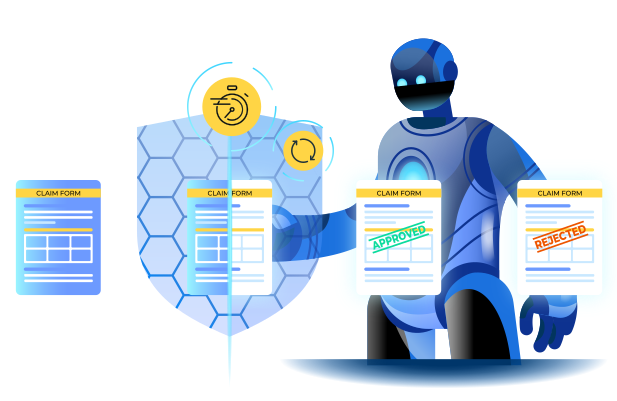
The Dawn of AI in Insurance Claims
The insurance industry is undergoing a significant transformation, and at the heart of this revolution lies Artificial Intelligence (AI). For years, insurance claims processing has been a cumbersome and often frustrating experience for both insurers and policyholders. Manual processes, paperwork, and lengthy waiting times have been the norm. However, AI is changing all of that, offering the promise of faster, more accurate, and more efficient claims processing.
Why AI is a Game-Changer for Insurance Claims
Several factors contribute to AI's disruptive potential in insurance claims processing. These include:
- Increased Efficiency: AI-powered systems can automate many of the manual tasks involved in claims processing, freeing up human adjusters to focus on more complex cases.
- Reduced Costs: By automating tasks and improving accuracy, AI can help insurers reduce operational costs associated with claims processing.
- Improved Accuracy: AI algorithms can analyze vast amounts of data to identify patterns and anomalies, leading to more accurate claims assessments and fraud detection.
- Faster Processing Times: AI can significantly reduce the time it takes to process a claim, leading to greater customer satisfaction.
- Enhanced Customer Experience: Faster processing times and more accurate assessments contribute to a better overall customer experience.
Key Applications of AI in Insurance Claims Processing
AI is being applied to various aspects of insurance claims processing, including:
Fraud Detection
Fraudulent claims are a major problem for the insurance industry, costing billions of dollars each year. AI algorithms can analyze claims data to identify suspicious patterns and anomalies that may indicate fraud. These algorithms can consider factors such as the claimant's history, the nature of the claim, and the circumstances surrounding the incident. By flagging potentially fraudulent claims, AI can help insurers prevent losses and protect their bottom line.
Automated Claims Assessment
AI can automate the assessment of simple claims, such as those involving minor vehicle damage or straightforward medical expenses. AI-powered systems can analyze photos, videos, and other data to estimate the cost of repairs or medical treatment. This automation frees up human adjusters to focus on more complex claims that require human judgment and expertise.
Predictive Analytics
AI can be used to predict the likelihood of a claim being filed based on various factors, such as weather patterns, traffic conditions, and economic indicators. This information can help insurers proactively manage their risk and allocate resources more effectively. For example, an insurer might increase staffing in a call center in anticipation of a major storm that is likely to generate a large number of claims.
Image and Video Analysis
AI-powered image and video analysis can be used to assess damage to vehicles, property, and other assets. These systems can automatically identify and measure damage, providing adjusters with valuable information to help them make accurate claims assessments. This technology can also be used to detect fraud by identifying inconsistencies between the claimed damage and the actual damage visible in images or videos.
Natural Language Processing (NLP)
NLP is a branch of AI that deals with the interaction between computers and human language. In insurance claims processing, NLP can be used to automatically extract information from unstructured data, such as claim forms, police reports, and medical records. This information can then be used to populate claims management systems and automate various tasks.
Examples of AI in Action
Several insurance companies are already using AI to transform their claims processing operations. Here are a few examples:
- Lemonade: This insurance company uses AI chatbots to handle claims from start to finish. The chatbot guides the claimant through the claims process, collects information, and assesses the claim. In many cases, claims can be approved and paid out in a matter of minutes.
- Allstate: Allstate is using AI to analyze photos of vehicle damage and estimate the cost of repairs. This technology has significantly reduced the time it takes to process auto claims.
- Chubb: Chubb is using AI to detect fraudulent claims by analyzing claims data and identifying suspicious patterns. This has helped the company prevent significant losses from fraud.
The Future of AI in Insurance Claims
The future of AI in insurance claims processing is bright. As AI technology continues to evolve, we can expect to see even more innovative applications emerge. Some potential future applications include:
Personalized Claims Experiences
AI can be used to personalize the claims experience for each individual customer. By analyzing customer data, insurers can tailor the claims process to meet the specific needs and preferences of each claimant. This could involve providing different communication channels, offering different settlement options, or providing proactive support and guidance throughout the claims process.
Real-Time Claims Processing
AI can enable real-time claims processing, allowing insurers to settle claims almost instantly. This would require seamless integration of AI-powered systems with various data sources, such as sensors, IoT devices, and external databases. Imagine a scenario where a car accident is automatically detected by sensors in the vehicle, and a claim is automatically filed and processed within seconds.
Autonomous Claims Adjusting
In the future, we may see the emergence of autonomous claims adjusters that can handle even complex claims without human intervention. These adjusters would be powered by sophisticated AI algorithms that can analyze vast amounts of data, make informed decisions, and negotiate settlements. While human adjusters will likely still be needed for the most complex cases, autonomous adjusters could handle a significant portion of the claims volume, freeing up human adjusters to focus on more strategic tasks.
Challenges and Considerations
While the potential benefits of AI in insurance claims processing are significant, there are also some challenges and considerations that need to be addressed. These include:
Data Privacy and Security
AI systems rely on large amounts of data, including personal information. It is crucial to ensure that this data is protected from unauthorized access and misuse. Insurers need to implement robust data privacy and security measures to comply with regulations and maintain customer trust.
Bias and Fairness
AI algorithms can be biased if they are trained on biased data. This can lead to unfair or discriminatory outcomes for certain groups of claimants. Insurers need to carefully monitor their AI systems to ensure that they are fair and unbiased.
Explainability and Transparency
It is important to understand how AI algorithms make decisions. This is particularly important in insurance claims processing, where decisions can have significant financial consequences for claimants. Insurers need to be able to explain the reasoning behind their AI-powered claims assessments.
Integration with Existing Systems
Integrating AI systems with existing claims management systems can be a complex and challenging task. Insurers need to carefully plan and execute their AI deployments to ensure seamless integration and avoid disruptions to their operations.

0 Comments