
Why Understanding Financial Advisor Certifications Matters for Retirement Planning
Planning for retirement can feel overwhelming. There are numerous financial decisions to make, from determining how much to save to choosing the right investment strategies. Many people turn to financial advisors for guidance. However, not all financial advisors are created equal. Understanding the different certifications they hold is crucial to ensuring you're working with someone qualified to help you achieve your retirement goals. This article will explore common financial advisor certifications related to retirement planning, helping you make informed decisions when selecting professional assistance.
The Role of a Financial Advisor in Retirement Planning
A financial advisor can play a vital role in your retirement planning journey. They can help you:
- Assess your current financial situation
- Define your retirement goals
- Develop a personalized retirement plan
- Manage your investments
- Minimize taxes
- Plan for healthcare costs
- Navigate estate planning
Because retirement planning involves so many complex aspects, it's essential to work with an advisor who possesses the necessary expertise and credentials.
Key Financial Advisor Certifications for Retirement Planning
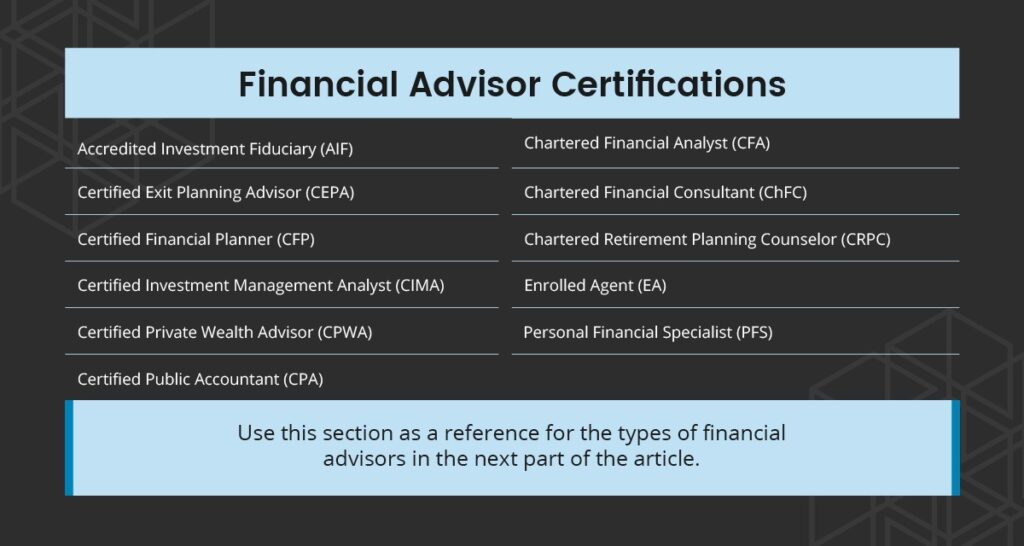
Several certifications indicate a financial advisor has met specific educational, examination, and experience requirements. Here are some of the most common and reputable certifications relevant to retirement planning:
Certified Financial Planner (CFP)
The Certified Financial Planner (CFP) certification is widely recognized as the gold standard in financial planning. CFP professionals have completed extensive training and testing in areas such as retirement planning, investment management, insurance, tax planning, and estate planning. They are required to adhere to a strict code of ethics and act in their clients' best interests. To become a CFP, candidates must:
- Hold a bachelor's degree.
- Complete CFP Board-registered education coursework.
- Pass the comprehensive CFP Certification Examination.
- Have several years of qualifying experience in financial planning.
- Adhere to the CFP Board's Standards of Professional Conduct.
The CFP certification signifies a commitment to providing comprehensive and ethical financial planning services.
Chartered Financial Consultant (ChFC)
The Chartered Financial Consultant (ChFC) designation is another respected credential in the financial planning industry. While similar to the CFP, the ChFC program places a greater emphasis on insurance and financial planning for business owners. ChFCs must complete a comprehensive curriculum covering topics such as:
- Financial planning
- Income taxation
- Insurance
- Investments
- Estate planning
- Business planning
To earn the ChFC designation, candidates must pass rigorous examinations and meet experience requirements. Like CFPs, ChFCs are bound by a code of ethics.
Chartered Retirement Planning Counselor (CRPC)
The Chartered Retirement Planning Counselor (CRPC) designation focuses specifically on retirement planning. CRPCs have demonstrated expertise in retirement income planning, asset management, and estate planning strategies relevant to retirees. The CRPC program covers topics such as:
- Retirement needs analysis
- Investment strategies for retirement
- Retirement plan distributions
- Tax planning for retirement
- Estate planning considerations
The CRPC designation is a good choice for advisors who specialize in retirement planning services.
Retirement Income Certified Professional (RICP)
The Retirement Income Certified Professional (RICP) designation concentrates on helping individuals create sustainable retirement income streams. RICPs have in-depth knowledge of:
- Social Security claiming strategies
- Pension planning
- Annuities
- Healthcare costs in retirement
- Long-term care planning
This designation is particularly valuable for advisors who focus on helping clients generate income throughout their retirement years.
Accredited Financial Counselor (AFC)
The Accredited Financial Counselor (AFC) certification focuses on financial counseling and education. AFCs are trained to help individuals and families manage their finances, reduce debt, and achieve their financial goals. While not solely focused on retirement planning, AFCs can provide valuable guidance on budgeting, saving, and debt management, which are essential components of a successful retirement plan. The AFC certification emphasizes:
- Financial literacy
- Budgeting and debt management
- Saving and investing
- Credit counseling
- Consumer protection
Beyond Certifications: Other Factors to Consider
While certifications are an important indicator of an advisor's knowledge and expertise, they are not the only factor to consider. You should also evaluate:
- Experience: How long has the advisor been working in the financial planning industry?
- Specialization: Does the advisor specialize in retirement planning?
- Fee structure: How is the advisor compensated (e.g., commission-based, fee-based, fee-only)?
- Client reviews and testimonials: What do other clients say about their experience with the advisor?
- Communication style: Are you comfortable communicating with the advisor?
- Fiduciary duty: Does the advisor have a legal obligation to act in your best interests? (Fee-only advisors typically have a fiduciary duty.)
How to Verify a Financial Advisor's Certification
It's crucial to verify that a financial advisor actually holds the certifications they claim to have. You can typically do this by visiting the website of the organization that grants the certification. For example:
- CFP: Visit the CFP Board website (cfp.net) and use their "Find a CFP Professional" tool.
- ChFC, CRPC, RICP: Visit The American College of Financial Services website (theamericancollege.edu) and use their directory.
- AFC: Visit the AFCPE website (afcpe.org) and use their directory.
These websites allow you to search for advisors by name, location, or certification and verify their credentials.
Choosing the Right Financial Advisor for Your Retirement Needs
Selecting a financial advisor is a personal decision. Take the time to research your options, interview potential advisors, and ask questions about their qualifications, experience, and fee structure. By understanding the different financial advisor certifications and considering other important factors, you can find a qualified professional who can help you achieve your retirement goals.

0 Comments