
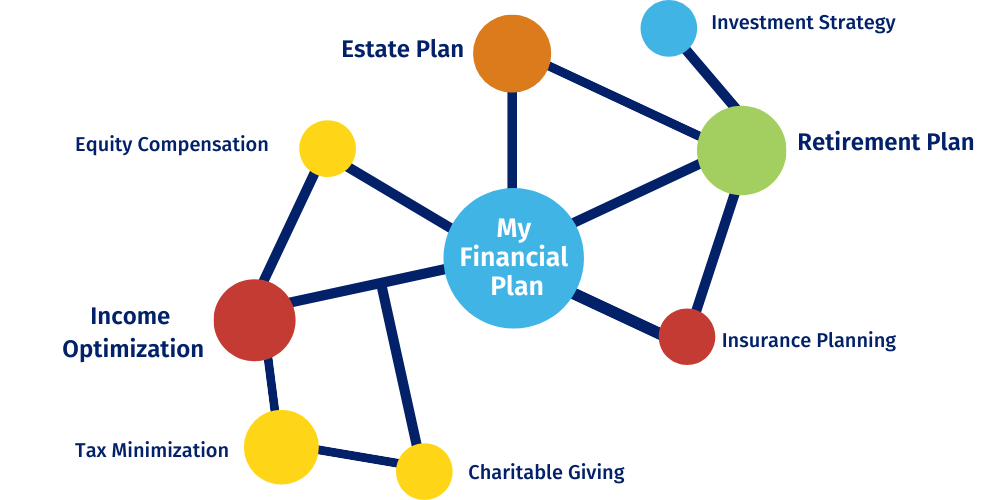
Understanding the Basics of Retirement Planning and Taxes
Retirement planning is a crucial aspect of financial security, ensuring you have sufficient funds to maintain your lifestyle after you stop working. However, without careful consideration of taxes, a significant portion of your retirement savings can be eroded. This guide explores strategies for optimizing your retirement plan to minimize your tax burden and maximize your long-term financial well-being.
Tax-Advantaged Retirement Accounts
The cornerstone of tax-optimized retirement planning lies in leveraging tax-advantaged retirement accounts. These accounts offer various tax benefits that can significantly boost your savings over time.
Traditional 401(k) and IRA
Traditional 401(k)s and IRAs offer tax-deferred growth. This means that your contributions are often tax-deductible in the year you make them, reducing your current taxable income. Your investments grow tax-free within the account, and you only pay taxes when you withdraw the money during retirement. This can be advantageous if you expect to be in a lower tax bracket during retirement than you are currently.
The advantage here is that you get to delay paying taxes, allowing your money to grow more quickly. However, remember that withdrawals in retirement are taxed as ordinary income.
Roth 401(k) and Roth IRA
Roth 401(k)s and Roth IRAs operate differently. Contributions are made with after-tax dollars, meaning you don't receive a tax deduction upfront. However, the significant advantage is that your investments grow tax-free, and withdrawals in retirement are also tax-free. This can be particularly beneficial if you anticipate being in a higher tax bracket during retirement or simply want the certainty of knowing your withdrawals will be tax-free.
While you don't get the immediate tax break, the tax-free growth and tax-free withdrawals can be a substantial benefit over the long term.
Choosing the Right Account: Roth vs. Traditional
Deciding between a Roth and a traditional retirement account is a personal decision based on your individual circumstances and financial goals. Consider the following factors:
- Current vs. Future Tax Bracket: If you believe you will be in a higher tax bracket in retirement, a Roth account may be more beneficial. If you expect to be in a lower tax bracket, a traditional account might be more advantageous.
- Age and Time Horizon: Younger individuals with a longer time horizon may benefit more from a Roth account, as the tax-free growth has more time to compound.
- Current Income: High-income earners may not be eligible to contribute to a Roth IRA directly, although they may be able to use a "backdoor Roth IRA" strategy (discussed later).
- Risk Tolerance: Tax diversification, by having both Roth and Traditional accounts, can provide flexibility and potentially reduce your overall tax risk.
Strategies for Tax-Optimized Retirement Planning
Beyond choosing the right type of retirement account, several strategies can further optimize your retirement plan for tax efficiency:
Maximize Contributions
Take full advantage of employer matching contributions to your 401(k). This is essentially free money and a guaranteed return on your investment. Also, contribute as much as you can afford to your retirement accounts, up to the annual contribution limits. The more you save now, the more you'll have in retirement, and the more significant the tax benefits will be.
Asset Location
Asset location involves strategically placing different types of investments in different types of accounts to minimize taxes. For example, investments that generate high taxable income, such as bonds, may be better suited for tax-deferred accounts like traditional 401(k)s or IRAs. Investments with high growth potential, such as stocks, may be better suited for Roth accounts, where the gains will be tax-free.
Tax-Loss Harvesting
Tax-loss harvesting involves selling investments that have lost value to offset capital gains taxes. This can be done in taxable investment accounts. You can use the losses to offset gains in the same year, and if your losses exceed your gains, you can deduct up to $3,000 of the excess loss from your ordinary income.
Qualified Charitable Distributions (QCDs)
If you are age 70 ½ or older, you can make qualified charitable distributions (QCDs) from your IRA directly to a qualified charity. QCDs can satisfy your required minimum distributions (RMDs) and are excluded from your taxable income. This can be a tax-efficient way to give to charity, especially if you don't itemize deductions.
Health Savings Accounts (HSAs)
While not strictly a retirement account, Health Savings Accounts (HSAs) offer a triple tax advantage: contributions are tax-deductible, earnings grow tax-free, and withdrawals for qualified medical expenses are tax-free. If you have a high-deductible health insurance plan, consider contributing to an HSA and using it to save for future medical expenses in retirement.
Backdoor Roth IRA
If your income is too high to contribute directly to a Roth IRA, you can use a "backdoor Roth IRA" strategy. This involves contributing to a traditional IRA (which may or may not be tax-deductible, depending on your income and whether you have a retirement plan at work) and then converting it to a Roth IRA. While the conversion is taxable, all future growth and withdrawals will be tax-free. Be aware of the "pro rata" rule, which can complicate this strategy if you have existing pre-tax balances in traditional IRAs.
Strategic Withdrawal Planning
During retirement, carefully plan your withdrawals to minimize your tax burden. Consider withdrawing from taxable accounts first, followed by tax-deferred accounts, and lastly from tax-free accounts. This can help you control your taxable income and potentially stay in a lower tax bracket.
Working with a Financial Advisor
Navigating the complexities of retirement planning and tax optimization can be challenging. Consulting with a qualified financial advisor can provide personalized guidance based on your individual circumstances and goals. A financial advisor can help you develop a comprehensive retirement plan that incorporates tax-efficient strategies to maximize your savings and minimize your tax liability.

0 Comments