
Retirement Planning: A Unique Challenge for the Self-Employed
Being your own boss comes with many perks: flexibility, autonomy, and the potential for unlimited earnings. However, when it comes to retirement planning, self-employed individuals face a unique set of challenges. Unlike employees who often have access to employer-sponsored retirement plans like 401(k)s, the self-employed are solely responsible for saving and investing for their future. This requires proactive planning and a disciplined approach.
Understanding the Importance of Early Retirement Planning
It's easy to put off retirement planning, especially when you're focused on building your business and managing day-to-day operations. However, the earlier you start, the better. Time is your greatest asset when it comes to investing. The power of compounding allows your investments to grow exponentially over time. Delaying your retirement savings, even by a few years, can significantly impact the amount you'll have available when you eventually decide to retire.
Furthermore, as a self-employed individual, you may not have access to traditional benefits like health insurance or paid time off. This means you need to factor these expenses into your retirement planning calculations. You may need to save more to cover these costs in retirement.
Retirement Savings Options for the Self-Employed
Fortunately, there are several retirement savings options specifically designed for self-employed individuals. These plans offer tax advantages that can help you grow your savings faster.
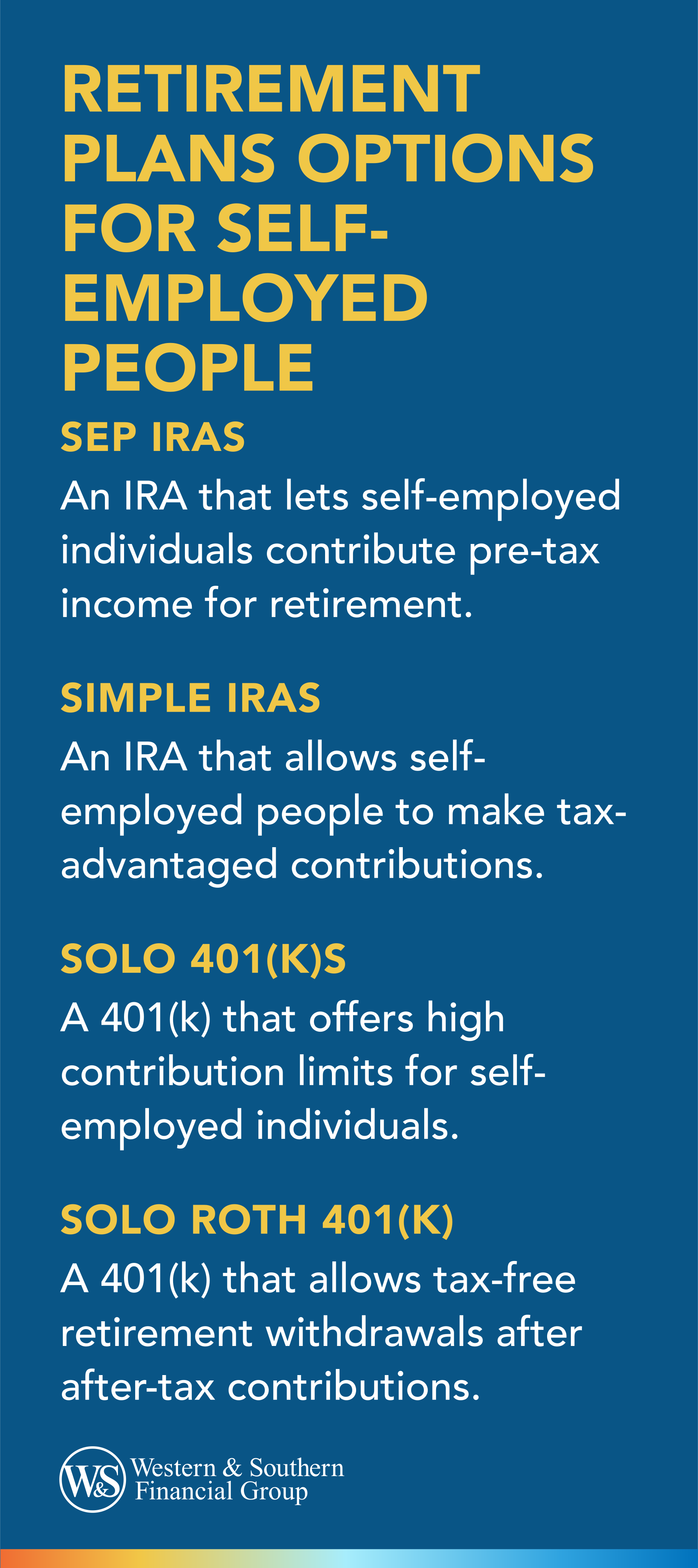
SEP IRA (Simplified Employee Pension Plan)
A SEP IRA is a popular choice for self-employed individuals and small business owners. It's relatively easy to set up and administer. With a SEP IRA, you can contribute up to 20% of your net self-employment income, with a maximum contribution limit set annually by the IRS. The contributions are tax-deductible, and your investments grow tax-deferred until retirement.
SIMPLE IRA (Savings Incentive Match Plan for Employees)
A SIMPLE IRA is another option that allows both you and your employees to contribute. As the employer, you're required to either match employee contributions up to 3% of their compensation or make a non-elective contribution of 2% of their compensation, regardless of whether they contribute. The contribution limits are generally lower than those of a SEP IRA, but it can be a good option if you want to provide a retirement plan for your employees as well.
Solo 401(k)
A Solo 401(k) is a retirement plan designed specifically for self-employed individuals and small business owners with no employees (other than a spouse). It allows you to contribute both as the employee and as the employer. As the employee, you can contribute up to the employee contribution limit set annually by the IRS. As the employer, you can contribute up to 25% of your net self-employment income. This can result in significantly higher contribution limits compared to SEP IRAs or SIMPLE IRAs.
There are two types of Solo 401(k)s: traditional and Roth. With a traditional Solo 401(k), your contributions are tax-deductible, and your investments grow tax-deferred. With a Roth Solo 401(k), your contributions are made with after-tax dollars, but your withdrawals in retirement are tax-free.
Traditional IRA and Roth IRA
Even if you have a SEP IRA, SIMPLE IRA, or Solo 401(k), you can still contribute to a Traditional IRA or Roth IRA, subject to income limitations. These accounts offer additional tax advantages and can help you diversify your retirement savings.
Calculating Your Retirement Needs
Determining how much you need to save for retirement can seem daunting, but it's an essential step in the planning process. Consider the following factors:
Estimating Your Retirement Expenses
Start by estimating your expenses in retirement. Consider your current expenses and how they might change. Will you be traveling more? Will you have lower housing costs? Factor in inflation, which can erode the purchasing power of your savings over time. Use online retirement calculators or consult with a financial advisor to help you estimate your retirement expenses accurately.
Determining Your Retirement Income Sources
Identify your potential sources of income in retirement. This may include Social Security benefits, pensions, and investment income. Keep in mind that Social Security benefits may not be sufficient to cover all of your expenses. You'll likely need to rely on your retirement savings to supplement your income.
Factoring in Healthcare Costs
Healthcare costs are a significant expense in retirement. Consider purchasing long-term care insurance to protect yourself against the costs of assisted living or nursing home care. Factor in the costs of Medicare premiums, deductibles, and co-pays. Also, remember that healthcare costs tend to increase with age.
Investment Strategies for Retirement
Once you've determined how much you need to save, it's time to develop an investment strategy. Consider the following factors:
Risk Tolerance
Assess your risk tolerance. How comfortable are you with the possibility of losing money in exchange for potentially higher returns? Your risk tolerance will influence the types of investments you choose.
Time Horizon
Consider your time horizon. How many years do you have until retirement? The longer your time horizon, the more risk you can generally afford to take. This is because you have more time to recover from any potential losses.
Diversification
Diversify your investments. Don't put all your eggs in one basket. Spread your investments across different asset classes, such as stocks, bonds, and real estate. This can help reduce your overall risk.
Rebalancing
Rebalance your portfolio regularly. Over time, your asset allocation may drift away from your target allocation. Rebalancing involves selling some assets and buying others to bring your portfolio back into alignment.
Seeking Professional Advice
Retirement planning can be complex, especially for self-employed individuals. Consider seeking professional advice from a financial advisor. A financial advisor can help you assess your financial situation, develop a retirement plan, and choose the right investments.
Staying Disciplined and Reviewing Your Plan Regularly
Once you've developed a retirement plan, it's important to stay disciplined and review your plan regularly. Make regular contributions to your retirement accounts. Track your progress and make adjustments as needed. Life circumstances can change, so it's important to review your plan at least once a year to ensure it still meets your needs.

0 Comments