
Understanding Debt Validation: Your Right as a Consumer
When a debt collection agency contacts you, it's crucial to understand your rights. One of the most powerful tools you have is the right to request debt validation. This process forces the debt collector to prove that the debt is actually yours and that they have the legal right to collect it. Ignoring a debt collector can have serious consequences for your credit score and financial well-being, so taking proactive steps like sending a debt validation request is essential.
What is a Debt Validation Request?
A debt validation request is a written request you send to a debt collection agency asking them to provide proof that you owe the debt they are trying to collect. This isn't simply asking for a bill; it's demanding documentation that verifies the debt's legitimacy. This documentation should include information such as:
- The name of the original creditor
- The amount of the debt
- The account number associated with the debt
- A copy of the original contract or agreement that created the debt
- Evidence that the debt collector has the legal right to collect the debt (e.g., proof of assignment)
By requesting validation, you're essentially challenging the debt collector to prove their claim. If they can't provide sufficient evidence, they may be legally prohibited from continuing collection efforts.
Why Should You Send a Debt Validation Request?
There are several important reasons to send a debt validation request:
Protecting Yourself from Scams and Errors
Unfortunately, debt collection scams are common. Sending a debt validation request can help you identify fraudulent attempts to collect debts you don't owe. Additionally, errors can occur in debt collection, such as incorrect amounts, mistaken identities, or attempts to collect debts that have already been paid. Debt validation helps uncover these errors.
Ensuring the Debt is Legitimate
Even if the debt isn't a scam, it's possible that the debt collector doesn't have the legal right to collect it. Debt collectors often buy debts from original creditors for pennies on the dollar. However, they must still prove that they have the legal authority to collect the debt. A debt validation request forces them to provide that proof.
Buying Time to Assess Your Options
Sending a debt validation request buys you valuable time to assess your financial situation and explore your options. While the debt collector is gathering information to validate the debt, you can consult with a credit counselor, attorney, or other financial advisor to determine the best course of action.
Potentially Eliminating the Debt
If the debt collector can't provide sufficient validation, they may be legally required to stop collection efforts. This could potentially eliminate the debt altogether. Even if they do provide validation, the process may uncover errors or inaccuracies that can be used to negotiate a lower settlement amount.
How to Write a Debt Validation Request Letter
Writing a debt validation request letter is a straightforward process. Here's a step-by-step guide:
1. Gather Information
Before you start writing, gather all the information you have about the debt, including the debt collector's name and address, the account number, and the date you received the collection notice. This information will help you create a clear and accurate request.
2. Use a Template (Optional)
While you can write your own letter, using a template can ensure you include all the necessary information. Many free debt validation request templates are available online. Choose a template that suits your needs and adapt it to your specific situation.
3. Clearly State Your Intent
In the first paragraph of your letter, clearly state that you are requesting debt validation. Use language like, "This letter is a formal request for validation of the alleged debt you are attempting to collect."
4. Request Specific Information
Be specific about the information you want the debt collector to provide. Request documentation such as:
- The name of the original creditor
- The account number associated with the debt
- A copy of the original contract or agreement that created the debt
- Proof that you are responsible for the debt
- Evidence that the debt collector has the legal right to collect the debt
5. Set a Deadline
Give the debt collector a reasonable deadline to respond to your request. A common deadline is 30 days. State in your letter that if they fail to provide the requested information within the specified timeframe, you will consider the debt to be invalid.
6. Keep a Copy
Make a copy of your debt validation request letter for your records. This copy will be important if you need to take further action, such as filing a complaint with the Consumer Financial Protection Bureau (CFPB) or consulting with an attorney.
7. Send the Letter via Certified Mail
Send your debt validation request letter via certified mail with return receipt requested. This will provide you with proof that the debt collector received your letter. The return receipt will serve as evidence that you sent the request and when it was received.
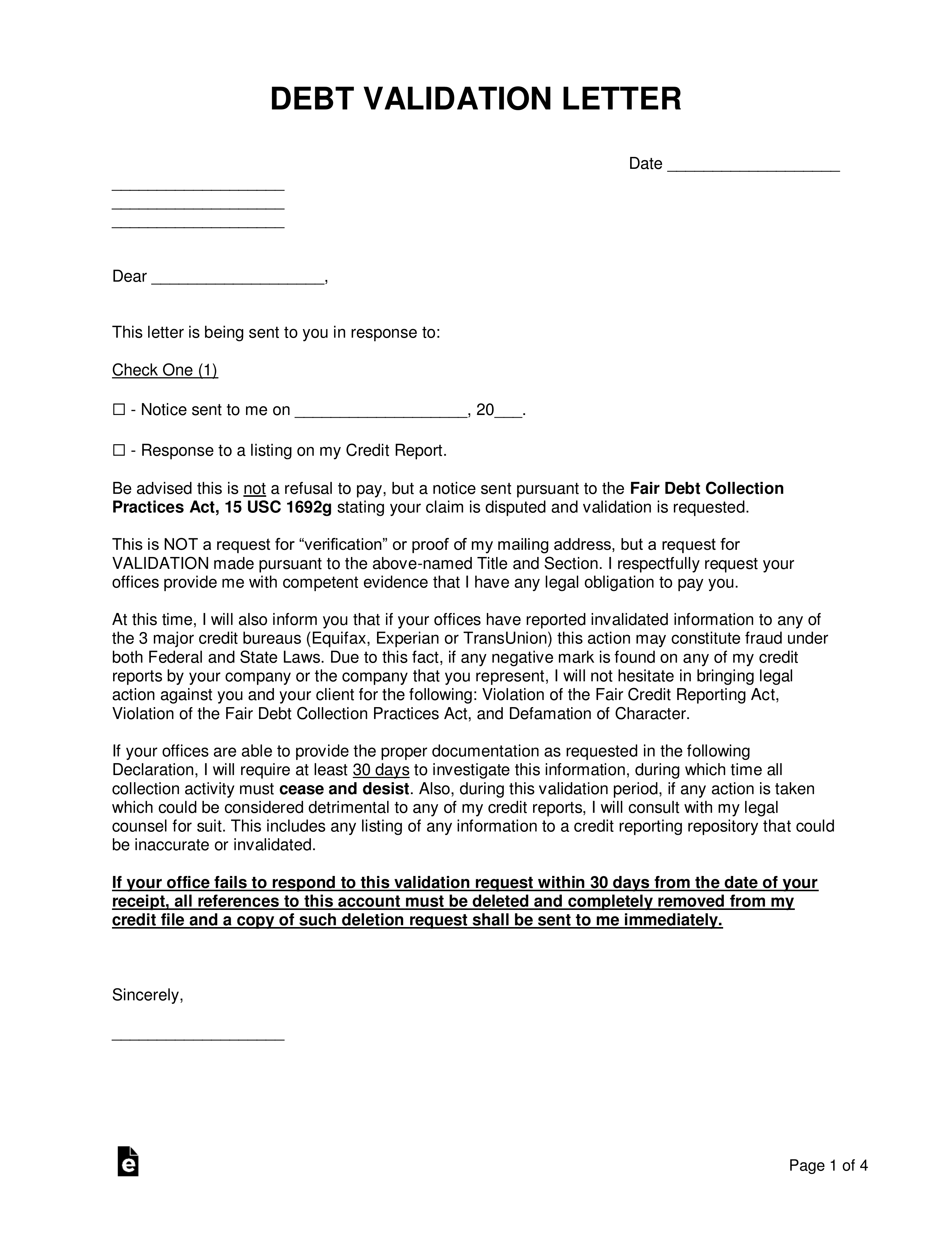
Sample Debt Validation Request Letter
Here's a sample debt validation request letter:
[Your Name]
[Your Address]
[Your City, State, Zip Code]
[Your Phone Number]
[Your Email Address]
[Date]
[Debt Collector's Name]
[Debt Collector's Address]
[Debt Collector's City, State, Zip Code]
Subject: Debt Validation Request - Account Number: [Account Number]
Dear [Debt Collector's Name],
This letter is a formal request for validation of the alleged debt you are attempting to collect. I received your notice on [Date of Collection Notice] regarding account number [Account Number].
Pursuant to my rights under the Fair Debt Collection Practices Act (FDCPA), I am requesting that you provide the following information to validate this debt:
- The name of the original creditor.
- The account number associated with the debt.
- A copy of the original contract or agreement that created the debt.
- Proof that I am responsible for the debt.
- Evidence that you have the legal right to collect this debt.
Please provide this information within 30 days of the date of this letter. If you fail to provide the requested information within this timeframe, I will consider the debt to be invalid, and I will expect you to cease all collection efforts.
Please note that this is not a refusal to pay but a request for verification. I am willing to work with you to resolve this matter once I have received the requested validation.
Sincerely,
[Your Signature]
[Your Typed Name]
What Happens After You Send a Debt Validation Request?
After you send a debt validation request, the debt collector has a limited time to respond. They must either provide the requested validation or cease collection efforts. If they provide validation, review the documentation carefully to ensure it is accurate and complete.
If the debt collector fails to provide validation within the specified timeframe, they may be legally prohibited from continuing collection efforts. In this case, you should send them a cease and desist letter, instructing them to stop contacting you.
When to Seek Professional Help
Navigating debt collection can be complex and stressful. If you are unsure about your rights or need assistance with debt validation, consider seeking professional help. A credit counselor or attorney can provide valuable guidance and support.
Credit Counselors
Credit counselors can help you assess your financial situation, develop a budget, and explore debt management options. They can also help you understand your rights and navigate the debt collection process.
Attorneys
An attorney can provide legal advice and representation if you are facing aggressive debt collection tactics or believe your rights have been violated. They can also help you negotiate with debt collectors and file lawsuits if necessary.

0 Comments