
Understanding the Legal Landscape of Cryptocurrency
The legality of cryptocurrency varies significantly from country to country. Navigating this complex landscape can be challenging, especially given the rapidly evolving nature of digital assets and their regulatory frameworks. This article aims to provide a general overview of how different countries approach cryptocurrency legality, helping you understand the legal status in your region and potential implications for your cryptocurrency activities.
Why Cryptocurrency Legality Varies
Several factors contribute to the diverse regulatory approaches to cryptocurrency globally:
- Economic Concerns: Some countries worry about the potential for cryptocurrency to destabilize their economies, particularly regarding capital flight and tax evasion.
- Financial Stability: Regulators are concerned about the impact of cryptocurrency volatility on financial stability and investor protection.
- Money Laundering and Terrorism Financing: Cryptocurrencies' pseudonymous nature raises concerns about their use in illicit activities.
- Technological Understanding: Regulators' varying levels of understanding of blockchain technology and its implications influence their approach.
- Ideological Differences: Some countries are more open to innovation and technological disruption than others.
How Countries Regulate Cryptocurrency: A Spectrum of Approaches
Countries adopt a range of approaches to cryptocurrency regulation, which can be broadly categorized as follows:
Complete Ban
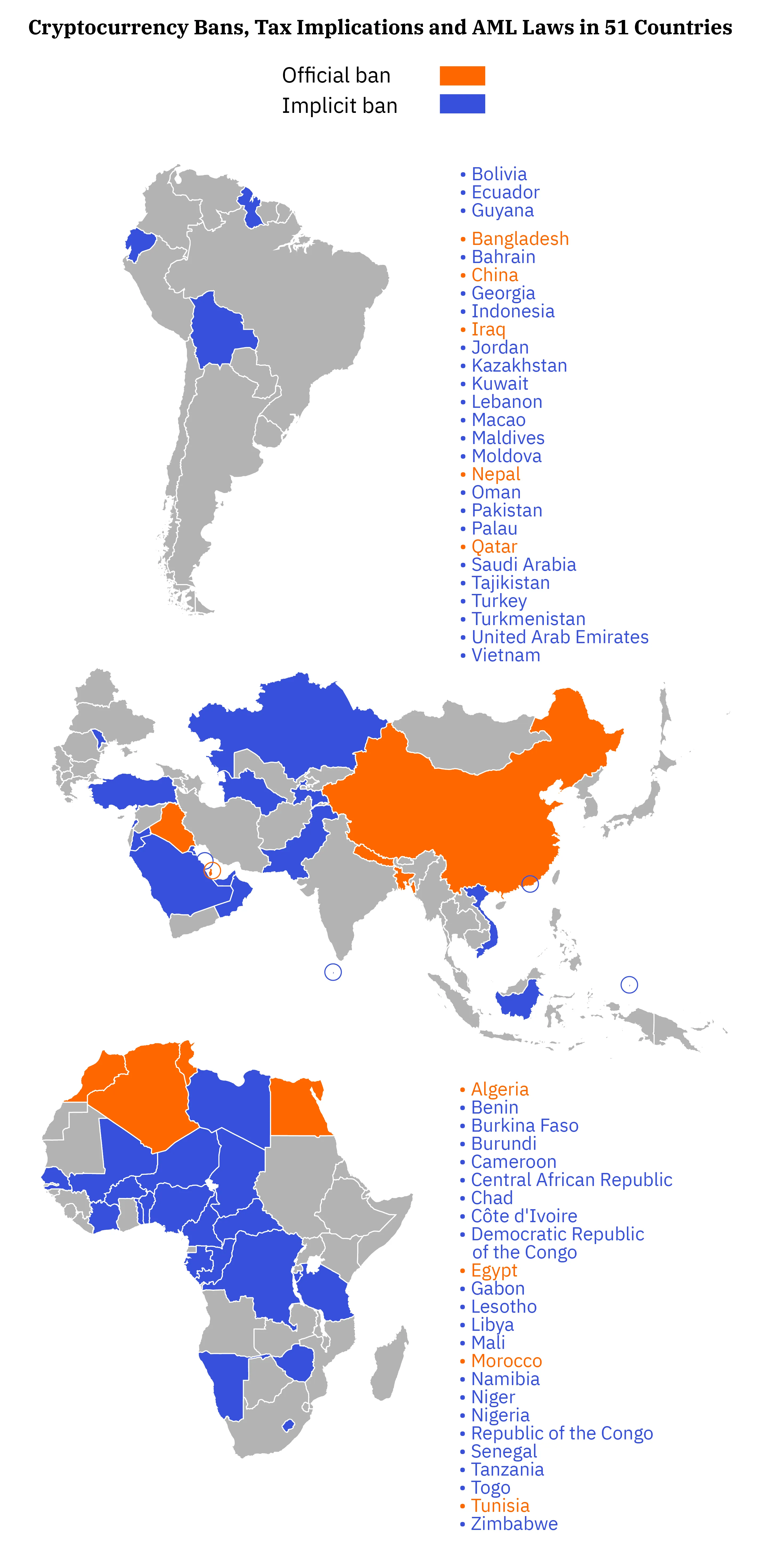
In some countries, cryptocurrency is completely banned. This means that it is illegal to buy, sell, trade, or use cryptocurrencies. These bans are often motivated by concerns about financial stability, money laundering, and loss of control over monetary policy. Examples of countries that have, at some point, implemented or considered strict bans include:
- Algeria
- Bangladesh
- China (with varying degrees of enforcement over time)
- Egypt
- Iraq
- Morocco
- Nepal
- Qatar
- Oman
- Tunisia
It's important to note that even in countries with bans, enforcement can be challenging, and citizens may still attempt to use cryptocurrencies through VPNs and other methods.
Implicit Ban / Restricted Use
Some countries don't explicitly ban cryptocurrency but impose restrictions that effectively limit its use. This can include prohibiting banks and financial institutions from dealing with cryptocurrency exchanges or processing cryptocurrency transactions. This approach aims to discourage cryptocurrency adoption without outright criminalizing it. Examples of countries that have employed this approach include:
- Bolivia
- Ecuador
- Vietnam (restrictions on using cryptocurrency as a payment method)
Regulation as Securities
Many countries classify cryptocurrencies as securities, particularly those that are considered investment contracts or offer rights to future profits. This means that cryptocurrency exchanges and initial coin offerings (ICOs) are subject to securities laws, requiring registration, disclosure, and compliance with investor protection regulations. This approach is common in countries with well-developed financial markets and strong regulatory frameworks. Examples include:
- United States
- Canada
- Singapore
- Switzerland
Within this category, the specific regulations can vary significantly. Some countries have tailored existing securities laws to accommodate cryptocurrencies, while others have created new regulatory frameworks specifically for digital assets.
Regulation as Commodities
Some countries treat cryptocurrencies as commodities, similar to gold or oil. This means that they are subject to commodity trading regulations, which typically focus on market manipulation and consumer protection. This approach is often favored by countries with established commodity markets. Examples include:
- Japan
- Australia
Regulation as Payment Systems
Some countries regulate cryptocurrencies as payment systems, focusing on their use as a medium of exchange. This approach typically involves licensing and oversight of cryptocurrency exchanges and payment processors to ensure compliance with anti-money laundering (AML) and counter-terrorism financing (CTF) regulations. Examples include:
- European Union (through the Markets in Crypto-Assets Regulation - MiCA)
- United Kingdom
Taxation and Reporting Requirements
Regardless of how a country regulates cryptocurrency, most jurisdictions require individuals and businesses to report their cryptocurrency holdings and transactions for tax purposes. Cryptocurrency gains are typically treated as capital gains or ordinary income, depending on the specific circumstances. Failure to comply with tax reporting requirements can result in penalties and legal repercussions. Always consult with a tax professional to understand your tax obligations related to cryptocurrency.
How to Determine the Legality of Cryptocurrency in Your Country
Given the complexity and rapidly changing nature of cryptocurrency regulations, it is essential to stay informed about the legal status in your country. Here are some resources to help you:
Consult Government Resources
Check the websites of your country's central bank, financial regulatory authority, and tax authority for official statements and guidance on cryptocurrency regulation. These resources may provide information on the legal status of cryptocurrency, tax obligations, and any restrictions on its use.
Research Local News and Legal Publications
Stay updated on the latest developments in cryptocurrency regulation by following local news outlets and legal publications. These sources may report on new laws, regulations, and court decisions that affect the legality of cryptocurrency in your country.
Seek Legal Advice
If you are unsure about the legal status of cryptocurrency in your country or have specific questions about its regulation, consult with a qualified legal professional specializing in cryptocurrency law. They can provide tailored advice based on your individual circumstances and help you navigate the legal complexities.
Join Cryptocurrency Communities
Engage with online and offline cryptocurrency communities in your country. These communities can provide valuable insights into the local regulatory landscape and connect you with other individuals and businesses involved in cryptocurrency.
Disclaimer
This article is for informational purposes only and does not constitute legal advice. The legal status of cryptocurrency is constantly evolving, and it is essential to consult with a qualified legal professional to obtain specific advice based on your individual circumstances and jurisdiction.

0 Comments