
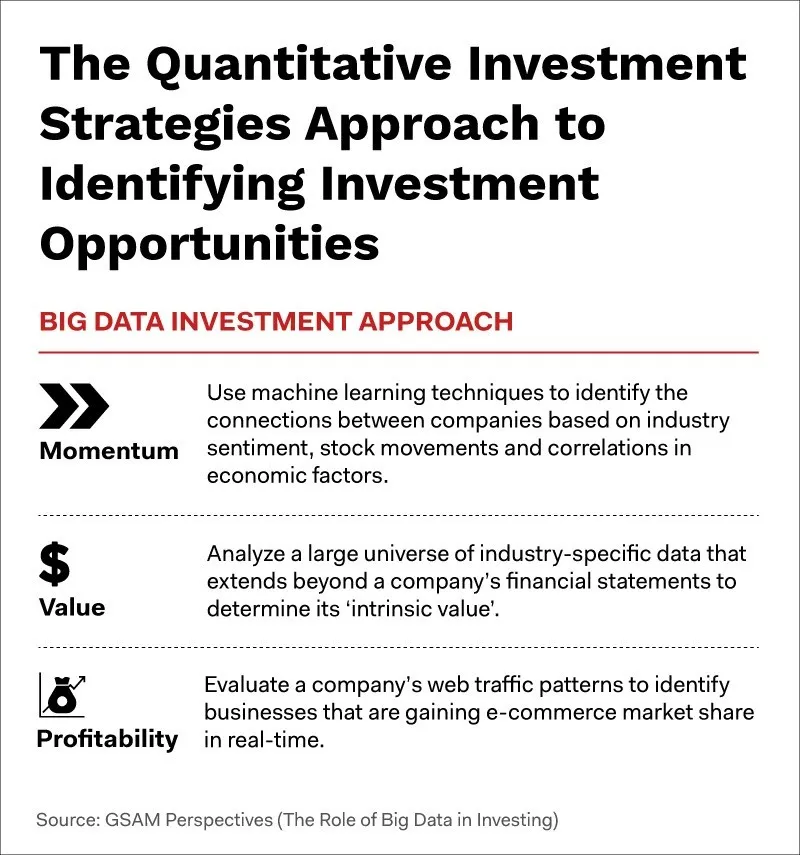
Understanding the Big Data Landscape
Big data is no longer a buzzword; it's a fundamental aspect of modern business. Companies across various industries are leveraging massive datasets to gain valuable insights, improve decision-making, and drive innovation. Investing in big data, therefore, presents a significant opportunity for investors looking for long-term growth. However, navigating this complex landscape requires a well-defined investment strategy.
Why Invest in Big Data?
The potential returns from big data investments are substantial. Here are a few compelling reasons to consider adding big data-related assets to your portfolio:
- Enhanced Decision-Making: Big data analytics provides businesses with data-driven insights, allowing them to make more informed and strategic decisions.
- Improved Efficiency: By analyzing operational data, companies can identify bottlenecks, optimize processes, and increase overall efficiency.
- Personalized Customer Experiences: Big data enables businesses to understand customer preferences and tailor products and services to meet individual needs.
- Competitive Advantage: Companies that effectively leverage big data gain a significant competitive edge in their respective markets.
- Innovation and New Product Development: Big data insights can spark innovation and lead to the development of new products and services that cater to evolving customer demands.
Investment Strategies for Big Data
There are several approaches to investing in big data, each with its own set of risks and rewards. Here are some popular strategies:
1. Investing in Big Data Companies Directly
This involves purchasing stock in publicly traded companies that are directly involved in big data. These companies can be categorized as:
a. Big Data Infrastructure Providers
These companies provide the hardware and software infrastructure necessary to store, process, and analyze massive datasets. Examples include:
- Cloud Computing Providers: Companies like Amazon (AWS), Microsoft (Azure), and Google (GCP) offer cloud-based big data solutions that are scalable and cost-effective.
- Database Management Companies: Companies such as Oracle and SAP provide database management systems that are essential for storing and organizing big data.
- Hardware Manufacturers: Companies like Intel and NVIDIA produce the processors and hardware that power big data infrastructure.
Investing in these companies provides exposure to the overall growth of the big data market, as they benefit from the increasing demand for big data infrastructure.
b. Big Data Analytics Software Companies
These companies develop and market software tools that enable businesses to analyze and visualize big data. Examples include:
- Data Visualization Companies: Companies like Tableau and Qlik provide tools for creating interactive dashboards and visualizations that help users understand complex data.
- Machine Learning and AI Companies: Companies like Palantir and DataRobot offer platforms for building and deploying machine learning models that can extract insights from big data.
- Specialized Analytics Companies: Companies that focus on specific industries, such as healthcare or finance, and provide analytics solutions tailored to their unique needs.
Investing in these companies allows you to capitalize on the growing demand for sophisticated analytics tools.
2. Investing in Companies That Utilize Big Data
This strategy involves investing in companies that are not necessarily big data companies themselves, but heavily rely on big data to improve their operations and gain a competitive advantage. This includes companies across various sectors, such as:
a. E-commerce Companies
Companies like Amazon and Alibaba use big data to personalize customer experiences, optimize pricing, and improve supply chain management.
b. Healthcare Providers
Hospitals and healthcare systems use big data to improve patient outcomes, reduce costs, and personalize treatment plans.
c. Financial Institutions
Banks and insurance companies use big data to detect fraud, assess risk, and personalize financial products.
d. Marketing and Advertising Companies
These companies use big data to target advertising campaigns, measure marketing effectiveness, and understand consumer behavior.
Investing in these companies can provide exposure to the benefits of big data without directly investing in big data companies themselves.
3. Investing in Big Data ETFs and Mutual Funds
Exchange-Traded Funds (ETFs) and mutual funds that focus on big data provide a diversified way to invest in the sector. These funds typically hold a basket of stocks in companies that are involved in big data, either directly or indirectly.
a. Benefits of Investing in Big Data ETFs and Mutual Funds
- Diversification: ETFs and mutual funds provide instant diversification, reducing the risk associated with investing in individual stocks.
- Professional Management: These funds are managed by professional investment managers who have expertise in the big data sector.
- Accessibility: ETFs and mutual funds are easily accessible to individual investors.
b. Examples of Big Data ETFs
Examples of ETFs that focus on big data include the Global X Data & Analytics ETF (DA) and the ROBO Global Robotics and Automation Index ETF (ROBO), which may hold companies that benefit from big data applications.
4. Investing in Venture Capital and Private Equity
This strategy involves investing in private companies that are developing innovative big data technologies or solutions. This is a higher-risk, higher-reward strategy that is typically only accessible to accredited investors.
a. Benefits of Investing in Venture Capital and Private Equity
- High Potential Returns: Private companies have the potential for significant growth and returns.
- Early Access to Innovation: Investing in private companies allows you to gain early access to cutting-edge technologies.
b. Risks of Investing in Venture Capital and Private Equity
- Illiquidity: Private investments are typically illiquid, meaning they cannot be easily bought or sold.
- High Risk: Private companies are often early-stage and have a higher risk of failure.
Key Considerations Before Investing
Before investing in big data, it's crucial to consider the following factors:
1. Understanding the Technology
Take the time to understand the underlying technologies that drive big data. This will help you make more informed investment decisions.
2. Assessing the Competitive Landscape
The big data market is highly competitive. Evaluate the competitive landscape to identify companies that have a sustainable competitive advantage.
3. Evaluating Financial Performance
Analyze the financial performance of potential investments, including revenue growth, profitability, and cash flow.
4. Considering Valuation
Ensure that the valuation of potential investments is reasonable, given their growth prospects and risk profile.
5. Diversifying Your Portfolio
Don't put all your eggs in one basket. Diversify your portfolio across different big data companies and investment strategies.
The Future of Big Data Investing
The big data market is expected to continue to grow rapidly in the coming years, driven by the increasing volume of data and the growing demand for data-driven insights. As technology evolves and new applications emerge, the opportunities for investing in big data will continue to expand. By carefully considering your investment goals and risk tolerance, you can develop a successful investment strategy for capitalizing on the potential of big data.

0 Comments