
Understanding Brokerage Accounts and Investment Strategies
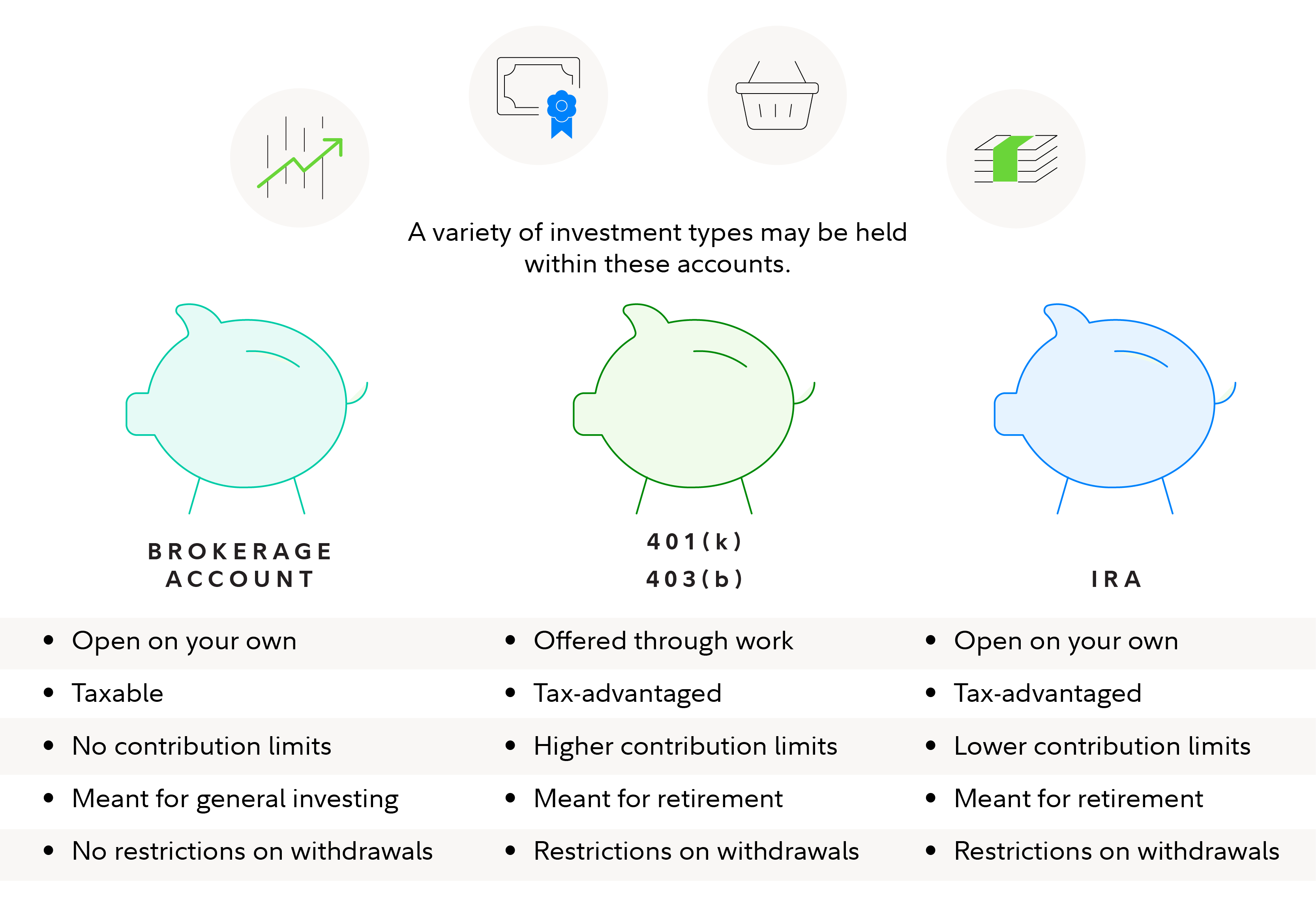
A brokerage account is a type of investment account that allows you to buy and sell assets like stocks, bonds, mutual funds, and exchange-traded funds (ETFs). Choosing the right investment strategies within your brokerage account is crucial for achieving your financial goals. Different strategies cater to varying risk tolerances, time horizons, and investment objectives. This article explores some common and effective investment strategies to help you navigate the world of brokerage accounts.
Defining Your Investment Goals and Risk Tolerance
Before diving into specific investment strategies, it’s essential to define your investment goals and understand your risk tolerance. Ask yourself: What are you investing for? Retirement? A down payment on a house? Your children's education? How long do you have until you need the money? Your answers to these questions will influence the most suitable strategies for you.
Assessing Your Risk Tolerance
Risk tolerance refers to your ability and willingness to withstand potential losses in your investments. Are you comfortable with the possibility of losing a portion of your investment in exchange for potentially higher returns? Or do you prefer a more conservative approach with lower potential returns but also lower risk? A risk assessment questionnaire can help you determine your risk profile, which will guide your investment decisions.
Popular Investment Strategies for Brokerage Accounts
Once you've defined your goals and risk tolerance, you can start exploring various investment strategies. Here are some popular options:
1. Dollar-Cost Averaging
Dollar-cost averaging involves investing a fixed amount of money at regular intervals, regardless of the asset's price. This strategy helps to mitigate the risk of investing a large sum at a market peak. By consistently buying more shares when prices are low and fewer shares when prices are high, you can potentially lower your average cost per share over time. This is a great strategy for long-term investors who are less concerned about short-term market fluctuations.
For example, instead of investing $12,000 in a stock all at once, you could invest $1,000 each month for 12 months. This allows you to take advantage of market volatility and potentially buy more shares at lower prices.
2. Buy and Hold
The buy-and-hold strategy is a long-term investment approach that involves purchasing assets and holding them for an extended period, regardless of short-term market fluctuations. This strategy relies on the belief that the market will generally rise over time. Buy-and-hold investors typically focus on fundamentally strong companies and ETFs with a track record of solid performance. The key to success with this strategy is patience and discipline, resisting the urge to sell during market downturns.
This strategy minimizes transaction costs and taxes, as you're not constantly buying and selling assets. It also allows you to benefit from the power of compounding over time.
3. Value Investing
Value investing involves identifying and investing in undervalued stocks – stocks that are trading below their intrinsic value. Value investors look for companies with strong fundamentals, such as solid earnings, low debt, and a proven track record, but whose stock prices are currently depressed due to temporary market conditions or investor sentiment. This strategy requires thorough research and analysis to identify these undervalued opportunities.
Benjamin Graham, the father of value investing, advocated for buying stocks trading at a significant discount to their net asset value. Warren Buffett is a prominent example of a successful value investor.
4. Growth Investing
Growth investing focuses on investing in companies that are expected to grow at a faster rate than the overall market. These companies typically have high growth potential, innovative products or services, and strong management teams. Growth investors are often willing to pay a premium for these stocks, anticipating significant future returns. However, growth stocks can also be more volatile than value stocks.
Identifying growth stocks requires analyzing a company's revenue growth, earnings growth, and future prospects. Investors often look for companies disrupting existing industries or creating new markets.
5. Dividend Investing
Dividend investing involves investing in companies that pay regular dividends to their shareholders. Dividends are a portion of a company's profits that are distributed to investors. Dividend investors typically seek companies with a history of consistent dividend payments and a strong financial foundation. This strategy provides a steady stream of income and can be particularly attractive to retirees or those seeking passive income.
Dividend investing can also offer a degree of downside protection, as dividend-paying stocks tend to be less volatile than non-dividend-paying stocks. Reinvesting dividends can further enhance returns through compounding.
6. Index Investing
Index investing involves investing in a portfolio that mirrors a specific market index, such as the S&P 500. This is typically done through index funds or ETFs, which hold all or a representative sample of the stocks in the index. Index investing offers broad diversification and low costs, as index funds typically have very low expense ratios. This strategy is a popular choice for beginners and those seeking a simple, passive investment approach.
Index investing eliminates the need to actively select individual stocks, reducing the risk of underperforming the market. It also provides instant diversification across a wide range of companies.
7. Sector Investing
Sector investing focuses on investing in specific sectors of the economy, such as technology, healthcare, or energy. This strategy allows investors to capitalize on specific industry trends or growth opportunities. However, it also carries higher risk, as the performance of a particular sector can be more volatile than the overall market. Thorough research and understanding of the chosen sector are crucial for success.
For example, an investor who believes in the future of electric vehicles might invest in companies in the electric vehicle sector, such as Tesla or lithium mining companies.
The Importance of Diversification and Asset Allocation
No matter which investment strategy you choose, diversification and asset allocation are essential for managing risk and maximizing returns. Diversification involves spreading your investments across a variety of asset classes, sectors, and geographic regions. This helps to reduce the impact of any single investment on your overall portfolio. Asset allocation refers to the process of determining the appropriate mix of assets in your portfolio, based on your risk tolerance, time horizon, and investment goals.
Diversifying Your Portfolio
A well-diversified portfolio might include stocks, bonds, real estate, and commodities. Within each asset class, you can further diversify by investing in different sectors, industries, and geographic regions. For example, you could diversify your stock portfolio by investing in both large-cap and small-cap stocks, as well as stocks from different countries.
Strategic Asset Allocation
Your asset allocation should be tailored to your individual circumstances. A younger investor with a long time horizon might allocate a larger portion of their portfolio to stocks, which offer higher potential returns but also higher risk. An older investor approaching retirement might allocate a larger portion of their portfolio to bonds, which offer lower risk and a more stable income stream.
Rebalancing Your Portfolio
Over time, your asset allocation may drift away from your target allocation due to market fluctuations. Rebalancing involves selling some assets that have performed well and buying assets that have underperformed to bring your portfolio back into alignment with your target allocation. Rebalancing helps to maintain your desired risk level and can also potentially improve your returns over time.
You can rebalance your portfolio periodically, such as annually or semi-annually, or when your asset allocation deviates significantly from your target allocation.

0 Comments