
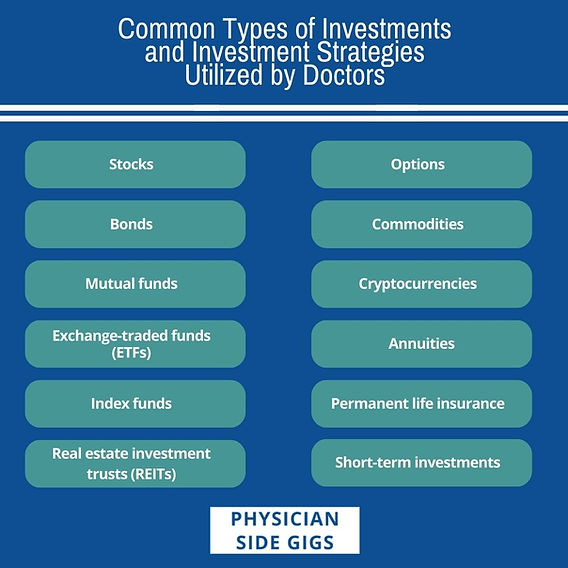
Introduction: Why Doctors Need Tailored Investment Strategies
Doctors dedicate their lives to helping others, often working long hours and facing immense pressure. While their profession is rewarding, it can also leave little time for managing personal finances. This is where strategic investment planning becomes crucial. Unlike many other professions, doctors often have a unique financial profile: high income, significant student loan debt, and a demanding career that leaves limited time for actively managing investments. Therefore, a tailored investment strategy is essential to build a secure financial future.
Understanding Your Financial Landscape
Before diving into specific investment options, it's important for doctors to assess their current financial situation. This includes understanding income, expenses, debts (especially student loans), and existing assets. Creating a detailed budget and tracking expenses is the first step towards gaining control of your finances.
Assessing Risk Tolerance
A key component of any investment strategy is understanding your risk tolerance. Are you comfortable with the possibility of losing money in exchange for potentially higher returns, or do you prefer a more conservative approach that prioritizes capital preservation? Your risk tolerance will significantly influence the types of investments you choose.
Defining Financial Goals
What are your financial goals? Are you saving for retirement, a down payment on a house, your children's education, or early financial independence? Clearly defining your goals will help you create a timeline and determine the amount of money you need to save and invest.
Investment Options for Doctors
Here's an overview of various investment options that may be suitable for doctors, considering their unique financial circumstances:
Retirement Accounts
Retirement accounts offer tax advantages that can significantly boost your savings over time. Doctors should maximize contributions to these accounts whenever possible.
401(k) and 403(b) Plans
If your employer offers a 401(k) or 403(b) plan, take full advantage of it, especially if there's an employer matching contribution. This is essentially free money! Contribute enough to receive the maximum match, and consider contributing the maximum allowable amount if your budget allows. These plans offer a variety of investment options, typically including mutual funds and target-date funds.
Solo 401(k)
Doctors who are self-employed or own their own practice can utilize a Solo 401(k). This allows you to contribute as both the employee and the employer, significantly increasing your potential contributions.
SEP IRA
A Simplified Employee Pension (SEP) IRA is another option for self-employed doctors. It's simpler to set up than a Solo 401(k) but may have lower contribution limits.
Roth IRA
A Roth IRA offers tax-free withdrawals in retirement. While contributions aren't tax-deductible, the growth and withdrawals are completely tax-free, making it a potentially valuable tool for long-term savings. Income limitations apply to Roth IRA contributions.
Taxable Investment Accounts
Once you've maximized your contributions to tax-advantaged retirement accounts, you can consider investing in taxable investment accounts. These accounts offer more flexibility but don't provide the same tax benefits.
Stocks
Investing in stocks (ownership shares in companies) can provide significant long-term growth potential. However, stocks are also more volatile than other asset classes. Diversification is crucial when investing in stocks. Consider investing in a broad market index fund or ETF to spread your risk across a wide range of companies.
Bonds
Bonds are debt instruments issued by corporations or governments. They are generally less volatile than stocks but offer lower potential returns. Bonds can provide stability to your portfolio and help to reduce overall risk.
Mutual Funds and ETFs
Mutual funds and Exchange-Traded Funds (ETFs) offer diversification and professional management. They pool money from multiple investors to invest in a portfolio of stocks, bonds, or other assets. ETFs are typically more tax-efficient and have lower expense ratios than mutual funds.
Real Estate
Real estate can be a valuable investment, providing both income and appreciation potential. However, it also requires significant capital and management. Consider investing in real estate investment trusts (REITs) for a more liquid and diversified approach to real estate investing.
Alternative Investments
Alternative investments, such as private equity, hedge funds, and venture capital, are generally more complex and illiquid than traditional investments. They may offer higher potential returns but also come with higher risks and fees. These investments are typically more suitable for sophisticated investors with a high net worth.
Strategies for Managing Student Loan Debt
Many doctors carry significant student loan debt. Managing this debt effectively is crucial for building a solid financial foundation. Consider exploring options such as income-driven repayment plans and loan refinancing to potentially lower your monthly payments and interest rates.
The Importance of Professional Financial Advice
Given the complexities of investment planning and the unique financial challenges faced by doctors, seeking professional financial advice is highly recommended. A qualified financial advisor can help you develop a personalized investment strategy, manage your debt, and plan for your future.
Finding a Financial Advisor
When choosing a financial advisor, look for someone who is a Certified Financial Planner (CFP) or has other relevant credentials. Make sure they are fee-only, meaning they are compensated solely by fees paid by you, rather than commissions from selling investment products. This helps ensure that their advice is unbiased and in your best interest.
Automating Your Investments
One of the best ways to stay on track with your investment goals is to automate your investments. Set up automatic transfers from your checking account to your investment accounts on a regular basis. This makes saving and investing effortless and helps you avoid the temptation to spend the money elsewhere.

0 Comments