
The Evolving Landscape of Insurance
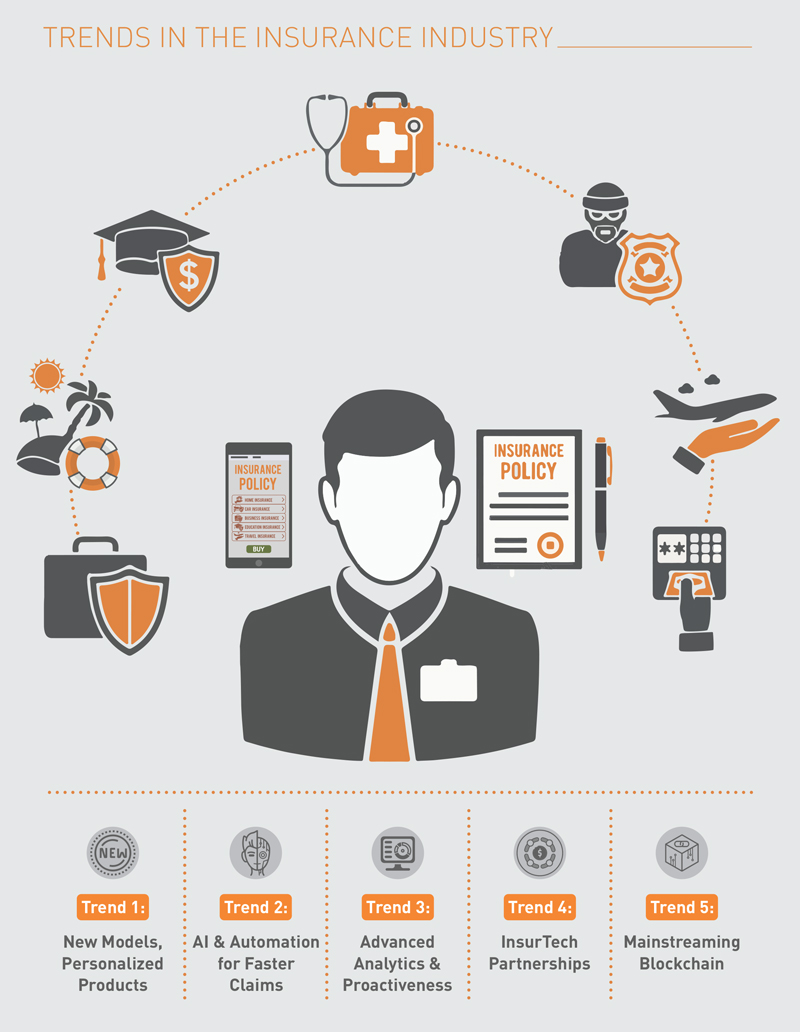
The insurance industry is undergoing a period of significant transformation, driven by technological advancements, shifting customer expectations, and evolving risk landscapes. Understanding these insurance industry trends is crucial for insurers to remain competitive and meet the changing needs of their clients. From personalized policies to AI-powered claims processing, the future of insurance is being shaped by innovation and a focus on customer-centricity.
Digital Transformation and Insurtech
One of the most prominent insurance industry trends is the rapid adoption of digital technologies. Insurtech, the fusion of insurance and technology, is disrupting traditional insurance models and creating new opportunities for growth and efficiency. This includes:
Artificial Intelligence (AI) and Machine Learning (ML)
AI and ML are revolutionizing various aspects of the insurance value chain. From underwriting to claims processing, these technologies are enabling insurers to automate tasks, improve accuracy, and enhance decision-making. For example, AI-powered chatbots can provide instant customer support, while ML algorithms can analyze vast amounts of data to identify fraudulent claims and assess risk more effectively. Personalized pricing based on individual risk profiles is also becoming more common due to AI. This allows insurers to offer more competitive rates and attract a wider customer base.
Internet of Things (IoT)
The IoT is another key driver of change in the insurance industry. Connected devices, such as wearables, smart home sensors, and telematics systems, are generating real-time data that can be used to monitor and manage risk. For instance, insurers can offer discounts to drivers who demonstrate safe driving habits based on data collected from telematics devices. Similarly, smart home sensors can detect water leaks or fires, allowing insurers to proactively mitigate potential losses. This proactive approach not only benefits insurers but also helps customers prevent damage and reduce their overall risk exposure.
Blockchain Technology
Blockchain technology has the potential to transform insurance processes by enhancing transparency, security, and efficiency. Blockchain can be used to create a shared, immutable ledger of insurance policies and claims, reducing the risk of fraud and streamlining claims processing. Smart contracts, which are self-executing contracts stored on the blockchain, can automate claims payouts and ensure that all parties adhere to the terms of the agreement. While blockchain adoption in insurance is still in its early stages, its potential to revolutionize the industry is significant.
Personalization and Customer Experience
Customers are demanding more personalized and seamless insurance experiences. They expect insurers to understand their unique needs and offer tailored products and services that meet those needs. This requires insurers to:
Data-Driven Insights
Insurers need to leverage data analytics to gain a deeper understanding of their customers and their risk profiles. By analyzing customer data, insurers can identify patterns and trends that can be used to personalize pricing, coverage, and service offerings. This includes using demographic data, behavioral data, and claims history to create more accurate risk assessments and offer more relevant products. For example, an insurer might offer a discount on car insurance to a customer who drives a vehicle with advanced safety features or who has a clean driving record.
Omnichannel Communication
Customers expect to be able to interact with insurers through a variety of channels, including online portals, mobile apps, social media, and phone. Insurers need to provide a consistent and seamless experience across all channels, ensuring that customers can easily access information, file claims, and manage their policies. This requires insurers to invest in omnichannel communication platforms and train their employees to provide excellent customer service regardless of the channel being used.
Focus on Transparency
Transparency is crucial for building trust with customers. Insurers need to be upfront about their pricing, coverage, and claims processes. They should also provide clear and concise explanations of policy terms and conditions. This helps customers understand their coverage and avoid misunderstandings or disputes. Transparency also extends to data privacy. Insurers should be transparent about how they collect, use, and protect customer data. They should also give customers control over their data and allow them to opt-out of data collection if they choose.
Evolving Risk Landscape
The risk landscape is constantly evolving, with new and emerging risks posing challenges for insurers. These include:
Climate Change
Climate change is increasing the frequency and severity of extreme weather events, such as hurricanes, floods, and wildfires. This is leading to higher insurance claims and increased uncertainty for insurers. Insurers need to adapt to this changing risk landscape by incorporating climate change considerations into their risk models and pricing strategies. They also need to work with policymakers and communities to promote climate resilience and reduce the impact of extreme weather events. This might involve offering incentives for homeowners to build resilient homes or investing in infrastructure projects that protect communities from flooding.
Cybersecurity Risks
Cyberattacks are becoming increasingly sophisticated and frequent, posing a significant threat to businesses and individuals. Insurers need to offer cybersecurity insurance policies that protect businesses from financial losses resulting from cyberattacks. This includes coverage for data breaches, ransomware attacks, and business interruption. Insurers also need to educate their customers about cybersecurity best practices and help them implement measures to protect themselves from cyber threats. This could involve offering cybersecurity training or providing access to cybersecurity tools and resources.
Pandemic Risks
The COVID-19 pandemic highlighted the importance of pandemic risk management. Insurers need to develop strategies to address future pandemics and other large-scale health crises. This includes offering business interruption insurance policies that cover losses resulting from pandemics and working with governments and public health organizations to develop effective pandemic response plans. It also requires insurers to reassess their risk models and ensure that they are adequately prepared for future pandemics.
Sustainability and ESG Considerations
Environmental, Social, and Governance (ESG) factors are becoming increasingly important for insurers. Investors, customers, and employees are demanding that insurers operate in a sustainable and responsible manner. This includes:
Investing in Sustainable Assets
Insurers are increasingly investing in sustainable assets, such as renewable energy projects and green buildings. This helps to reduce their carbon footprint and support the transition to a low-carbon economy. It also aligns their investments with their values and demonstrates their commitment to sustainability. This might involve investing in solar farms, wind farms, or energy-efficient buildings.
Promoting Social Responsibility
Insurers are also promoting social responsibility by supporting community development initiatives and promoting diversity and inclusion within their workforce. This helps to improve their reputation and attract and retain talent. It also demonstrates their commitment to creating a positive impact on society. This could involve supporting local charities, offering scholarships to underprivileged students, or implementing diversity and inclusion programs within their organization.
Adhering to Ethical Governance Practices
Insurers need to adhere to ethical governance practices to ensure that they are operating in a transparent and accountable manner. This includes having strong risk management frameworks in place and ensuring that their employees are trained in ethical conduct. It also involves being transparent about their governance structures and decision-making processes. This helps to build trust with stakeholders and ensures that the insurer is operating in a responsible and sustainable manner.
The Future of Insurance
The insurance industry is poised for continued transformation in the years to come. Insurers who embrace digital technologies, prioritize customer experience, and adapt to the evolving risk landscape will be best positioned to succeed. By focusing on innovation, sustainability, and ethical governance, insurers can create value for their customers, their shareholders, and society as a whole.

0 Comments