
Understanding the Intertwined Relationship of Geopolitics and Global Trade
Global trade, the exchange of goods, services, and capital across international borders, is a cornerstone of modern economies. It fosters economic growth, encourages innovation, and allows countries to specialize in producing what they do best. However, the smooth flow of global trade is not guaranteed. It is profoundly influenced by geopolitical stability, or rather, the lack thereof. Geopolitical instability, encompassing conflicts, political tensions, and shifts in power dynamics, can significantly disrupt global trade flows, creating ripple effects across the world economy.
The Direct Impact: Disruption of Supply Chains
One of the most immediate and visible impacts of geopolitical instability on global trade is the disruption of supply chains. Modern supply chains are intricate networks that span across multiple countries, relying on the efficient movement of goods and materials. When instability arises in a key region, it can throw these networks into disarray.
Armed Conflicts and Trade Routes
Armed conflicts, whether civil wars or international disputes, can directly impede trade by disrupting transportation routes. Ports may be closed, roads become impassable, and shipping lanes become too dangerous to navigate. The ongoing conflict in Ukraine, for example, has severely impacted global grain exports, as Ukrainian ports, vital for exporting wheat and other agricultural products, have been blockaded or damaged. This disruption has led to food shortages and price increases in many countries that rely on Ukrainian grain.
Political Instability and Border Closures
Political instability can also lead to border closures and trade restrictions. Governments facing internal unrest or external threats may impose stricter border controls, slowing down the movement of goods and increasing transportation costs. Sanctions, often imposed as a tool of foreign policy, can also significantly curtail trade with targeted countries. The sanctions imposed on Russia following its invasion of Ukraine have dramatically reduced trade between Russia and many Western countries, affecting industries ranging from energy to technology.
The Indirect Impact: Increased Uncertainty and Risk Aversion
Beyond the direct disruptions to supply chains, geopolitical instability also has a profound indirect impact on global trade by increasing uncertainty and risk aversion among businesses. When the political landscape is volatile, companies become hesitant to invest in new projects, expand into new markets, or engage in long-term contracts.
Investment Hesitation
Geopolitical risks make businesses less willing to invest in countries or regions perceived as unstable. Foreign direct investment (FDI), a crucial driver of economic growth, often declines in areas experiencing political turmoil. Companies fear that their investments could be seized, nationalized, or destroyed in the event of conflict or political upheaval. This reluctance to invest can stifle economic development and further exacerbate instability.
Increased Trade Costs
Uncertainty also translates into increased trade costs. Businesses may need to pay higher insurance premiums to cover the risks of shipping goods to volatile regions. They may also need to diversify their supply chains, sourcing materials from multiple countries to reduce their reliance on any single source. This diversification can add to production costs and make businesses less competitive.
Currency Fluctuations
Geopolitical events can trigger significant currency fluctuations. When a country faces political or economic turmoil, its currency may depreciate, making its exports cheaper and its imports more expensive. While this can theoretically boost exports in the short term, it can also lead to inflation and instability. Furthermore, currency volatility makes it more difficult for businesses to plan and manage their finances, discouraging international trade.
Specific Examples of Geopolitical Instability and its Impact
Throughout history, numerous examples demonstrate the detrimental effects of geopolitical instability on global trade. Examining these instances provides valuable insights into the complex interplay between politics and economics.
The Cold War
The Cold War, a period of geopolitical tension between the United States and the Soviet Union, significantly shaped global trade patterns. The world was effectively divided into two blocs, with limited trade between them. The US and its allies imposed trade restrictions on the Soviet Union and its satellite states, while the Soviet Union pursued its own trade policies within its bloc. This division hampered global economic integration and limited the benefits of international trade.
The Arab Spring
The Arab Spring, a series of pro-democracy uprisings that swept across the Middle East and North Africa in the early 2010s, caused significant disruptions to regional and global trade. Political instability and armed conflicts in countries like Libya, Syria, and Egypt disrupted oil production, trade routes, and supply chains. The resulting uncertainty led to a decline in investment and economic growth in the region.
The US-China Trade War
The US-China trade war, initiated in 2018, involved the imposition of tariffs on billions of dollars worth of goods traded between the two countries. This trade dispute, driven by geopolitical tensions and concerns about unfair trade practices, has disrupted global supply chains, increased prices for consumers, and slowed down global economic growth. It highlights how trade can be weaponized in geopolitical disputes.
Brexit
Brexit, the United Kingdom's withdrawal from the European Union, has created new trade barriers between the UK and the EU. The imposition of customs checks and regulatory hurdles has increased trade costs and slowed down the movement of goods between the UK and the EU, impacting businesses on both sides. This example demonstrates how even peaceful political decisions can have significant consequences for global trade flows.
Adapting to the New Reality: Strategies for Businesses and Governments
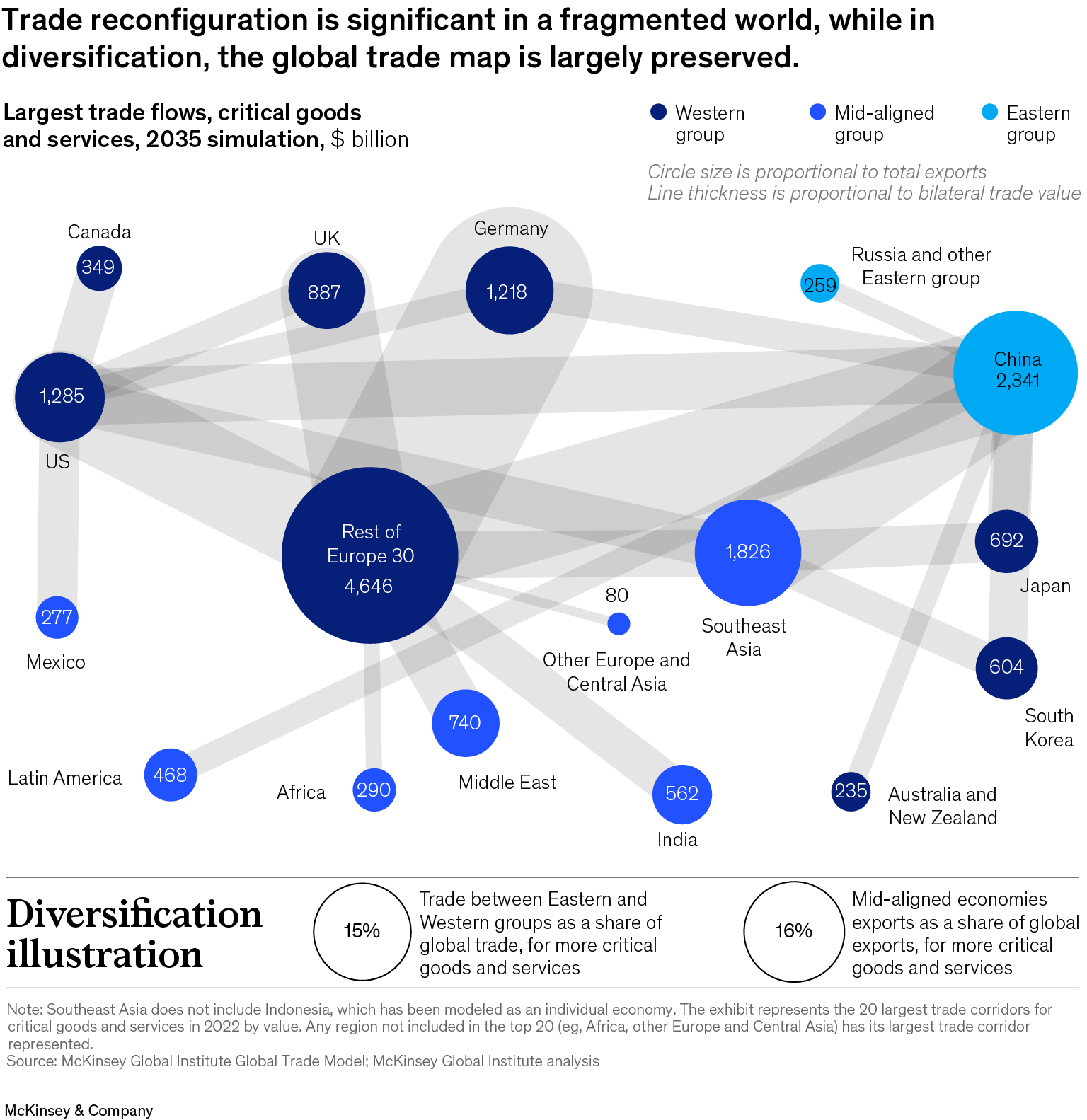
In a world characterized by increasing geopolitical instability, businesses and governments need to adopt strategies to mitigate the risks and ensure the continued flow of global trade. Diversification, resilience, and collaboration are key.
Diversifying Supply Chains
Businesses should diversify their supply chains to reduce their reliance on any single country or region. This involves sourcing materials from multiple suppliers, establishing production facilities in different locations, and developing contingency plans to deal with disruptions. Diversification can make businesses more resilient to geopolitical shocks.
Investing in Resilience
Businesses need to invest in building resilience into their operations. This includes strengthening cybersecurity, developing robust risk management frameworks, and fostering a culture of adaptability. Resilient businesses are better equipped to weather geopolitical storms and maintain their competitiveness.
Promoting International Cooperation
Governments should work together to promote international cooperation and reduce geopolitical tensions. This includes strengthening international institutions, resolving trade disputes through dialogue, and fostering a rules-based international order. International cooperation is essential for maintaining a stable and predictable global trading environment.
Supporting Developing Countries
Developed countries should provide support to developing countries to help them build stronger economies and institutions. This includes providing aid, promoting trade, and investing in infrastructure. Stronger developing countries are less likely to be sources of instability and more likely to contribute to global economic growth.

0 Comments