
The Looming Shadow: Understanding the Student Loan Debt Crisis
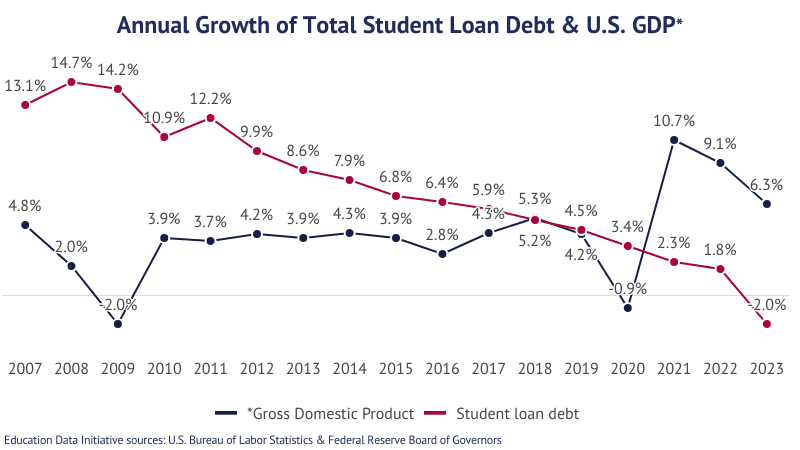
The student loan debt crisis in the United States is a complex and multifaceted issue with far-reaching economic consequences. It's not just a personal financial burden for millions of Americans; it's a significant drag on the national economy, impacting everything from homeownership rates to consumer spending. Understanding the scope and potential ramifications of this crisis is crucial for policymakers, economists, and individuals alike.
Impact on Consumer Spending
One of the most direct economic consequences of the student loan debt crisis is its impact on consumer spending. Millions of borrowers are burdened with monthly loan payments that can significantly limit their disposable income. This reduced spending power translates into less money flowing into the economy, affecting various sectors from retail to entertainment.
Delayed Purchases and Economic Growth
Young adults, typically a driving force behind consumer spending, are particularly affected. Saddled with debt, they are often forced to delay major purchases like cars, homes, and other durable goods. This delay not only impacts the industries that rely on these purchases but also hinders overall economic growth. A generation struggling to make ends meet due to student loan debt is a generation less able to contribute to a thriving economy.
The Ripple Effect: Reduced Demand Across Industries
The reduced consumer spending caused by student loan debt creates a ripple effect throughout the economy. Businesses experience lower demand, leading to reduced production, slower growth, and potentially even job losses. This creates a negative feedback loop, where economic hardship further exacerbates the debt crisis.
Impact on Homeownership
Homeownership is a cornerstone of the American dream and a significant driver of wealth creation. However, the student loan debt crisis is making it increasingly difficult for young adults to achieve this milestone. Lenders are often hesitant to approve mortgages for individuals with substantial student loan debt, even if they have good credit scores and stable employment.
Increased Debt-to-Income Ratios
Student loan debt significantly increases borrowers' debt-to-income (DTI) ratios, a key metric used by lenders to assess creditworthiness. A high DTI ratio indicates that a large portion of an individual's income is already committed to debt payments, making them a riskier borrower. This can lead to mortgage denials or higher interest rates, further hindering the ability to purchase a home.
Delayed Entry into the Housing Market
The delay in homeownership caused by student loan debt has broader economic implications. It reduces demand in the housing market, potentially dampening property values and slowing down construction activity. Additionally, it deprives young adults of the opportunity to build equity and accumulate wealth through homeownership, perpetuating a cycle of financial instability.
Impact on Small Business Formation
Entrepreneurship is a vital engine of economic growth, creating jobs and fostering innovation. However, the student loan debt crisis is discouraging many young adults from starting their own businesses. The financial burden of student loan payments makes it difficult to secure funding, manage cash flow, and take the risks associated with launching a new venture.
Reduced Access to Capital
Securing funding is often the biggest hurdle for aspiring entrepreneurs. Student loan debt can significantly reduce access to capital by limiting personal savings and making it more difficult to obtain loans from banks or investors. Lenders may be hesitant to provide funding to individuals with high debt burdens, fearing that they will be unable to repay their loans.
Risk Aversion and Opportunity Cost
The pressure to repay student loans can also make young adults more risk-averse, discouraging them from pursuing entrepreneurial opportunities. The potential for failure, coupled with the obligation to make loan payments, can be a significant deterrent. Furthermore, the opportunity cost of starting a business, which often involves forgoing a stable income, can be too high for those burdened with student loan debt.
Impact on Retirement Savings
Saving for retirement is crucial for long-term financial security. However, the student loan debt crisis is making it more difficult for young adults to save adequately for their future. Monthly loan payments can significantly reduce the amount of money available for retirement contributions, potentially jeopardizing their ability to retire comfortably.
Reduced Contributions to Retirement Accounts
The less disposable income available due to student loan debt directly impacts the amount individuals can contribute to retirement accounts like 401(k)s and IRAs. This reduced saving can compound over time, leading to a significant shortfall in retirement savings. Starting to save later in life also means missing out on the benefits of compounding interest, further exacerbating the problem.
Increased Reliance on Social Security
If young adults are unable to save adequately for retirement due to student loan debt, they may become more reliant on Social Security benefits in their later years. This could strain the Social Security system, which is already facing significant funding challenges. A generation struggling to save for retirement due to student loan debt could place an additional burden on future taxpayers.
Impact on Labor Market Mobility
The student loan debt crisis can also affect labor market mobility, limiting individuals' ability to pursue career opportunities that may require relocation or further education. The pressure to repay student loans can force individuals to take jobs that may not be the best fit for their skills or interests, simply to ensure they can make their monthly payments.
Geographic Constraints
Student loan debt can create geographic constraints, limiting individuals' ability to move to areas with better job opportunities or a lower cost of living. The fear of losing income or incurring additional expenses associated with relocation can be a significant deterrent, even if it means sacrificing career advancement or personal fulfillment.
Reduced Investment in Further Education
The burden of existing student loan debt can also discourage individuals from pursuing further education or training that could enhance their skills and career prospects. The prospect of taking on additional debt can be daunting, even if it leads to a higher-paying job in the long run. This can limit career advancement opportunities and hinder the overall productivity of the workforce.
The Broader Economic Consequences
Beyond the individual impacts, the student loan debt crisis has broader economic consequences that affect the entire nation. These include reduced economic growth, increased income inequality, and potential instability in the financial system.
Reduced Economic Growth
As discussed earlier, the reduced consumer spending, delayed homeownership, and decreased entrepreneurship caused by student loan debt all contribute to slower economic growth. A generation burdened with debt is a generation less able to invest in the economy and contribute to its overall prosperity.
Increased Income Inequality
The student loan debt crisis disproportionately affects low-income and minority students, exacerbating existing income inequalities. These students often face greater challenges in repaying their loans, leading to higher default rates and long-term financial hardship. This perpetuates a cycle of poverty and limits opportunities for upward mobility.
Potential Financial Instability
While less immediate, some economists worry about the potential for the student loan debt crisis to contribute to financial instability. If a significant number of borrowers default on their loans, it could trigger a cascade of negative consequences for lenders and the broader financial system, although this is a complex and debated topic.

0 Comments