
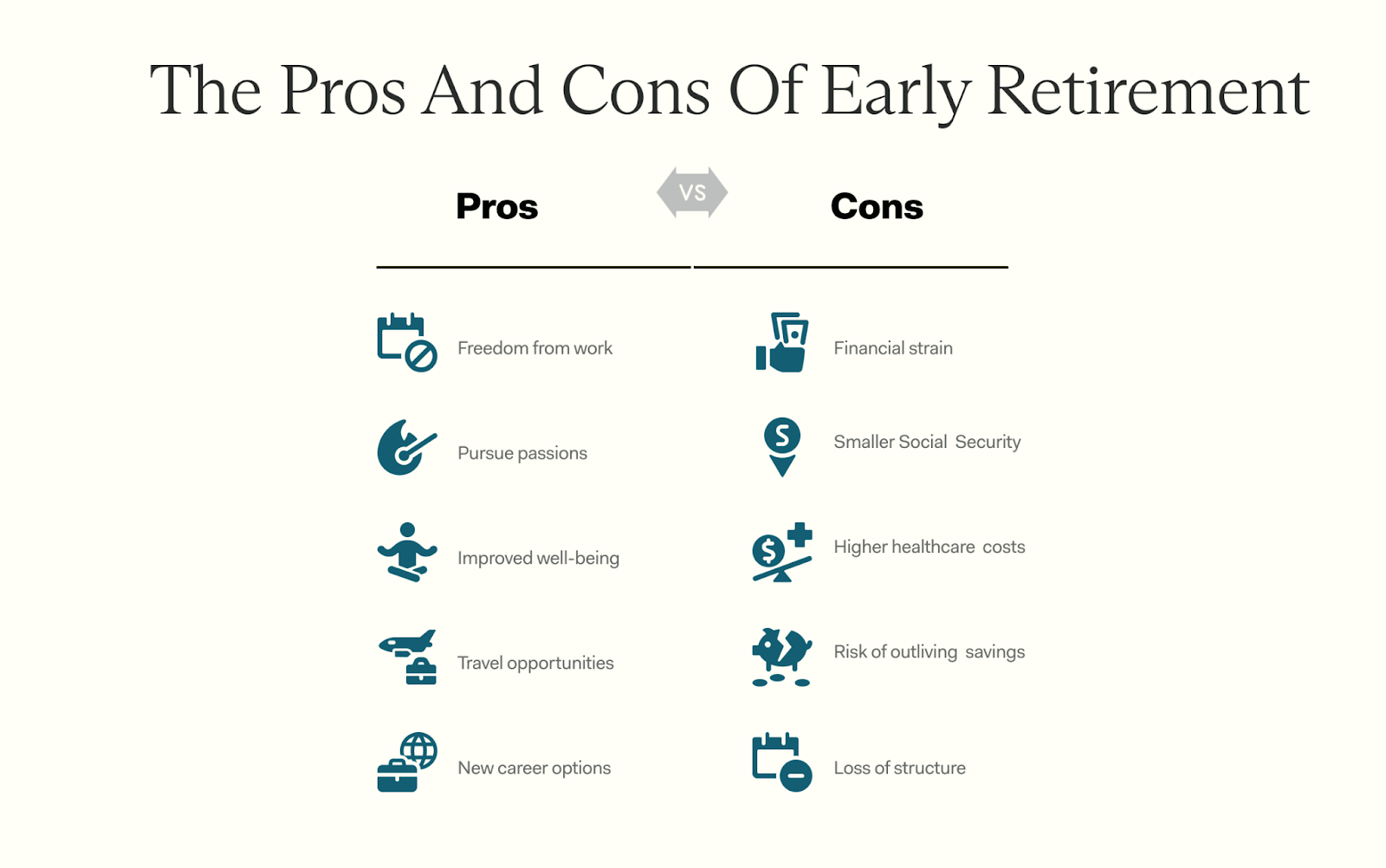
Is Early Retirement and Entrepreneurship Right for You?
The idea of early retirement, especially when coupled with starting your own business, can be incredibly appealing. Trading the 9-to-5 grind for a life of passion, purpose, and financial control is a dream for many. However, it's crucial to approach this decision with careful consideration and realistic expectations. Early retirement starting a business is not a one-size-fits-all solution, and it requires thorough planning and self-assessment.
Before taking the plunge, ask yourself some fundamental questions. Are you genuinely ready to leave your current career behind? Do you have a viable business idea with a strong market potential? Are you financially prepared to support yourself and your business during the initial stages? Answering these questions honestly will help you determine if this path is the right fit for you.
Financial Considerations for Early Retirement and Business Ownership
Perhaps the most critical aspect of planning for early retirement and starting a business is your financial situation. You'll need a solid understanding of your savings, investments, and potential income streams. Consider the following factors:
Calculating Your Retirement Needs
Estimate your living expenses in retirement. Factor in housing, healthcare, food, transportation, and leisure activities. Don't forget to account for inflation, which can erode the purchasing power of your savings over time. Online retirement calculators can be helpful, but it's wise to consult with a financial advisor for personalized guidance.
Funding Your Business Venture
Starting a business requires capital. Determine how much money you'll need to launch and operate your business, including startup costs, marketing expenses, and ongoing operational costs. Explore different funding options, such as personal savings, small business loans, grants, or angel investors. Be realistic about the potential for revenue generation and profitability. It's often wise to start small and scale up as your business grows.
Managing Cash Flow
Cash flow is the lifeblood of any business. Ensure you have a plan for managing your cash flow effectively. Track your income and expenses carefully, and develop a budget that allows you to cover your costs and reinvest in your business. It's also wise to have a financial cushion to weather unexpected expenses or periods of low revenue.
Choosing the Right Business for Your Early Retirement
Selecting the right business is crucial for success in early retirement. Consider your skills, interests, and passions. What are you good at? What do you enjoy doing? What problems can you solve for others? Starting a business that aligns with your strengths and interests will increase your chances of success and make the journey more enjoyable.
Leveraging Your Existing Skills and Experience
Consider how you can leverage your existing skills and experience in your new business. Your years of experience in your previous career may provide valuable insights and expertise that you can apply to a different industry or market. For example, if you were a project manager, you could offer project management consulting services to small businesses.
Exploring New Opportunities and Passions
Early retirement is also an opportunity to explore new opportunities and passions. Perhaps you've always dreamed of opening a bakery, starting a blog, or creating handcrafted goods. Research different business ideas and identify opportunities that align with your interests and skills. Don't be afraid to try something new, but be sure to do your homework and assess the market potential.
Considering Low-Investment Business Ideas
If you're concerned about financial risk, consider starting a low-investment business. There are many opportunities to start a business with minimal upfront costs, such as freelancing, consulting, online coaching, or selling products online. These types of businesses can be a great way to test the waters and generate income without risking a significant amount of capital.
Planning and Preparation for Your Business Launch
Once you've chosen your business idea, it's time to develop a comprehensive business plan. A well-written business plan will serve as a roadmap for your business and help you stay on track. It will also be essential if you need to secure funding from lenders or investors.
Developing a Business Plan
Your business plan should include a detailed description of your business, your target market, your products or services, your marketing strategy, your financial projections, and your management team. It should also identify your competitive advantages and outline your plans for growth and expansion. Consider seeking guidance from a business mentor or consultant to help you develop a solid business plan.
Building Your Network
Networking is essential for success in any business. Attend industry events, join online communities, and connect with other entrepreneurs. Building relationships with potential customers, suppliers, and mentors can provide valuable insights and support. Don't be afraid to ask for help and advice from others who have been through the process of starting a business.
Legal and Regulatory Considerations
Be sure to comply with all legal and regulatory requirements for your business. This may include registering your business, obtaining necessary licenses and permits, and complying with tax laws. Consult with an attorney or accountant to ensure you're meeting all legal and regulatory obligations.
Embracing the Entrepreneurial Mindset
Starting a business in early retirement requires a different mindset than working for someone else. You'll need to be self-motivated, disciplined, and resilient. Be prepared to work hard, learn from your mistakes, and adapt to changing circumstances. The entrepreneurial journey can be challenging, but it can also be incredibly rewarding.
Staying Motivated and Focused
It's important to stay motivated and focused on your goals. Set realistic goals, celebrate your successes, and don't get discouraged by setbacks. Surround yourself with positive people who support your dreams. Remember why you started your business in the first place, and keep your vision in mind.
Continuous Learning and Improvement
The business world is constantly evolving, so it's essential to be a lifelong learner. Stay up-to-date on industry trends, attend workshops and seminars, and read books and articles on business management. Be open to new ideas and willing to adapt your strategies as needed.
Balancing Work and Life
One of the benefits of early retirement is the opportunity to have more control over your time. Be sure to prioritize your health and well-being. Set boundaries between work and personal life, and make time for activities you enjoy. Remember that early retirement is about creating a fulfilling and balanced life, not just working all the time.

0 Comments