
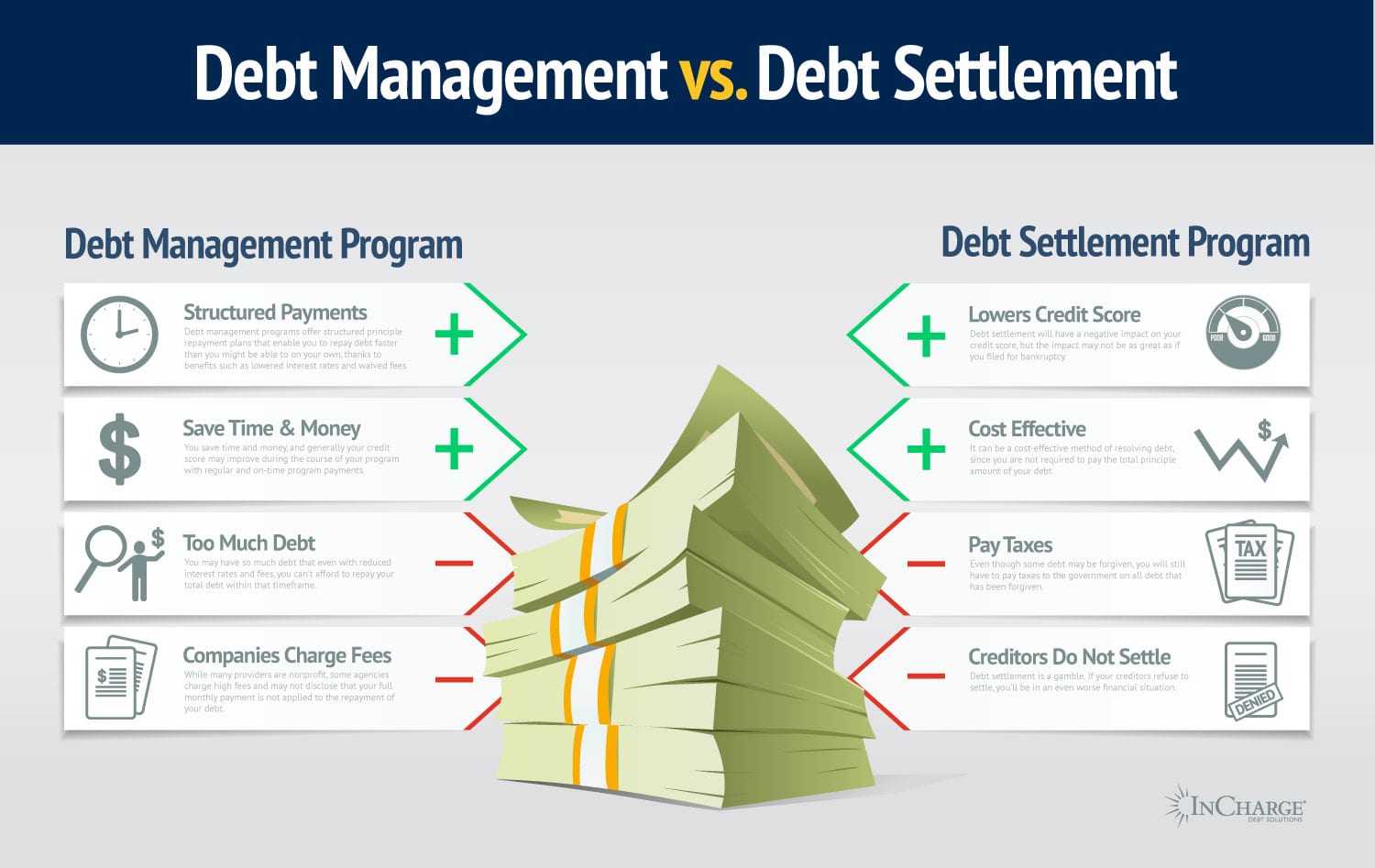
Understanding Your Debt Relief Options: Debt Management Plan vs. Debt Settlement
Facing overwhelming debt can be a stressful and daunting experience. Fortunately, there are several debt relief options available to help you regain control of your finances. Two common options are debt management plans (DMPs) and debt settlement. While both aim to reduce your debt burden, they work in different ways and have distinct advantages and disadvantages. Understanding these differences is crucial to choosing the right path for your individual circumstances. This article will explore the pros and cons of each approach to help you make an informed decision about your financial future.
What is a Debt Management Plan (DMP)?
A debt management plan (DMP) is a structured program offered by credit counseling agencies. It's designed to help you repay your unsecured debts, such as credit card debt, in a more manageable way. It typically involves working with a credit counselor to create a budget and negotiate with your creditors to lower your interest rates and monthly payments. You then make a single monthly payment to the credit counseling agency, which distributes the funds to your creditors according to the agreed-upon terms.
Pros of a Debt Management Plan
Lower Interest Rates: One of the biggest advantages of a DMP is the potential to lower your interest rates. Credit counseling agencies often have established relationships with creditors and can negotiate better terms on your behalf. This can significantly reduce the total amount of interest you pay over time, allowing you to pay off your debt faster.
Simplified Payments: Instead of juggling multiple payments to different creditors each month, you make a single payment to the credit counseling agency. This simplifies your budgeting and reduces the risk of missed payments.
Budgeting Assistance: Credit counselors can help you create a realistic budget and identify areas where you can cut expenses. This can improve your overall financial health and help you stay on track with your debt repayment plan.
Credit Score Protection: Unlike debt settlement, a DMP generally doesn't negatively impact your credit score. As long as you make your payments on time through the DMP, your credit score may even improve over time as you reduce your debt balance. However, you will typically need to close the credit accounts included in the plan, which could temporarily lower your available credit and potentially impact your credit utilization ratio. It is important to discuss potential credit score impacts with your counselor.
Creditor Relationships: Working through a reputable credit counseling agency can maintain or even improve your relationship with your creditors. They will appreciate that you are taking proactive steps to address your debt and are committed to repayment.
Cons of a Debt Management Plan
Requires Discipline: A DMP requires discipline and commitment. You need to stick to your budget and make your monthly payments on time. If you miss payments, you could jeopardize the agreement with your creditors and potentially damage your credit score.
May Require Account Closures: As mentioned, creditors often require you to close the credit accounts included in the DMP. This can limit your access to credit in the future, although this can be a positive thing if your spending is a problem.
Fees: Credit counseling agencies typically charge fees for their services. While these fees are usually reasonable, they can add to your overall debt burden. Be sure to inquire about the fees upfront and compare them to the potential benefits of the plan. Look for non-profit agencies that offer lower fees or even free services.
Not a Quick Fix: A DMP is not a quick fix for debt problems. It can take several years to complete the plan and pay off your debt. You need to be patient and committed to the process.
What is Debt Settlement?
Debt settlement involves negotiating with your creditors to pay a lump sum that is less than the total amount you owe. This can be a viable option if you are facing significant financial hardship and are unable to make your minimum payments. Debt settlement companies typically negotiate with your creditors on your behalf, aiming to reduce your principal balance by a significant amount. However, this process can have significant negative consequences for your credit score.
Pros of Debt Settlement
Potential for Significant Savings: The biggest advantage of debt settlement is the potential to save a significant amount of money. If your creditors agree to settle your debts for less than you owe, you can reduce your total debt burden considerably.
Faster Debt Relief (Potentially): Debt settlement can potentially provide faster debt relief compared to a DMP, especially if you can accumulate the funds needed for the settlement offer relatively quickly. However, this depends on your individual circumstances and the willingness of your creditors to negotiate.
Cons of Debt Settlement
Negative Impact on Credit Score: Debt settlement has a significant negative impact on your credit score. When you stop making payments on your debts to accumulate funds for settlement, your creditors will report delinquent payments to the credit bureaus. This can severely damage your credit score and make it difficult to obtain credit in the future. Settled debts are also noted on your credit report, further impacting your score. The negative impact can last for several years.
Creditors May Not Agree: There is no guarantee that your creditors will agree to settle your debts. They may prefer to pursue other collection methods, such as lawsuits or wage garnishment. They are under no obligation to accept a settlement offer.
Collection Calls and Lawsuits: While you are negotiating with your creditors, they may continue to contact you for payment. They may also file lawsuits against you to collect the debt. This can be a stressful and overwhelming experience.
Tax Implications: The amount of debt that is forgiven through debt settlement may be considered taxable income by the IRS. You may receive a 1099-C form from your creditors and be required to report the forgiven debt on your tax return. Consult with a tax professional to understand the potential tax implications of debt settlement.
Fees: Debt settlement companies typically charge fees for their services. These fees can be a percentage of the total debt you settle, which can be substantial. Be sure to understand the fee structure before enrolling in a debt settlement program.
Risk of Failure: Debt settlement is not always successful. If you are unable to accumulate the funds needed for the settlement offer or if your creditors refuse to negotiate, you may end up in a worse financial situation than when you started.
Debt Management Plan vs. Debt Settlement: Which is Right for You?
The best debt relief option for you depends on your individual circumstances, including your debt level, income, credit score, and financial goals. Here's a summary to help you decide:
* Choose a Debt Management Plan if: You have a steady income, can afford to make monthly payments, and want to protect your credit score. A DMP is a good option if you want to reduce your interest rates and simplify your payments while maintaining a good credit rating. * Choose Debt Settlement if: You are facing significant financial hardship, are unable to make your minimum payments, and are willing to accept the negative consequences on your credit score. Debt settlement may be an option if you have a lump sum of money available and your creditors are willing to negotiate. You are comfortable with the risk of lawsuits and collection calls, and are aware of the potential tax implications.It is highly recommended to consult with a qualified financial advisor or credit counselor to discuss your options and determine the best course of action for your specific situation. They can provide personalized advice and guidance to help you make informed decisions about your financial future. They can also help you understand the long-term implications of each option and avoid potential pitfalls.

0 Comments