
Understanding the Impact of Trade Wars on Global Supply Chains
Trade wars, characterized by escalating tariffs and retaliatory measures between countries, have a profound impact on global supply chains. These complex networks, which involve the production and distribution of goods across multiple countries, are particularly vulnerable to disruptions caused by trade barriers. Understanding the nature and consequences of these disruptions is crucial for businesses and policymakers alike.
The Mechanics of Trade War Impact
Trade wars primarily affect supply chains through several key mechanisms:
Increased Costs Due to Tariffs
The most immediate impact of a trade war is the imposition of tariffs on imported goods. These tariffs increase the cost of imported components and raw materials, directly impacting the production costs for businesses that rely on these inputs. Companies may absorb these costs, pass them on to consumers in the form of higher prices, or attempt to find alternative, potentially less efficient or lower quality, suppliers.
Disruptions to Established Trade Routes
Trade wars can disrupt established trade routes and relationships. Companies may be forced to reroute their supply chains to avoid tariffs, which can lead to increased transportation costs, delays, and logistical challenges. This disruption can be particularly damaging for businesses that have invested heavily in infrastructure and relationships along specific trade routes.
Uncertainty and Reduced Investment
The uncertainty created by trade wars can discourage investment in global supply chains. Businesses may be hesitant to invest in new facilities, equipment, or partnerships when the future of trade relations is unclear. This reduced investment can stifle innovation and long-term growth.
Shifting Production Locations
In response to tariffs and trade barriers, companies may choose to shift their production locations to countries that are not subject to the same trade restrictions. This process, known as reshoring, nearshoring, or friend-shoring, can be costly and time-consuming, requiring significant investment in new facilities and infrastructure. Moreover, it can lead to job losses in countries that are subject to tariffs.
Specific Examples of Trade War Impacts
The effects of trade wars can be observed in various sectors and regions around the world.
The US-China Trade War
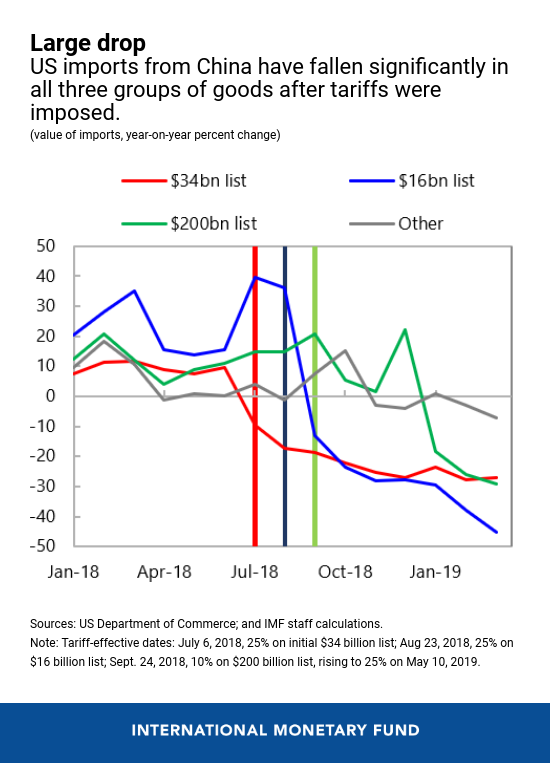
The trade war between the United States and China, which began in 2018, provides a prime example of the impact of trade wars on global supply chains. The imposition of tariffs on hundreds of billions of dollars' worth of goods traded between the two countries led to significant disruptions in numerous industries. For example, the agricultural sector in the US was heavily affected by retaliatory tariffs imposed by China on agricultural products. Similarly, manufacturers in both countries faced increased costs and logistical challenges due to the tariffs on imported components and materials.
Impact on the Technology Sector
The technology sector is particularly vulnerable to trade war disruptions due to its reliance on complex global supply chains. Many technology companies rely on components and materials sourced from multiple countries, including China. Tariffs on these components can significantly increase production costs and disrupt the flow of goods. Furthermore, restrictions on the export of certain technologies can hinder innovation and limit access to key markets.
Impact on the Automotive Industry
The automotive industry, with its intricate global supply chains, also experiences significant impact from trade wars. Automobiles are made of thousands of parts, sourced from numerous countries. Tariffs on these parts can increase the cost of production and reduce the competitiveness of automotive manufacturers. The USMCA (United States-Mexico-Canada Agreement) was designed, in part, to address the complexities of automotive supply chains in North America, but even this agreement has faced challenges in the context of broader trade tensions.
Strategies for Mitigating Trade War Risks
Businesses can take several steps to mitigate the risks associated with trade wars:
Diversifying Supply Chains
One of the most effective strategies is to diversify supply chains by sourcing components and materials from multiple countries. This reduces reliance on any single country and makes the supply chain more resilient to disruptions. Diversification can be a costly and complex process, but it can provide significant benefits in the long run.
Negotiating with Suppliers
Businesses can negotiate with their suppliers to share the burden of tariffs. This may involve renegotiating contracts, finding alternative suppliers, or working with suppliers to improve efficiency and reduce costs.
Investing in Technology and Automation
Investing in technology and automation can help businesses reduce their reliance on labor and improve efficiency, making them more competitive in the face of tariffs. Automation can also help businesses reshore production to countries with higher labor costs, reducing their exposure to trade war risks.
Seeking Government Support
Businesses can seek government support in the form of subsidies, tax breaks, or trade assistance programs. Governments may also be willing to negotiate trade agreements or provide other forms of relief to businesses that are affected by trade wars.
The Long-Term Implications
The long-term implications of trade wars on global supply chains are significant. They include:
Increased Regionalization of Supply Chains
Trade wars may accelerate the trend towards regionalization of supply chains, with businesses increasingly focusing on sourcing components and materials from countries within their own region. This can lead to increased regional trade and investment, but it may also reduce global trade and investment.
Greater Emphasis on Resilience
Trade wars highlight the importance of supply chain resilience. Businesses are likely to place a greater emphasis on building resilient supply chains that can withstand disruptions. This may involve investing in redundant suppliers, holding larger inventories, and developing contingency plans.
Geopolitical Shifts
Trade wars can contribute to geopolitical shifts by altering trade relationships and power dynamics between countries. They can also lead to increased tensions and instability in the international system.
Technological Innovation
The need to adapt to trade war challenges can spur technological innovation in areas such as supply chain management, logistics, and automation. Companies are incentivized to find new and more efficient ways to operate in a disrupted trade environment.

0 Comments