
Understanding Credit Scores: VantageScore vs. FICO
When it comes to assessing your creditworthiness, two names often come up: VantageScore and FICO. Both are credit scoring models widely used by lenders to evaluate the risk of lending money to consumers. While they share the common goal of predicting credit risk, they differ in their methodologies, data sources, and other key aspects. Understanding these differences is crucial for managing your credit effectively and achieving your financial goals. This article will delve into a detailed comparison of VantageScore and FICO score, highlighting their similarities and differences to help you navigate the world of credit scoring.
What are Credit Scores and Why are They Important?
Before diving into the specifics of VantageScore and FICO, it's important to understand the fundamental role of credit scores. A credit score is a three-digit number that summarizes your credit history and predicts your likelihood of repaying debt. Lenders use this score to determine whether to approve your loan application and at what interest rate. A higher credit score generally translates to better loan terms, lower interest rates, and greater access to credit products. Credit scores also impact other aspects of your life, such as renting an apartment, securing insurance, and even getting a job.
FICO Score: The Industry Standard
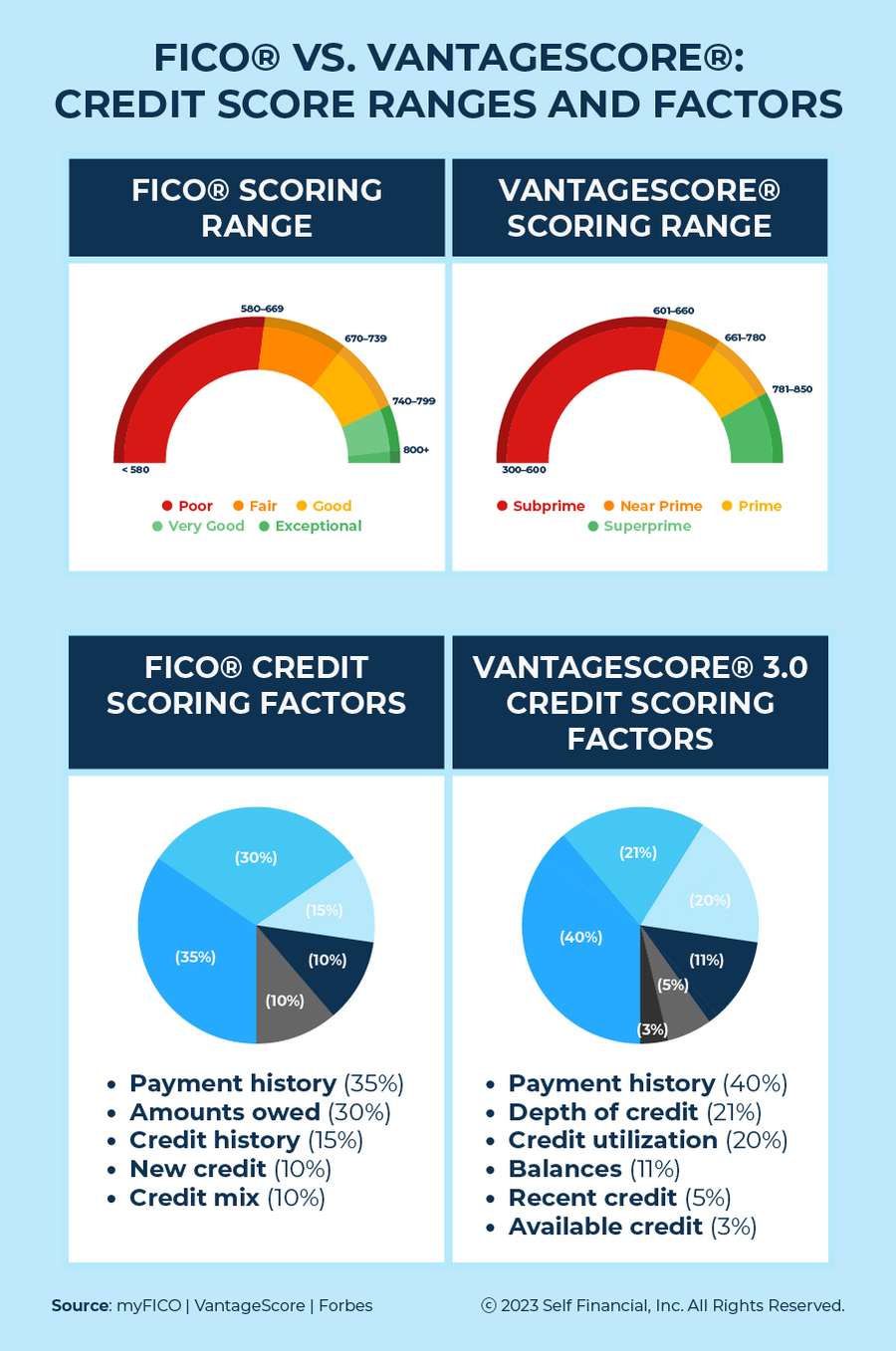
The FICO score, developed by Fair Isaac Corporation, has been the industry standard for credit scoring for decades. It's used by a vast majority of lenders in the United States and is considered the benchmark for creditworthiness. FICO scores range from 300 to 850, with higher scores indicating lower credit risk.
Factors Considered in FICO Scoring:
The FICO score is calculated based on five main categories, each weighted differently:
- Payment History (35%): This is the most important factor, reflecting your record of making payments on time. Late payments, collections, and bankruptcies negatively impact your score.
- Amounts Owed (30%): This refers to the total amount of debt you owe and the percentage of your available credit you're using (credit utilization ratio). Keeping your credit utilization low is crucial.
- Length of Credit History (15%): A longer credit history generally indicates a more stable credit profile.
- Credit Mix (10%): Having a mix of different credit accounts (e.g., credit cards, installment loans, mortgages) can positively impact your score.
- New Credit (10%): Opening too many new credit accounts in a short period can lower your score.
FICO has also developed industry-specific scores, such as auto scores and bankcard scores, which are tailored to specific types of lending.
VantageScore: A Challenger to the Throne
VantageScore was created in 2006 by the three major credit bureaus – Equifax, Experian, and TransUnion – to provide a more consistent and predictive credit scoring model. It aims to address some of the limitations of the FICO score and offer a more accessible and transparent scoring system.
Factors Considered in VantageScore Scoring:
VantageScore also uses a range of 300 to 850 and considers several factors, although the weighting and categorization differ slightly from FICO:
- Payment History (Extremely Influential): Like FICO, payment history is the most important factor in VantageScore.
- Age and Type of Credit (Highly Influential): This considers the age of your oldest credit account and the mix of credit types you have.
- Percentage of Credit Limit Used (Highly Influential): Similar to credit utilization in FICO, this measures how much of your available credit you're using.
- Total Balances/Debt (Moderately Influential): This reflects the total amount of debt you owe across all your accounts.
- Recent Credit Behavior and Inquiries (Less Influential): This looks at how recently you've opened new accounts and the number of credit inquiries on your report.
- Available Credit (Less Influential): This refers to the total amount of credit available to you.
Key Differences Between VantageScore and FICO
While both scores aim to assess creditworthiness, several key differences distinguish VantageScore from FICO:
Data Requirements:
One of the most significant differences is the amount of credit history required to generate a score. FICO typically requires at least six months of credit history and at least one account reported to the credit bureaus within the past six months. VantageScore, on the other hand, can generate a score with as little as one month of credit history and one account reported within the past 24 months. This can be particularly beneficial for younger adults or those new to credit.
Treatment of Unpaid Medical Debt:
VantageScore 3.0 and later versions place less weight on unpaid medical debt than FICO. They also ignore medical debt that has been paid off. This change reflects the understanding that medical debt is often unavoidable and may not accurately reflect a borrower's creditworthiness. FICO also has made changes to reduce the impact of medical debt, but the impact may vary depending on the FICO version used.
Scoring of Trended Data:
FICO incorporates trended data, which analyzes patterns in your credit behavior over time. This allows lenders to see not just your current debt levels, but also how your debt has changed over time. VantageScore utilizes similar data analysis techniques to predict risk.
Credit Utilization Calculation:
While both scores consider credit utilization, they may calculate it differently. FICO typically looks at the utilization rate for each individual credit card, as well as the overall utilization rate across all cards. VantageScore may focus more on the overall utilization rate.
Adoption Rate:
While VantageScore is gaining traction, FICO remains the more widely used scoring model. Lenders are more likely to rely on FICO scores when making lending decisions, although VantageScore is becoming increasingly accepted.
Which Score Should You Focus On?
Since lenders may use either FICO or VantageScore (or both), it's a good idea to monitor both scores. You can obtain your FICO score from various sources, including credit card statements, loan providers, and myFICO.com. You can access your VantageScore through free credit monitoring services offered by many websites and financial institutions. Understanding both scores will give you a more comprehensive view of your credit health and help you identify areas for improvement.
Improving Your Credit Score: Tips for Both Models
Regardless of whether lenders are using FICO or VantageScore, the fundamental principles of building good credit remain the same:
- Pay your bills on time: This is the most important factor. Set up automatic payments or reminders to avoid late payments.
- Keep your credit utilization low: Aim to use no more than 30% of your available credit on each card.
- Avoid opening too many new credit accounts at once: Opening multiple accounts in a short period can lower your score.
- Monitor your credit reports regularly: Check your credit reports from all three major credit bureaus for errors and dispute any inaccuracies.
- Maintain a mix of credit accounts: Having a mix of credit cards, installment loans, and other types of credit can benefit your score.
By following these tips, you can improve your credit score, regardless of the scoring model used.

0 Comments