
Understanding the Relationship Between Interest Rates and the Stock Market
The stock market and interest rates share a complex and often inverse relationship. Understanding this dynamic is crucial for investors looking to navigate market fluctuations and make informed decisions. Interest rate hikes, implemented by central banks like the Federal Reserve, can have a significant impact on stock market performance, influencing investor sentiment, corporate profitability, and overall economic growth.
How Interest Rate Hikes Work
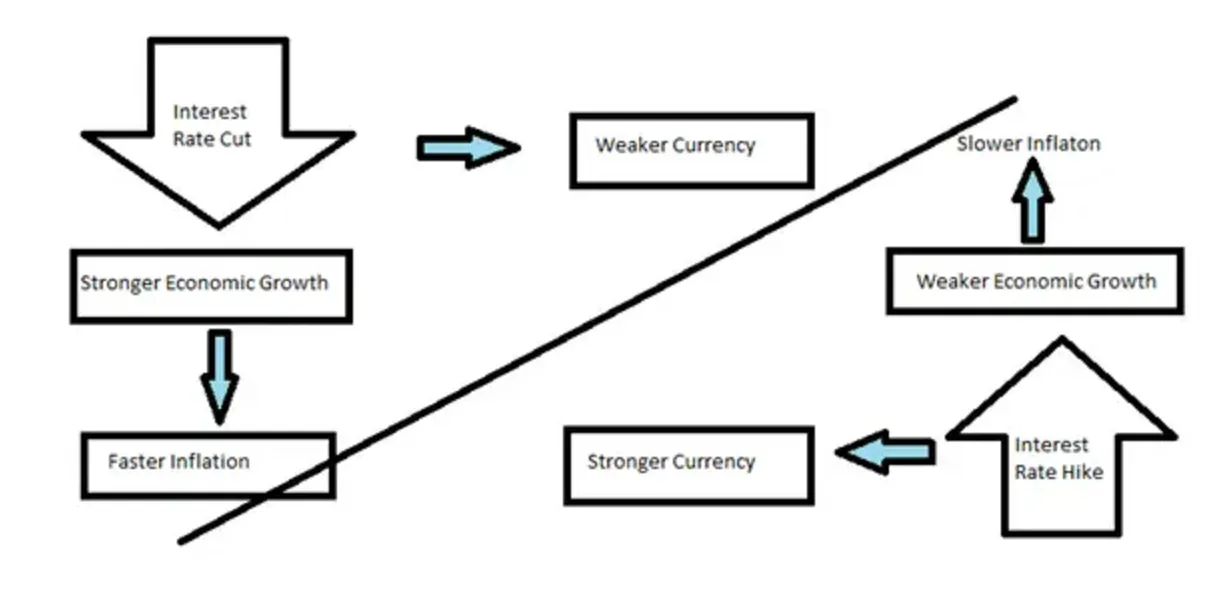
Central banks use interest rate hikes as a tool to control inflation. When inflation rises too quickly, central banks increase the benchmark interest rate, which is the rate at which commercial banks can borrow money from the central bank. This, in turn, leads to higher borrowing costs for businesses and consumers. Higher borrowing costs can slow down economic activity by reducing spending and investment. The theory is that by making it more expensive to borrow money, demand will decrease, eventually leading to lower prices and controlled inflation.
The Immediate Impact on Stock Prices
One of the most immediate effects of interest rate hikes is a potential decline in stock prices. Several factors contribute to this phenomenon:
Increased Borrowing Costs for Companies
Higher interest rates directly impact companies by increasing their borrowing costs. This means companies have to pay more to finance their operations, expansions, and investments. As a result, companies may experience reduced profitability, which can negatively affect their stock prices. Companies with substantial debt burdens are particularly vulnerable to the adverse effects of rising interest rates.
Reduced Consumer Spending
Higher interest rates also affect consumer spending. When interest rates rise, consumers face higher costs for mortgages, car loans, and credit card debt. This can lead to a decrease in discretionary spending, affecting companies that rely on consumer demand. Sectors like retail, consumer discretionary, and housing are especially sensitive to changes in consumer spending.
Shift in Investor Sentiment
Interest rate hikes can also trigger a shift in investor sentiment. Investors may become more cautious and risk-averse, leading to a sell-off in the stock market. The expectation of slower economic growth and reduced corporate earnings can drive investors to reallocate their portfolios to safer assets like bonds or cash. This shift in sentiment can exacerbate the downward pressure on stock prices.
Sector-Specific Impacts
The impact of interest rate hikes is not uniform across all sectors of the stock market. Some sectors are more sensitive to interest rate changes than others:
Technology Sector
The technology sector, often characterized by high growth expectations and future earnings potential, can be particularly vulnerable to interest rate hikes. Higher interest rates can reduce the present value of future earnings, making high-growth tech stocks less attractive to investors. Additionally, many tech companies rely on borrowing to fund their research and development, making them more susceptible to increased borrowing costs.
Utilities and Real Estate
Sectors like utilities and real estate, often considered defensive investments, can also be affected by rising interest rates. These sectors are typically income-oriented, with investors attracted to their dividend yields. However, when interest rates rise, bond yields also increase, making bonds a more attractive alternative to dividend-paying stocks. This can lead to a decrease in demand for utility and real estate stocks.
Financial Sector
The financial sector can experience a mixed impact from interest rate hikes. Banks and other financial institutions can benefit from higher interest rates as they can charge more for loans. However, rising interest rates can also lead to a decrease in loan demand and an increase in defaults, potentially offsetting the positive effects. The overall impact on the financial sector depends on various factors, including the pace and magnitude of the interest rate increases and the overall health of the economy.
Historical Trends
Analyzing historical data can provide insights into the relationship between interest rate hikes and stock market performance. While past performance is not indicative of future results, examining historical trends can help investors understand potential market reactions to interest rate changes.
Historically, periods of rising interest rates have often been associated with periods of slower stock market growth or even market corrections. However, the magnitude and duration of these effects can vary depending on factors such as the overall economic environment, the pace of interest rate increases, and investor sentiment. It's also important to consider that the stock market can sometimes anticipate interest rate hikes, with prices adjusting before the actual increases occur.
Strategies for Navigating Interest Rate Hikes
While interest rate hikes can create challenges for investors, there are strategies to help navigate these periods of market uncertainty:
Diversification
Diversifying your investment portfolio across different asset classes and sectors can help mitigate the impact of interest rate hikes. By spreading your investments across a range of assets, you can reduce your exposure to any single sector or asset class that may be particularly vulnerable to interest rate changes.
Focus on Value Stocks
Value stocks, which are typically undervalued by the market relative to their fundamentals, can be more resilient during periods of rising interest rates. These stocks often have lower price-to-earnings ratios and stronger balance sheets, making them less susceptible to the adverse effects of higher borrowing costs. Value stocks tend to perform better than growth stocks when interest rates are rising.
Consider Dividend-Paying Stocks
Dividend-paying stocks can provide a steady stream of income during periods of market volatility. Companies that consistently pay dividends are often more stable and financially sound, making them a relatively safer investment option during times of economic uncertainty. However, it is important to consider the sustainability of dividend payments before investing.
Stay Informed and Adaptable
Staying informed about economic developments, central bank policies, and market trends is crucial for making informed investment decisions. Be prepared to adapt your investment strategy as needed based on changing market conditions. Regularly review your portfolio and make adjustments as necessary to align with your risk tolerance and investment goals.
Long-Term Perspective
It's important to maintain a long-term perspective when investing in the stock market. While interest rate hikes can create short-term volatility, the stock market has historically delivered strong returns over the long run. Avoid making impulsive decisions based on short-term market fluctuations. Focus on your long-term investment goals and maintain a disciplined approach to investing.

0 Comments