
Understanding IRAs: A Foundation for Retirement
Planning for retirement can feel overwhelming, but understanding the different tools available can make the process much simpler. Two of the most common and powerful retirement savings vehicles are Individual Retirement Accounts (IRAs): the Roth IRA and the Traditional IRA. While both offer tax advantages to help you save for your future, they differ significantly in how those tax benefits are structured. Choosing the right IRA depends on your individual financial situation, your current income, and your expectations for your future tax bracket.
Key Differences at a Glance: Roth IRA vs. Traditional IRA
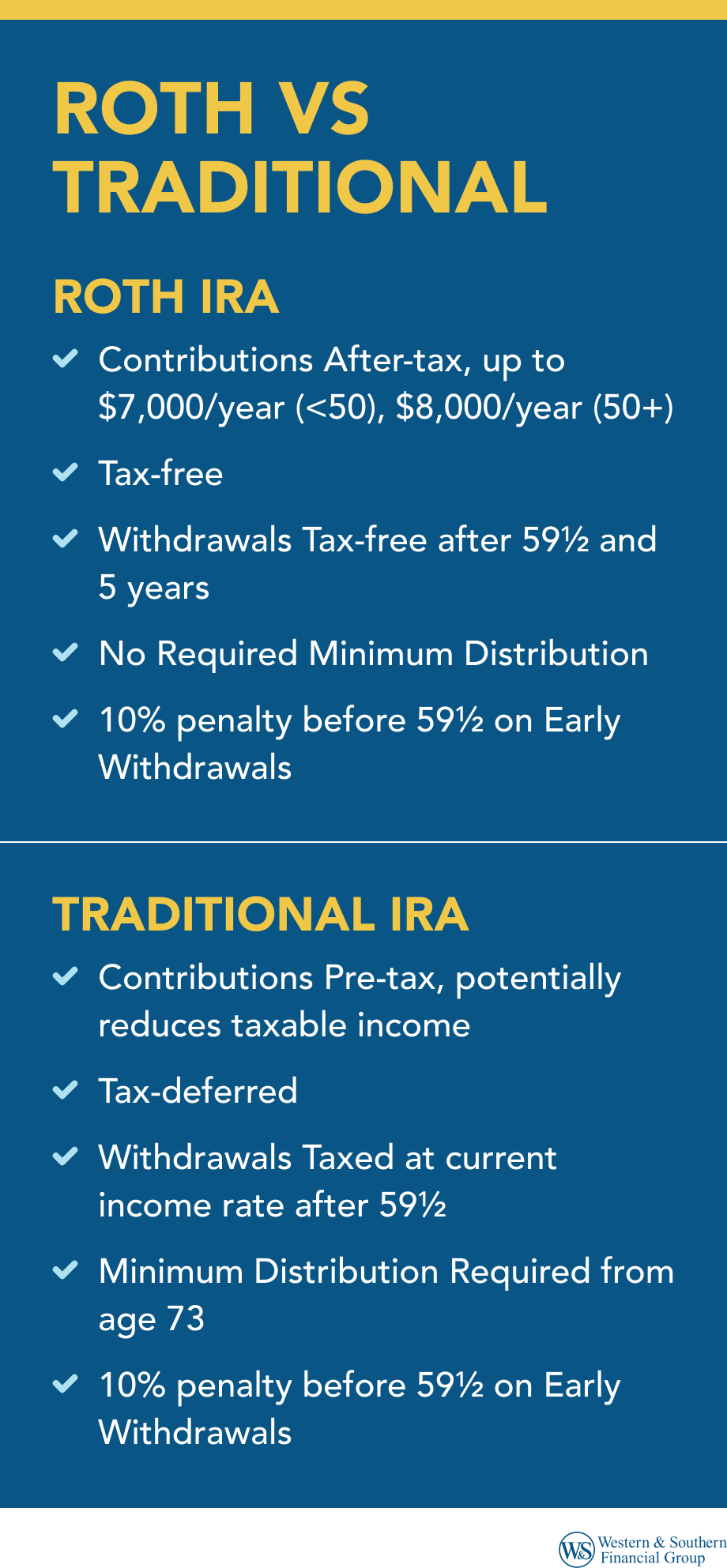
The primary distinction between a Roth IRA and a Traditional IRA lies in when you pay taxes. With a Traditional IRA, you typically contribute pre-tax dollars, meaning your contributions may be tax-deductible in the year you make them. Your money then grows tax-deferred, and you pay taxes on withdrawals in retirement. Conversely, with a Roth IRA, you contribute after-tax dollars. This means you don't get a tax deduction upfront, but your money grows tax-free, and withdrawals in retirement are also tax-free, provided certain conditions are met.
Contribution Limits
The annual contribution limits for both Roth and Traditional IRAs are the same. For 2024, the contribution limit is $7,000, with an additional $1,000 catch-up contribution allowed for those age 50 and older. It's important to note that these limits can change annually, so it's always best to check the current IRS guidelines.
Contribution Eligibility
While anyone with earned income can contribute to a Traditional IRA, Roth IRA contributions are subject to income limitations. If your income exceeds certain thresholds, you may not be eligible to contribute to a Roth IRA. These income limits are adjusted annually by the IRS. For example, in 2024, the ability to contribute to a Roth IRA phases out for single filers with modified adjusted gross income (MAGI) between $146,000 and $161,000, and is completely unavailable if your MAGI is $161,000 or higher. For those who are married filing jointly, the phase-out range is between $230,000 and $240,000, with no contributions allowed if MAGI exceeds $240,000.
Tax Implications: Now vs. Later
The choice between a Roth and Traditional IRA hinges on your expectations regarding future tax rates. If you believe you'll be in a higher tax bracket in retirement, a Roth IRA may be more advantageous. While you won't get a tax deduction now, you'll avoid paying taxes on your withdrawals later, potentially saving you a significant amount of money. Conversely, if you anticipate being in a lower tax bracket in retirement, a Traditional IRA might be the better option. You'll get a tax deduction now, which can lower your current tax bill, and you'll only pay taxes on your withdrawals when your tax rate is lower.
Tax Deductibility of Traditional IRA Contributions
The tax deductibility of Traditional IRA contributions depends on whether you (or your spouse, if married) are covered by a retirement plan at work. If you're not covered by a retirement plan at work, you can deduct the full amount of your Traditional IRA contributions, up to the annual contribution limit. If you are covered by a retirement plan at work, your ability to deduct Traditional IRA contributions may be limited, depending on your income. The IRS provides specific guidelines and income thresholds for determining the deductibility of Traditional IRA contributions.
Tax-Free Growth and Withdrawals with Roth IRAs
One of the most appealing features of a Roth IRA is the potential for tax-free growth and withdrawals. As long as you meet certain requirements, such as being at least 59 1/2 years old and having held the Roth IRA for at least five years, your withdrawals in retirement will be completely tax-free. This can be a significant advantage, especially if you anticipate your investments growing substantially over time.
Withdrawal Rules and Penalties
Both Roth and Traditional IRAs have rules regarding withdrawals before retirement age (typically 59 1/2). Generally, withdrawals before this age are subject to a 10% penalty, in addition to any applicable income taxes. However, there are exceptions to this rule. For example, with a Roth IRA, you can always withdraw your contributions tax-free and penalty-free, regardless of your age. With a Traditional IRA, exceptions to the penalty may apply for certain qualified expenses, such as medical expenses, higher education expenses, or a first-time home purchase.
Required Minimum Distributions (RMDs)
Another key difference between Roth and Traditional IRAs is the requirement for Required Minimum Distributions (RMDs). With a Traditional IRA, you are required to start taking distributions from your account once you reach age 73 (or 75, depending on your birth year). These RMDs are taxed as ordinary income. Roth IRAs, on the other hand, are not subject to RMDs during the original owner's lifetime. This can be a significant advantage for those who don't need the income from their retirement accounts and want to leave the money to their heirs.
Converting a Traditional IRA to a Roth IRA
It's possible to convert a Traditional IRA to a Roth IRA. This involves transferring the funds from your Traditional IRA to a Roth IRA. However, the conversion is considered a taxable event. You'll have to pay income taxes on the amount you convert, as if you had taken a distribution from your Traditional IRA. This can be a good strategy if you believe you'll be in a higher tax bracket in retirement and want to lock in tax-free growth and withdrawals in the future. It's important to carefully consider the tax implications before converting a Traditional IRA to a Roth IRA.
Making the Right Choice for Your Retirement
Deciding between a Roth IRA and a Traditional IRA is a personal decision that depends on your individual circumstances. Consider your current income, your expected future tax bracket, your risk tolerance, and your retirement goals. If you're unsure which type of IRA is right for you, it's always a good idea to consult with a qualified financial advisor. They can help you assess your financial situation and develop a retirement savings plan that meets your needs.

0 Comments