
Understanding the Retirement Planning Landscape for the Self-Employed
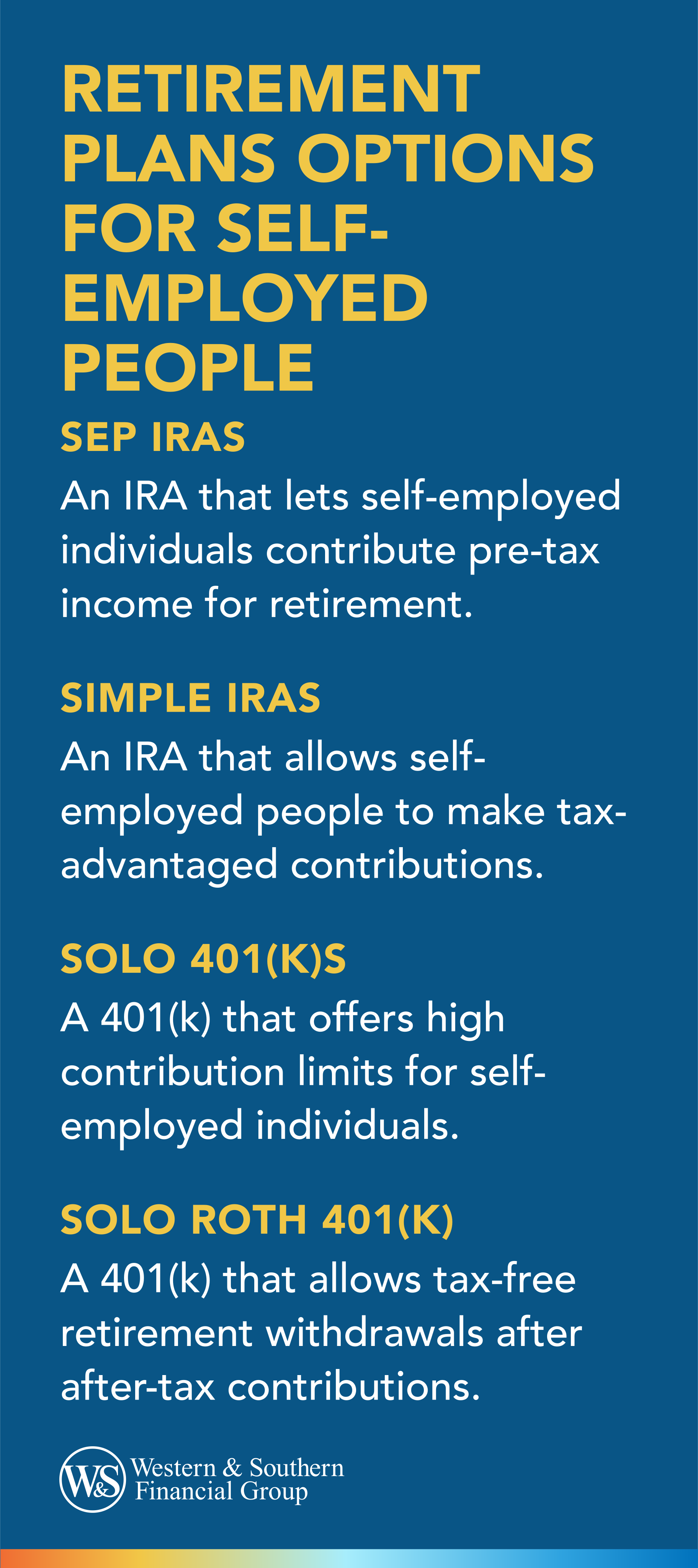
Being self-employed comes with a unique set of freedoms and challenges. One of the most significant challenges is often retirement planning. Unlike traditional employees who may have access to 401(k) plans and employer matching, self-employed individuals are responsible for their own retirement savings. Fortunately, there are several retirement plan options available, and one of the most popular and advantageous is the Simplified Employee Pension plan, or SEP IRA.
What is a SEP IRA?
A SEP IRA is a retirement savings plan designed specifically for self-employed individuals and small business owners. It allows you to contribute a significant portion of your self-employment income to a tax-deferred retirement account. Think of it as a powerful tool to build a secure financial future while also potentially lowering your current year's tax liability.
Key Features of a SEP IRA
Several features make the SEP IRA an attractive option for the self-employed:
- High Contribution Limits: Compared to traditional or Roth IRAs, SEP IRAs generally allow for much higher contribution limits. This means you can save a more substantial amount each year towards retirement. The exact contribution limit is subject to change annually, so it's crucial to check the IRS guidelines for the current year.
- Tax-Deferred Growth: Your investments within a SEP IRA grow tax-deferred. This means you won't pay taxes on any earnings, dividends, or capital gains until you withdraw the money in retirement. This allows your money to compound faster over time.
- Easy to Set Up and Maintain: Opening and managing a SEP IRA is typically straightforward. You can open an account at most brokerage firms, banks, or other financial institutions. The administrative burden is generally low compared to other retirement plans like 401(k)s.
- Flexibility: You have the flexibility to contribute as much or as little as you want each year, up to the contribution limit. This is particularly beneficial for self-employed individuals whose income may fluctuate from year to year.
SEP IRA Contribution Limits and Rules
Understanding the contribution limits and rules for SEP IRAs is crucial for maximizing your retirement savings and avoiding potential penalties. The annual contribution limit is based on a percentage of your net self-employment income. As of 2023, you can contribute up to 20% of your net self-employment income to a SEP IRA, but the contribution cannot exceed a specific dollar amount set by the IRS each year. This dollar amount changes annually to reflect inflation.
Calculating Your Net Self-Employment Income
Your net self-employment income is your gross income minus business expenses. It's essential to accurately calculate your net income to determine your maximum contribution amount. Remember to deduct all eligible business expenses, such as office supplies, travel costs, and professional fees, before calculating your contribution.
Important SEP IRA Rules to Remember
Here are some essential SEP IRA rules to keep in mind:
- Eligibility: To contribute to a SEP IRA, you must be self-employed or a small business owner. You must also have earned income during the year.
- Employee Coverage: If you have employees, you generally must make SEP contributions for them as well. The contribution percentage must be the same for all eligible employees, including yourself. There are specific eligibility requirements for employees, such as age and years of service.
- Withdrawals: Withdrawals from a SEP IRA in retirement are taxed as ordinary income. If you withdraw funds before age 59 ½, you may be subject to a 10% early withdrawal penalty, in addition to income taxes.
- No Catch-Up Contributions: Unlike some other retirement plans, SEP IRAs do not offer catch-up contributions for those age 50 and older.
Setting Up a SEP IRA: A Step-by-Step Guide
Setting up a SEP IRA is a relatively simple process. Here's a step-by-step guide:
1. Choose a Financial Institution
Research and select a reputable financial institution, such as a brokerage firm, bank, or credit union, that offers SEP IRAs. Consider factors like fees, investment options, and customer service when making your decision.
2. Complete the Paperwork
Open a SEP IRA account by completing the necessary paperwork provided by the financial institution. This typically involves providing your personal information, tax identification number, and beneficiary designations.
3. Fund Your Account
Once your account is open, you can fund it by transferring funds from a checking or savings account, or by rolling over funds from another retirement account. Remember to stay within the annual contribution limits.
4. Choose Your Investments
Select the investments that align with your risk tolerance and retirement goals. Common investment options within a SEP IRA include stocks, bonds, mutual funds, and exchange-traded funds (ETFs).
SEP IRA vs. Other Retirement Plans for the Self-Employed
While SEP IRAs are a popular choice, it's important to compare them to other retirement plan options to determine the best fit for your individual circumstances. Some alternatives include:
Solo 401(k)
A Solo 401(k) is another retirement plan option for self-employed individuals and small business owners. It allows you to contribute both as an employee and as an employer, potentially leading to higher contribution limits than a SEP IRA. There are two types: traditional and Roth.
SIMPLE IRA
A Savings Incentive Match Plan for Employees (SIMPLE) IRA is another option for small businesses. It's generally simpler to administer than a 401(k) but has lower contribution limits than a SEP IRA or Solo 401(k).
Traditional IRA and Roth IRA
While offering lower contribution limits, Traditional and Roth IRAs can be good supplemental options. Roth IRAs offer tax-free withdrawals in retirement, a significant advantage.
Benefits of a SEP IRA for Retirement Planning
The SEP IRA offers several compelling benefits for retirement planning, making it an attractive option for self-employed individuals:
Tax Advantages
Contributions to a SEP IRA are tax-deductible, which can lower your current year's taxable income. This can result in significant tax savings, especially for those in higher tax brackets. The tax-deferred growth of your investments within the account also allows your money to compound faster over time.
Simplicity
SEP IRAs are relatively easy to set up and maintain, making them a convenient option for self-employed individuals who may not have the time or resources to manage a more complex retirement plan.
Flexibility
The flexibility to contribute as much or as little as you want each year, up to the contribution limit, is a significant advantage for self-employed individuals whose income may fluctuate. This allows you to adjust your contributions based on your current financial situation.
Potential Drawbacks of a SEP IRA
While SEP IRAs offer many benefits, it's important to be aware of potential drawbacks:
Employee Coverage Requirement
If you have employees, you're generally required to make SEP contributions for them as well, which can increase your overall retirement savings costs. This requirement can be a significant factor for small business owners with multiple employees.
Withdrawal Restrictions
Withdrawals from a SEP IRA before age 59 ½ are generally subject to a 10% early withdrawal penalty, in addition to income taxes. This can make it difficult to access your retirement savings in case of an emergency.
No Catch-Up Contributions
The lack of catch-up contributions for those age 50 and older can limit the ability to boost retirement savings in the years leading up to retirement.

0 Comments