
Understanding Tax-Deferred Growth in Retirement Accounts
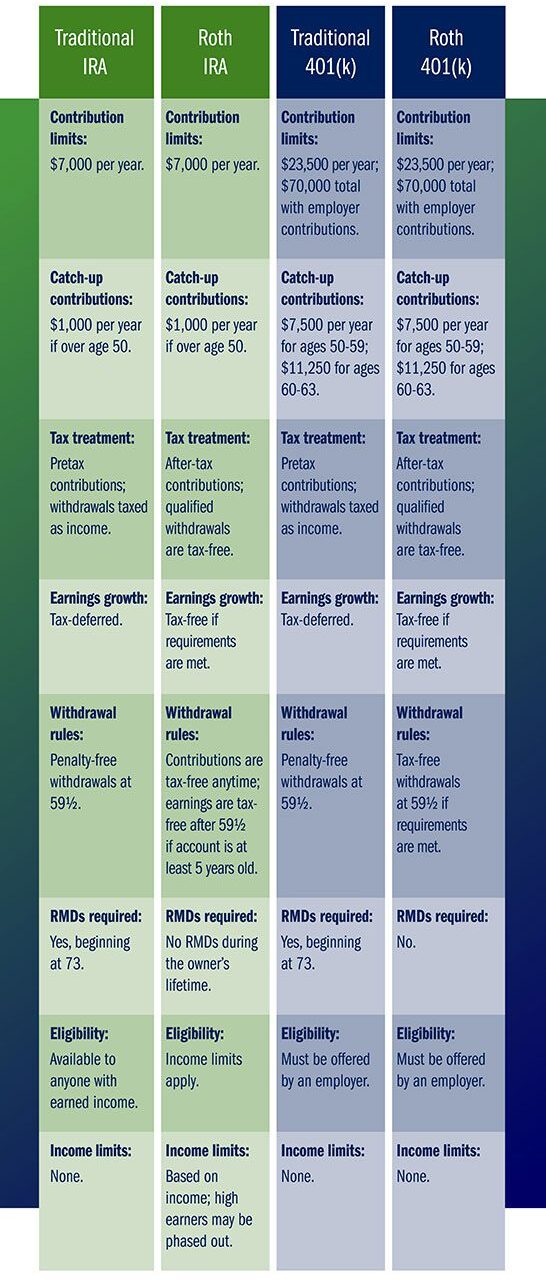
Planning for retirement involves making smart financial decisions today to secure your future. One of the most powerful tools available for retirement savings is the tax-deferred retirement account. These accounts, such as 401(k)s and IRAs, offer a significant advantage: your investments grow without being taxed each year. This allows your money to compound faster, potentially leading to a much larger nest egg when you retire.
Tax-deferred growth means you don't pay taxes on the investment earnings (capital gains, dividends, or interest) until you withdraw the money in retirement. This contrasts with taxable investment accounts, where you're required to pay taxes on earnings annually. The longer your money grows tax-deferred, the more significant the benefit becomes.
Popular Retirement Account Options
Several types of retirement accounts offer tax-deferred growth. Understanding the differences between them is crucial for choosing the right one for your situation.
401(k) Plans
A 401(k) is a retirement savings plan sponsored by an employer. Contributions are often made through payroll deductions, and many employers offer matching contributions, which is essentially free money. 401(k) plans typically offer a limited selection of investment options, usually mutual funds and target-date funds.
Traditional IRA
A Traditional IRA (Individual Retirement Account) allows individuals to contribute pre-tax dollars, potentially reducing your current taxable income. Earnings grow tax-deferred, and withdrawals in retirement are taxed as ordinary income. In some cases, contributions may be tax-deductible, further enhancing the tax benefits.
Roth IRA
A Roth IRA offers a different tax advantage. Contributions are made with after-tax dollars, but qualified withdrawals in retirement, including both contributions and earnings, are tax-free. This can be particularly beneficial if you anticipate being in a higher tax bracket in retirement.
SEP IRA
A SEP IRA (Simplified Employee Pension IRA) is designed for self-employed individuals and small business owners. It allows you to contribute a percentage of your net self-employment income to the account. Contributions are tax-deductible, and earnings grow tax-deferred.
Investment Strategies for Tax-Deferred Accounts
Once you've chosen the right retirement account, the next step is to develop an investment strategy that aligns with your risk tolerance, time horizon, and financial goals. Here are some common strategies to consider:
Diversification
Diversification is a cornerstone of sound investing. It involves spreading your investments across different asset classes, such as stocks, bonds, and real estate, to reduce risk. By diversifying, you're less vulnerable to the performance of any single investment. Within each asset class, further diversification can be achieved by investing in different sectors, industries, and geographic regions.
For example, instead of investing solely in technology stocks, you might allocate a portion of your portfolio to healthcare, consumer staples, and international stocks. Similarly, within bonds, you could diversify by investing in government bonds, corporate bonds, and municipal bonds.
Asset Allocation
Asset allocation refers to how you divide your portfolio among different asset classes. The optimal asset allocation depends on your risk tolerance and time horizon. Generally, younger investors with a longer time horizon can afford to take on more risk and allocate a larger portion of their portfolio to stocks, which have historically provided higher returns than bonds over the long term. As you approach retirement, you may want to gradually shift towards a more conservative asset allocation with a higher proportion of bonds to preserve capital.
Common asset allocation models include:
- Aggressive: 80-90% stocks, 10-20% bonds
- Moderate: 60-70% stocks, 30-40% bonds
- Conservative: 40-50% stocks, 50-60% bonds
Dollar-Cost Averaging
Dollar-cost averaging is a strategy where you invest a fixed amount of money at regular intervals, regardless of market fluctuations. This can help reduce the risk of investing a large sum of money at the wrong time. When prices are low, you'll buy more shares, and when prices are high, you'll buy fewer shares. Over time, this can lead to a lower average cost per share.
For example, instead of investing $12,000 in a single lump sum, you could invest $1,000 per month for 12 months. This strategy can be particularly useful in volatile markets.
Target-Date Funds
Target-date funds are a popular option for retirement savers, especially those who prefer a hands-off approach. These funds automatically adjust their asset allocation over time, becoming more conservative as you approach your target retirement date. They typically start with a higher allocation to stocks and gradually shift towards a higher allocation to bonds and other more conservative investments.
Target-date funds offer the convenience of a diversified portfolio managed by professional investment managers. However, it's important to review the fund's asset allocation and expense ratio to ensure it aligns with your risk tolerance and financial goals.
Low-Cost Index Funds and ETFs
Low-cost index funds and Exchange-Traded Funds (ETFs) are a cost-effective way to diversify your portfolio. These funds track a specific market index, such as the S&P 500, and offer broad market exposure at a low expense ratio. By investing in index funds and ETFs, you can avoid the higher fees associated with actively managed funds.
Index funds and ETFs can be used to build a diversified portfolio across different asset classes, sectors, and geographic regions.
Rebalancing
Over time, your asset allocation may drift away from your target allocation due to market fluctuations. Rebalancing involves selling some assets and buying others to bring your portfolio back to its original allocation. This helps to maintain your desired level of risk and can also improve your long-term returns.
Rebalancing can be done periodically, such as annually or semi-annually, or when your asset allocation deviates significantly from your target allocation.
Monitoring and Adjusting Your Strategy
Retirement planning is an ongoing process. It's important to regularly monitor your investments and adjust your strategy as needed to reflect changes in your circumstances, risk tolerance, and financial goals. Consider factors such as changes in your income, expenses, family situation, and the overall economic environment.
Regularly reviewing your investment performance and making necessary adjustments can help you stay on track towards achieving your retirement goals.

0 Comments