
What is a Self-Directed IRA?
A Self-Directed IRA (SDIRA) is a type of individual retirement account that allows you to invest in a wider range of assets than a traditional IRA. While traditional IRAs typically limit your investments to stocks, bonds, and mutual funds, an SDIRA opens the door to alternative investments, including real estate.
This flexibility can be a game-changer for investors looking to diversify their portfolio and potentially achieve higher returns. However, it's crucial to understand the rules and regulations associated with SDIRAs before diving in. It's not a free-for-all; certain restrictions apply to ensure compliance with IRS guidelines.
Why Invest in Real Estate with a Self-Directed IRA?
Investing in real estate through a Self-Directed IRA offers several potential advantages:
- Tax-Deferred or Tax-Free Growth: Like other IRA accounts, earnings within an SDIRA grow tax-deferred or tax-free, depending on whether it's a traditional or Roth SDIRA. This can significantly boost your long-term returns.
- Diversification: Real estate can provide diversification beyond the typical stock and bond investments, potentially reducing overall portfolio risk.
- Potential for Higher Returns: Real estate investments can offer the potential for higher returns compared to traditional investments, especially in appreciating markets. Rental income can also contribute to consistent cash flow.
- Control Over Investments: With an SDIRA, you have more control over your investment decisions. You choose the properties you want to invest in, giving you the ability to leverage your real estate expertise.
Understanding the Rules and Regulations
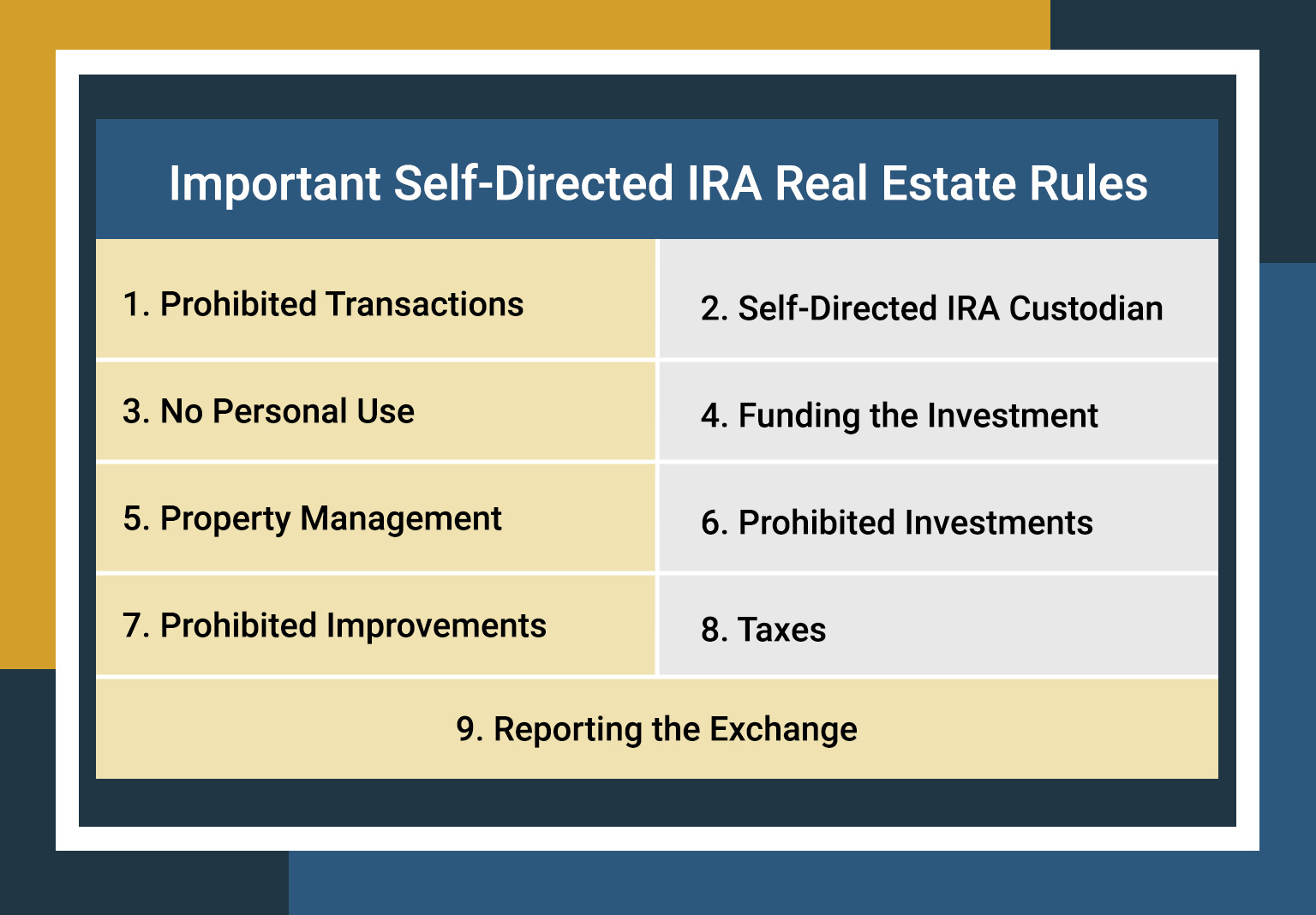
The IRS has specific rules governing Self-Directed IRAs, especially when it comes to real estate. Violating these rules can result in disqualification of the IRA and significant tax penalties. Here are some key considerations:
Prohibited Transactions
One of the most important aspects of SDIRA investing is understanding prohibited transactions. You, your family members (including spouse, parents, children, and their spouses), and any entity controlled by you cannot directly benefit from the IRA's investments. This means you cannot:
- Live in a property owned by your SDIRA.
- Rent a property owned by your SDIRA to a family member.
- Personally perform repairs or maintenance on a property owned by your SDIRA.
- Use the property for personal enjoyment or recreation.
All transactions must be conducted at arm's length, meaning they must be fair and reasonable as if dealing with an unrelated party. Any personal benefit derived from the IRA's assets is strictly prohibited.
Indirect Benefits
Even indirect benefits can trigger penalties. For example, if your SDIRA owns a property and you indirectly receive a benefit (e.g., using the property for a family reunion and not paying fair market rent), this could be considered a prohibited transaction.
Qualified Expenses
All expenses related to the real estate investment must be paid directly from the SDIRA. This includes property taxes, insurance, repairs, and maintenance. You cannot use personal funds to cover these expenses and then reimburse yourself. The funds must flow directly from the SDIRA to the service provider.
Finding a Custodian
You can't simply open a regular IRA and start investing in real estate. You'll need to find a custodian that specializes in Self-Directed IRAs and is familiar with real estate transactions. The custodian acts as the administrator of your account, holding the assets and ensuring compliance with IRS regulations. They will handle the paperwork, reporting, and other administrative tasks.
Steps to Investing in Real Estate with a Self-Directed IRA
Here's a step-by-step guide to getting started with real estate investing in an SDIRA:
- Open a Self-Directed IRA: Research and choose a reputable SDIRA custodian. Complete the necessary paperwork to open your account and transfer funds from existing retirement accounts or make new contributions.
- Fund Your Account: You can fund your SDIRA through rollovers from existing IRAs, 401(k)s, or other retirement accounts. You can also make annual contributions, subject to IRS limits.
- Find a Property: Work with a real estate agent to identify properties that meet your investment criteria. Conduct thorough due diligence, including inspections, appraisals, and title searches.
- Make an Offer: Once you've found a property you like, your SDIRA custodian will make the offer on behalf of the IRA. All paperwork must be in the name of the SDIRA.
- Secure Financing (If Needed): If you need financing, you'll need to obtain a non-recourse loan. This type of loan is secured only by the property, and the lender cannot pursue you personally if the loan defaults. This is a requirement for SDIRA real estate investments.
- Close the Deal: Once the offer is accepted and financing is secured, your SDIRA custodian will handle the closing process.
- Manage the Property: All income and expenses related to the property must flow through the SDIRA. If you're renting the property, the rent payments must be deposited directly into the SDIRA account.
Potential Risks and Challenges
While investing in real estate with an SDIRA can be rewarding, it's essential to be aware of the potential risks and challenges:
- Complexity: SDIRA real estate investing is more complex than traditional IRA investing. It requires a thorough understanding of IRS rules and regulations, as well as real estate investment principles.
- Due Diligence: Thorough due diligence is crucial to avoid costly mistakes. You need to carefully evaluate the property, market conditions, and potential risks.
- Liquidity: Real estate is generally less liquid than stocks and bonds. It may take time to sell a property if you need to access your funds.
- Custodian Fees: SDIRA custodians typically charge higher fees than traditional IRA custodians due to the increased administrative burden of handling alternative investments.
- Prohibited Transactions: The risk of violating prohibited transaction rules is a constant concern. Even unintentional violations can result in significant penalties.
Non-Recourse Loans
If you need to finance your SDIRA real estate purchase, you'll need to obtain a non-recourse loan. These loans differ from traditional mortgages in that the lender's only recourse in case of default is the property itself. They cannot come after your personal assets. Securing a non-recourse loan can be more challenging and may come with higher interest rates and fees.
Choosing the Right Property
Selecting the right property for your SDIRA is crucial for success. Consider factors such as location, market trends, rental income potential, and potential for appreciation. Research the local market thoroughly and consult with real estate professionals to identify promising opportunities. Remember that you cannot personally benefit from the property, so choose investments that align with your retirement goals.

0 Comments