
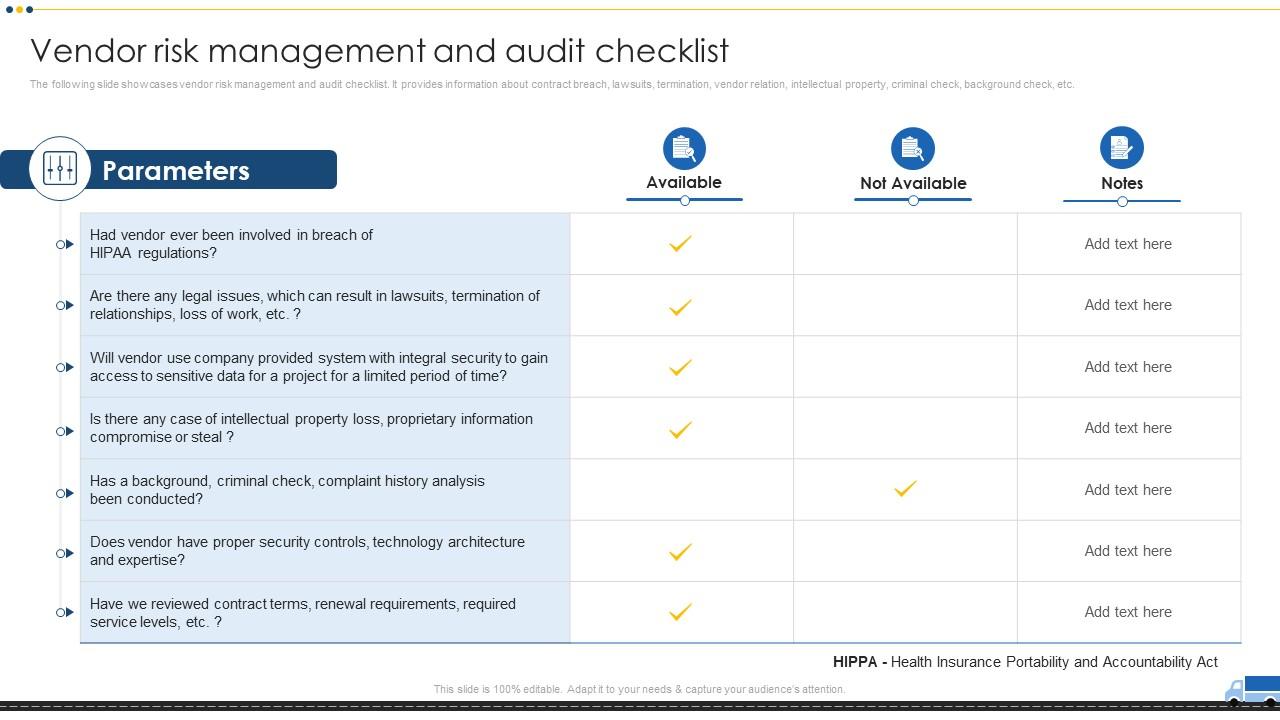
Understanding the Importance of an Insurance Risk Management Audit
In the complex world of insurance, effective risk management is paramount. An insurance risk management audit is a systematic process of evaluating an organization's risk management framework to ensure it is adequately identifying, assessing, and mitigating potential risks. This audit helps to protect the organization's assets, reputation, and financial stability.
A well-structured audit provides insights into the effectiveness of current risk controls, highlights areas for improvement, and ensures compliance with relevant regulations and industry best practices. By proactively identifying and addressing vulnerabilities, insurance companies can minimize potential losses and maintain a competitive edge.
Why Use an Insurance Risk Management Audit Checklist Template?
Navigating the complexities of insurance risk management requires a structured and comprehensive approach. An insurance risk management audit checklist template provides a standardized framework for conducting thorough audits. Here's why using a template is beneficial:
- Consistency: Ensures that all key areas are covered during each audit, promoting consistency and reliability.
- Efficiency: Streamlines the audit process, saving time and resources by providing a pre-defined structure.
- Comprehensive Coverage: Includes a wide range of risk areas, ensuring that no critical aspect is overlooked.
- Documentation: Facilitates clear and organized documentation of audit findings, making it easier to track progress and identify trends.
- Compliance: Helps ensure compliance with industry regulations and best practices.
Key Components of an Insurance Risk Management Audit Checklist Template
A comprehensive insurance risk management audit checklist template should cover a wide range of risk areas, including but not limited to:
1. Governance and Organizational Structure
This section assesses the overall governance framework and organizational structure in place for managing risk. Key areas to consider include:
- Risk Management Policy and Procedures: Are there clearly defined policies and procedures for identifying, assessing, and mitigating risks?
- Roles and Responsibilities: Are roles and responsibilities for risk management clearly defined and understood across the organization?
- Risk Appetite and Tolerance: Has the organization defined its risk appetite and tolerance levels? Are these levels communicated effectively?
- Board Oversight: Does the board of directors actively oversee risk management activities?
2. Underwriting and Pricing
Underwriting and pricing are critical areas for managing insurance risk. The audit should assess the effectiveness of underwriting practices and pricing methodologies.
- Underwriting Guidelines: Are underwriting guidelines comprehensive, up-to-date, and consistently applied?
- Pricing Models: Are pricing models accurate, data-driven, and regularly reviewed?
- Risk Selection: Is the organization effectively selecting risks that align with its risk appetite?
- Reinsurance: Is reinsurance coverage adequate and appropriately structured to mitigate potential losses?
3. Claims Management
Effective claims management is essential for controlling costs and maintaining customer satisfaction. The audit should evaluate the efficiency and effectiveness of the claims handling process.
- Claims Handling Procedures: Are claims handling procedures clearly defined, documented, and consistently applied?
- Claims Investigation: Are claims investigations thorough and timely?
- Fraud Detection: Are there adequate controls in place to detect and prevent fraudulent claims?
- Claims Reserving: Are claims reserves accurately estimated and regularly reviewed?
4. Investment Management
For insurance companies, investment management is a significant area of risk. The audit should assess the organization's investment strategy and risk controls.
- Investment Policy: Is there a clearly defined investment policy that aligns with the organization's risk appetite?
- Asset Allocation: Is the asset allocation appropriate for the organization's liabilities and risk tolerance?
- Risk Measurement and Monitoring: Are there effective risk measurement and monitoring systems in place?
- Compliance: Is the investment portfolio compliant with relevant regulations and investment guidelines?
5. Regulatory Compliance
Insurance companies are subject to a wide range of regulations. The audit should verify compliance with all applicable laws and regulations.
- Licensing and Registration: Are all licenses and registrations up-to-date and in compliance with regulatory requirements?
- Reporting Requirements: Are all required reports submitted accurately and on time?
- Data Privacy: Are there adequate controls in place to protect customer data and comply with data privacy regulations?
- Anti-Money Laundering (AML): Are there effective AML policies and procedures in place?
6. Operational Risks
Operational risks can arise from a variety of sources, including inadequate processes, human error, and technology failures. The audit should assess the effectiveness of operational risk controls.
- Business Continuity Planning: Is there a comprehensive business continuity plan in place to ensure business operations can continue in the event of a disruption?
- Information Security: Are there adequate controls in place to protect sensitive data from cyber threats and other security breaches?
- Outsourcing: Are there effective controls in place to manage the risks associated with outsourcing activities?
- Data Management: Are data management practices robust and reliable?
Developing Your Insurance Risk Management Audit Checklist Template
While numerous templates are available, customizing one to fit your organization's specific needs is crucial. Consider the following when developing or adapting a template:
- Identify Key Risk Areas: Determine the specific risks that are most relevant to your organization.
- Tailor Questions: Customize the checklist questions to reflect your organization's policies, procedures, and risk profile.
- Assign Responsibility: Clearly assign responsibility for completing each section of the checklist.
- Establish a Timeline: Set a realistic timeline for completing the audit.
- Review and Update: Regularly review and update the checklist to ensure it remains relevant and effective.
Using the Audit Checklist Effectively
Having a checklist is only the first step. To maximize its value, follow these best practices:
- Train Your Team: Ensure that the individuals conducting the audit are properly trained on the checklist and audit procedures.
- Document Findings: Thoroughly document all audit findings, including any deficiencies or areas for improvement.
- Develop Action Plans: Develop action plans to address any identified deficiencies.
- Monitor Progress: Regularly monitor progress on the action plans to ensure they are being implemented effectively.
- Communicate Results: Communicate the audit results to relevant stakeholders, including senior management and the board of directors.
Benefits of a Well-Implemented Insurance Risk Management Audit
A well-implemented insurance risk management audit provides numerous benefits, including:
- Improved Risk Management: Identifies weaknesses in the risk management framework and facilitates improvements.
- Reduced Losses: Helps to prevent or mitigate potential losses by identifying and addressing vulnerabilities.
- Enhanced Compliance: Ensures compliance with relevant regulations and industry best practices.
- Increased Efficiency: Streamlines processes and reduces operational costs.
- Improved Reputation: Enhances the organization's reputation by demonstrating a commitment to risk management.
- Enhanced Decision-Making: Provides management with the information they need to make informed decisions.

0 Comments