
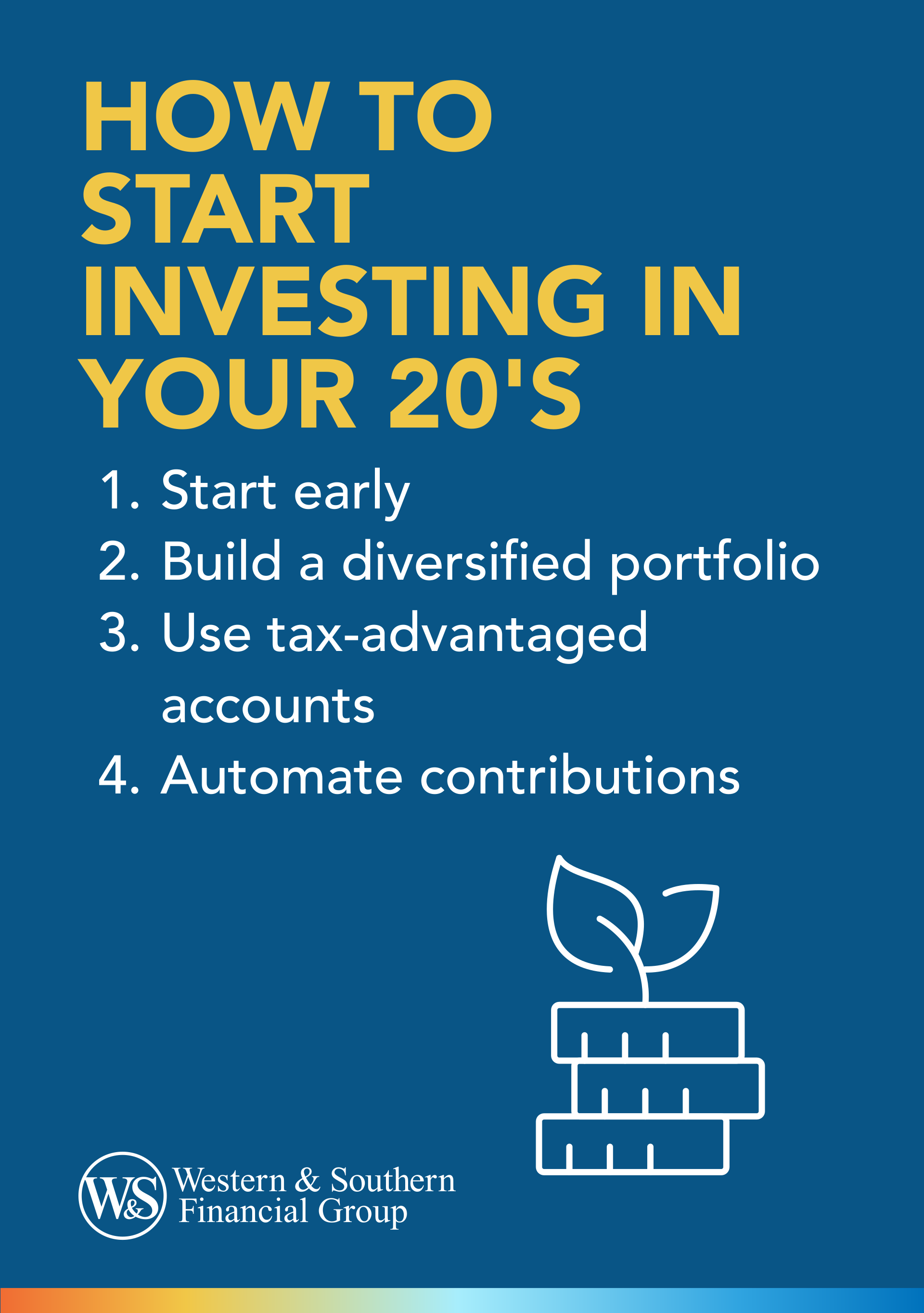
Why Start Investing in Your 20s?
Your 20s are a pivotal time for building a solid financial foundation. While the idea of investing might seem daunting, especially with student loans and the cost of living, starting early offers significant advantages. The power of compounding, the ability to weather market fluctuations, and the time to learn from your mistakes are all amplified when you begin investing in your 20s. This guide will help you navigate the world of investing and set you on the path to financial security.
Understanding the Basics of Investing
Before diving into specific investment strategies, it's crucial to understand the fundamental concepts. Investing involves allocating money with the expectation of generating future income or profit. This could involve stocks, bonds, real estate, or other assets. Each investment carries a different level of risk and potential return.
Risk vs. Return
A core principle of investing is the relationship between risk and return. Generally, investments with higher potential returns also carry higher risks. Lower-risk investments, like government bonds, typically offer lower returns. Understanding your risk tolerance is key to choosing investments that align with your comfort level and financial goals.
Different Types of Investments
Here's a brief overview of some common investment options:
- Stocks: Represent ownership in a company. Stocks can offer high growth potential but also carry significant risk.
- Bonds: Represent a loan you make to a company or government. Bonds are generally less risky than stocks but offer lower returns.
- Mutual Funds: A collection of stocks, bonds, or other assets managed by a professional fund manager. Mutual funds offer diversification, reducing risk.
- Exchange-Traded Funds (ETFs): Similar to mutual funds but trade like stocks on an exchange. ETFs often have lower expense ratios than mutual funds.
- Real Estate: Investing in property, either directly or through Real Estate Investment Trusts (REITs). Real estate can provide income through rent and potential capital appreciation.
Steps to Start Investing in Your 20s
Now that you understand the basics, let's explore the practical steps to begin your investing journey:
1. Define Your Financial Goals
What do you want to achieve with your investments? Are you saving for retirement, a down payment on a house, or a specific future expense? Clearly defining your goals will help you determine your investment timeline and risk tolerance. For example, if you're saving for retirement decades away, you can afford to take on more risk than if you need the money in a few years.
2. Assess Your Risk Tolerance
How comfortable are you with the possibility of losing money? Your risk tolerance is a crucial factor in determining which investments are right for you. Consider your age, financial situation, and personality when assessing your risk tolerance. Questionnaires and online tools can help you gauge your risk appetite.
3. Create a Budget and Pay Off Debt
Before you start investing, it's essential to have a solid financial foundation. Create a budget to track your income and expenses. Prioritize paying off high-interest debt, such as credit card debt, before investing. This will free up more money for investing and prevent debt from eroding your returns.
4. Open an Investment Account
You'll need to open an investment account to buy and sell investments. Several options are available, including:
- Brokerage Accounts: Allow you to buy and sell stocks, bonds, ETFs, and mutual funds.
- Retirement Accounts (401(k), IRA): Offer tax advantages for retirement savings.
- Robo-Advisors: Automated investment platforms that manage your portfolio based on your risk tolerance and goals.
Research different brokers and account types to find one that suits your needs. Consider factors like fees, investment options, and customer service.
5. Start Small and Invest Consistently
You don't need a lot of money to start investing. Many brokers allow you to open an account with a small amount of money. The key is to invest consistently, even if it's just a small amount each month. Dollar-cost averaging, investing a fixed amount regularly regardless of market fluctuations, can help reduce risk and build wealth over time.
6. Diversify Your Investments
Don't put all your eggs in one basket. Diversification involves spreading your investments across different asset classes, industries, and geographic regions. This helps reduce risk by minimizing the impact of any single investment on your overall portfolio.
7. Rebalance Your Portfolio Regularly
Over time, your portfolio's asset allocation may drift away from your target allocation due to market fluctuations. Rebalancing involves selling some investments and buying others to bring your portfolio back to its original allocation. This helps maintain your desired risk level and ensures you're staying on track to meet your goals.
8. Educate Yourself and Stay Informed
Investing is a lifelong learning process. Stay informed about market trends, economic news, and investment strategies. Read books, articles, and blogs on personal finance and investing. Consider taking online courses or attending workshops to deepen your knowledge. The more you learn, the better equipped you'll be to make informed investment decisions.
Investment Strategies for Your 20s
Here are a few popular investment strategies that are well-suited for young investors:
Index Fund Investing
Index funds track a specific market index, such as the S&P 500. They offer broad diversification at a low cost, making them an excellent choice for beginners. Index funds typically have lower expense ratios than actively managed mutual funds.
Target-Date Funds
Target-date funds are designed for retirement savings. They automatically adjust their asset allocation over time, becoming more conservative as you approach your target retirement date. This simplifies investing and ensures your portfolio is appropriately positioned for your stage of life.
Robo-Advisors
Robo-advisors use algorithms to manage your portfolio based on your risk tolerance and goals. They offer a convenient and low-cost way to invest, especially for those who are new to investing. Robo-advisors typically rebalance your portfolio automatically.
Common Investing Mistakes to Avoid in Your 20s
While starting early is advantageous, it's also important to avoid common investing mistakes:
1. Not Starting at All
The biggest mistake is not starting to invest at all. Procrastination can cost you dearly in the long run, as you miss out on the power of compounding.
2. Trying to Time the Market
Attempting to predict market highs and lows is a losing game. Market timing is notoriously difficult, even for professional investors. Instead, focus on long-term investing and dollar-cost averaging.
3. Investing Based on Emotion
Making investment decisions based on fear or greed can lead to poor outcomes. Avoid panic selling during market downturns and resist the urge to chase hot stocks.
4. Ignoring Fees
Fees can eat into your investment returns over time. Pay attention to expense ratios, transaction fees, and other costs associated with your investments. Choose low-cost options whenever possible.
5. Not Rebalancing Your Portfolio
Failing to rebalance your portfolio can lead to an unbalanced asset allocation and increased risk. Regularly review and rebalance your portfolio to maintain your desired risk level.
Resources for Young Investors
Here are some helpful resources to further your investing education:
- Books: "The Total Money Makeover" by Dave Ramsey, "The Intelligent Investor" by Benjamin Graham, "A Random Walk Down Wall Street" by Burton Malkiel
- Websites: Investopedia, The Motley Fool, NerdWallet
- Podcasts: The Dave Ramsey Show, The Investing for Beginners Podcast, The Money Guy Show

0 Comments