
Why Tenant Screening is Crucial for Rental Property Success
Tenant screening is arguably the most important step in the rental process. Finding the right tenants can save you significant time, money, and headaches in the long run. A thorough screening process helps you identify responsible, reliable, and respectful renters who are likely to pay rent on time, maintain the property, and abide by the lease agreement. Neglecting this crucial step can lead to evictions, property damage, legal issues, and financial losses.
Investing the time and resources in a comprehensive tenant screening process is an investment in the long-term success and profitability of your rental property. Think of it as preventative maintenance for your business.
Steps to Effective Tenant Screening
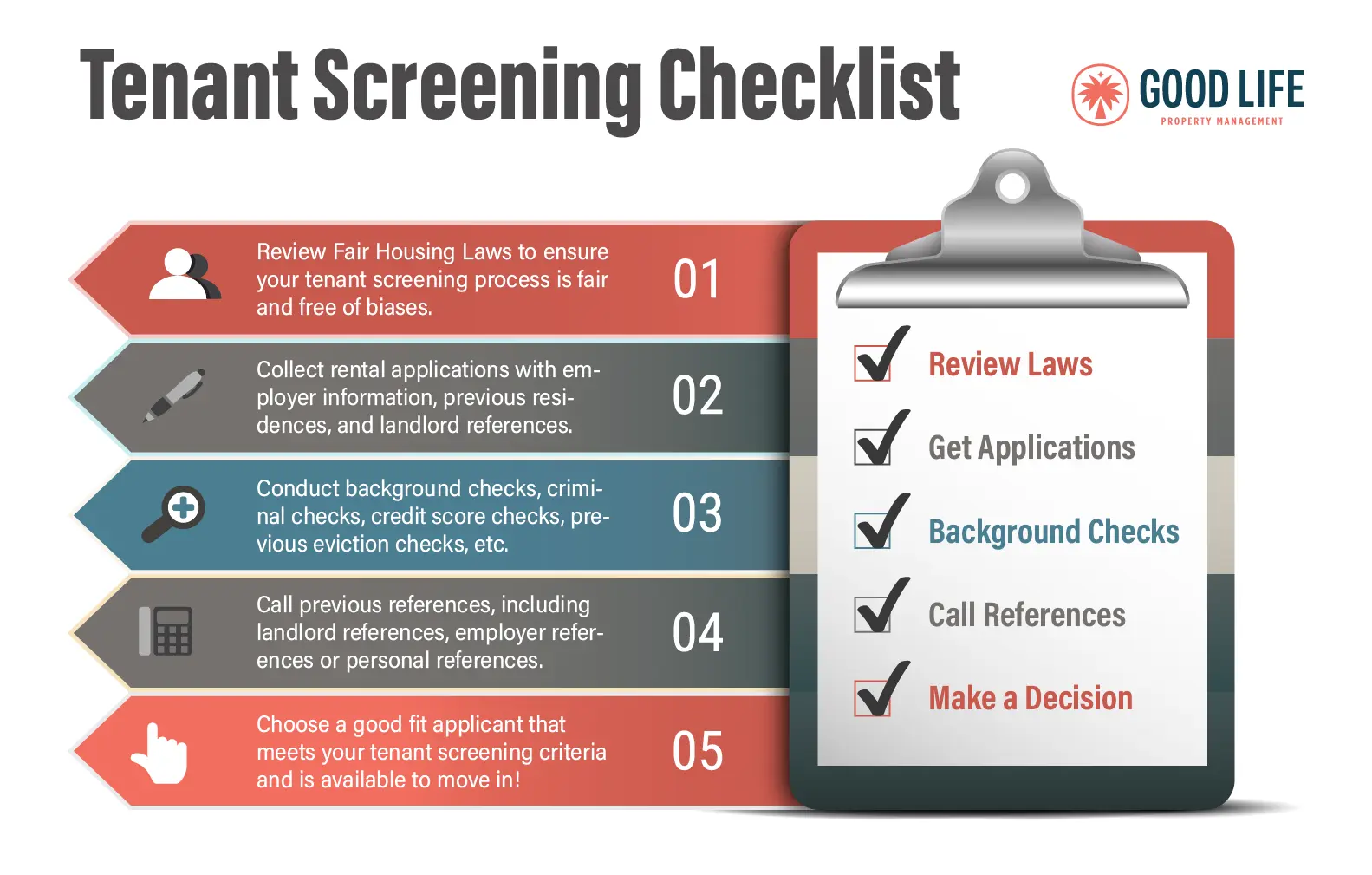
Here's a breakdown of the key steps involved in screening potential tenants:
1. Application Form: The Foundation of Your Screening Process
A detailed rental application is the cornerstone of tenant screening. It provides you with the initial information needed to assess a prospective tenant. Ensure your application includes the following:
- Personal Information: Full name, date of birth, contact information (phone number and email address), and social security number (optional, but recommended for background checks).
- Current and Previous Addresses: At least the past two years of residential history, including addresses, dates of residency, and landlord contact information.
- Employment History: Current and previous employers, job titles, salaries, and contact information for verification.
- Income Information: Proof of income, such as pay stubs, W-2 forms, or bank statements. This is crucial to determine if the tenant can afford the rent. A general rule of thumb is that rent should not exceed 30% of the tenant's gross monthly income.
- References: Personal and professional references who can vouch for the tenant's character and reliability.
- Pet Information: If you allow pets, gather information about the type, breed, and size of any pets the tenant owns.
- Vehicle Information: Make, model, and license plate number of any vehicles the tenant will be parking on the property.
- Emergency Contact Information: Name and contact information of a person to contact in case of an emergency.
- Authorization: A clear statement authorizing you to conduct background checks, credit checks, and contact references. This is essential for legal compliance.
Ensure the application includes a statement that all information provided is true and accurate, and that any false statements may be grounds for denial.
2. Credit Check: Assessing Financial Responsibility
A credit check provides valuable insight into a tenant's financial responsibility and history. It reveals their payment habits, debt levels, and any past financial issues, such as bankruptcies or collections. A good credit score generally indicates a responsible tenant who is likely to pay rent on time.
You can use a reputable tenant screening service to conduct a credit check. These services typically provide a credit report and a credit score, which will help you assess the tenant's creditworthiness.
Key things to look for in a credit report:
- Credit Score: A higher score generally indicates a lower risk. Aim for tenants with a credit score of 650 or higher.
- Payment History: Look for a history of on-time payments and minimal late payments.
- Debt Levels: High debt levels can indicate financial strain and increase the risk of late rent payments.
- Bankruptcies and Collections: These are red flags that suggest financial instability.
- Public Records: Check for any judgments, liens, or evictions.
Remember to comply with the Fair Credit Reporting Act (FCRA) when conducting credit checks. You must obtain the tenant's written consent and provide them with an adverse action notice if you deny their application based on information in the credit report.
3. Criminal Background Check: Ensuring Safety and Security
A criminal background check helps you ensure the safety and security of your property and other tenants. It reveals any past criminal convictions or pending criminal charges. While a criminal record doesn't automatically disqualify an applicant, it's important to carefully consider the nature and severity of the offense, as well as the time elapsed since the conviction.
Again, use a reputable tenant screening service to conduct a criminal background check. These services typically search various databases, including national criminal databases, state criminal databases, and sex offender registries.
Important Considerations:
- Ban the Box Laws: Be aware of any "ban the box" laws in your area, which may restrict your ability to ask about or consider an applicant's criminal history.
- Fair Housing Laws: Ensure that your criminal background check policy complies with fair housing laws. Avoid using blanket policies that automatically disqualify applicants with any criminal record, as this may disproportionately affect certain protected classes.
- Individual Assessment: Consider the nature of the offense, the time elapsed since the conviction, and any evidence of rehabilitation when making your decision.
4. Landlord References: Gaining Insight from Previous Landlords
Contacting previous landlords is a crucial step in verifying the information provided by the applicant and gaining valuable insight into their rental history. Ask previous landlords questions such as:
- Did the tenant pay rent on time?
- Did the tenant maintain the property in good condition?
- Did the tenant cause any disturbances or complaints?
- Did the tenant abide by the terms of the lease agreement?
- Would you rent to this tenant again?
Be sure to ask open-ended questions to encourage the landlord to provide detailed and honest feedback. Pay attention to any red flags or inconsistencies between the information provided by the applicant and the information provided by the landlord.
5. Employment Verification: Confirming Income and Stability
Verifying a tenant's employment history is essential to ensure they have a stable source of income and can afford the rent. Contact the applicant's employer to confirm their job title, salary, and length of employment. You can also request pay stubs or W-2 forms as proof of income.
If the applicant is self-employed, request copies of their tax returns or bank statements to verify their income.
6. Personal References: Assessing Character and Reliability
Contacting personal references can provide additional insight into a tenant's character and reliability. Ask references questions such as:
- How long have you known the applicant?
- What is your relationship to the applicant?
- Do you consider the applicant to be responsible and reliable?
- Would you recommend the applicant as a tenant?
While personal references may be biased, they can still provide valuable information about the applicant's personality and overall character.
Fair Housing Laws and Tenant Screening
It's crucial to comply with fair housing laws throughout the tenant screening process. Federal, state, and local fair housing laws prohibit discrimination based on protected characteristics such as race, color, religion, national origin, sex, familial status, and disability. Avoid asking discriminatory questions or making decisions based on protected characteristics.
Examples of discriminatory questions to avoid:
- Are you married?
- Do you plan to have children?
- What is your religion?
- What country are you from?
Ensure that your tenant screening criteria are objective, consistent, and applied equally to all applicants. Document your screening process and reasons for denial to protect yourself from potential fair housing claims.
Using a Tenant Screening Service
While you can conduct tenant screening yourself, using a reputable tenant screening service can save you time and effort, and ensure that you're complying with all applicable laws. These services typically provide a comprehensive suite of screening tools, including credit checks, criminal background checks, eviction history reports, and landlord reference checks.
When choosing a tenant screening service, consider the following factors:
- Reputation: Choose a service with a good reputation and a proven track record.
- Compliance: Ensure the service complies with all applicable laws, including the FCRA and fair housing laws.
- Cost: Compare the costs of different services and choose one that fits your budget.
- Features: Choose a service that offers the features you need, such as credit checks, criminal background checks, and eviction history reports.
- Customer Support: Ensure the service offers good customer support in case you have any questions or issues.

0 Comments