
Understanding Undervalued Stocks and Growth Potential
Investing in the stock market can be a rewarding endeavor, but it requires careful analysis and strategic decision-making. One popular strategy is to identify undervalued stocks with significant growth potential. This approach aims to find companies whose current market price is lower than their intrinsic value, suggesting that they are poised for future growth and increased profitability. But how exactly do you identify these hidden gems?
Key Metrics and Ratios for Identifying Undervalued Stocks
Several financial metrics and ratios can help investors determine if a stock is undervalued. Understanding these tools is crucial for making informed investment decisions.
Price-to-Earnings (P/E) Ratio
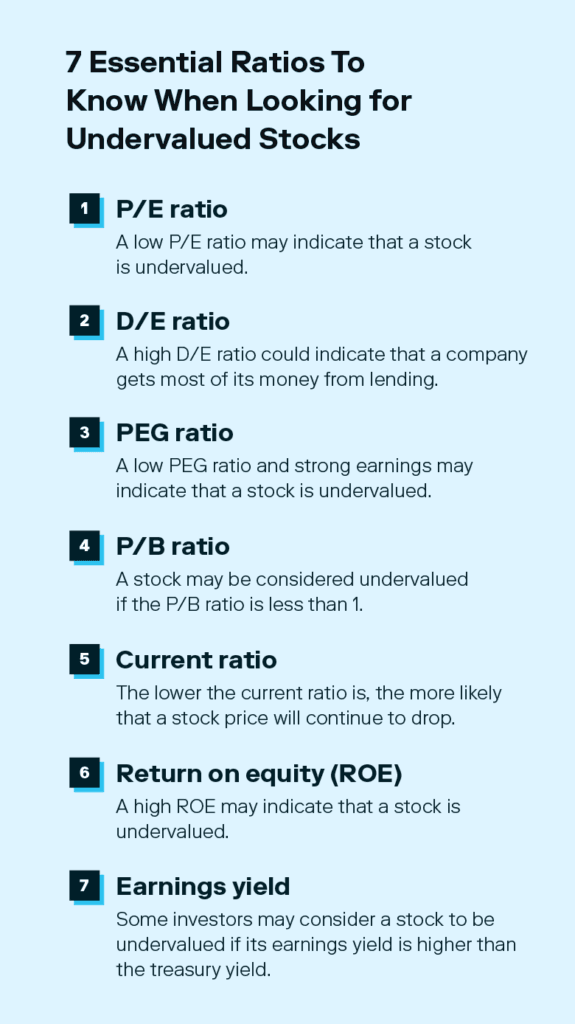
The Price-to-Earnings (P/E) ratio is one of the most widely used metrics. It compares a company's stock price to its earnings per share (EPS). A lower P/E ratio generally indicates that a stock is undervalued compared to its peers or historical averages. However, it’s important to consider industry benchmarks and growth rates. A low P/E ratio might also signify underlying problems within the company, so further investigation is essential. For example, a company with a P/E ratio of 10 might seem undervalued compared to the industry average of 20, suggesting a potential buying opportunity.
Price-to-Book (P/B) Ratio
The Price-to-Book (P/B) ratio compares a company’s market capitalization to its book value of equity. A lower P/B ratio suggests that the market is undervaluing the company's assets. This ratio is particularly useful for evaluating companies with substantial tangible assets, such as manufacturers or real estate companies. A P/B ratio below 1 could indicate undervaluation, but it’s important to assess the quality and liquidity of the assets. A company might have a low P/B ratio because its assets are difficult to sell or are depreciating rapidly.
Price-to-Sales (P/S) Ratio
The Price-to-Sales (P/S) ratio compares a company's market capitalization to its annual revenue. This ratio can be helpful for evaluating companies that are not yet profitable or are experiencing temporary earnings challenges. A lower P/S ratio suggests that the market is undervaluing the company's revenue-generating potential. This ratio is particularly useful when comparing companies within the same industry. A company with a P/S ratio significantly lower than its competitors may be considered undervalued, especially if it has strong growth prospects.
Dividend Yield
Dividend yield is the annual dividend payment divided by the stock price. A higher dividend yield can indicate that a stock is undervalued, especially if the company has a history of consistent dividend payments. This metric is attractive to income-seeking investors. However, it's crucial to assess the sustainability of the dividend. A high dividend yield might be a red flag if the company's earnings are declining or if it's heavily leveraged. A consistently high dividend yield from a financially stable company is a strong indicator of undervaluation.
Analyzing Growth Potential
Identifying undervalued stocks is only half the battle. It's equally important to assess their growth potential. A stock might be undervalued for a reason, and it's crucial to determine if the company has the potential to overcome its challenges and generate future growth.
Revenue Growth
Analyzing a company's historical and projected revenue growth is essential. Consistent revenue growth indicates that the company is successfully expanding its market share and attracting new customers. Look for companies that are outpacing their industry peers. Analyzing quarterly and annual reports can provide insights into revenue trends and growth drivers. A company consistently increasing its revenue year-over-year demonstrates strong growth potential.
Earnings Growth
Earnings growth is a key indicator of a company's profitability and efficiency. Look for companies that are consistently increasing their earnings per share (EPS). This suggests that the company is effectively managing its costs and improving its operational performance. Analyze the company's profit margins and identify any trends. Expanding profit margins indicate that the company is becoming more efficient and profitable.
Industry Trends and Competitive Landscape
Understanding the industry in which the company operates is crucial. Identify emerging trends and assess the company's ability to capitalize on these trends. Analyze the competitive landscape and determine the company's competitive advantages. Does the company have a unique product or service? Does it have a strong brand reputation? A company operating in a growing industry with a strong competitive position is more likely to achieve sustainable growth.
Management Quality and Strategy
The quality of a company's management team can significantly impact its future performance. Look for companies with experienced and capable leaders who have a proven track record of success. Evaluate the company's strategic vision and assess its ability to execute its plans. Are they investing in research and development? Are they expanding into new markets? A strong management team with a clear strategic vision is a positive indicator of growth potential. Read through annual reports and listen to earnings calls to understand the management team's perspective.
Qualitative Factors to Consider
While financial metrics are important, it's also essential to consider qualitative factors that can impact a company's future performance.
Brand Reputation
A strong brand reputation can be a significant competitive advantage. Companies with well-known and respected brands often command higher prices and enjoy greater customer loyalty. Analyze customer reviews and social media sentiment to gauge the company's brand reputation. A positive brand reputation can contribute to long-term growth and profitability.
Competitive Advantage (Moat)
A competitive advantage, often referred to as a "moat," is a sustainable advantage that allows a company to protect its market share and profitability. This could be a patented technology, a strong brand, or a cost advantage. Identifying companies with strong competitive advantages is crucial for long-term investment success. A wide economic moat makes it difficult for competitors to erode the company's profitability.
Corporate Governance
Good corporate governance practices can help ensure that a company is managed in the best interests of its shareholders. Look for companies with independent boards of directors and transparent accounting practices. Poor corporate governance can lead to mismanagement and financial irregularities. Research the company's leadership and their ethical track record.
Tools and Resources for Stock Analysis
Several tools and resources can help investors identify undervalued stocks with growth potential.
Financial Websites and Databases
Websites like Yahoo Finance, Google Finance, and Bloomberg provide a wealth of financial information, including stock quotes, financial statements, and analyst ratings. Databases like Morningstar and Value Line offer in-depth research reports and analysis. These resources can save time and provide valuable insights.
Financial News and Publications
Stay informed about market trends and company news by reading financial publications like The Wall Street Journal, The Financial Times, and Barron's. These publications provide in-depth analysis and commentary on the stock market and individual companies. Following industry-specific news can also provide insights into potential growth opportunities.
Financial Ratios Calculators
Online financial ratio calculators can simplify the process of calculating key metrics. These tools allow you to quickly analyze a company's financial performance and identify potential investment opportunities. Many financial websites offer built-in ratio calculators.

0 Comments