
Understanding Your Credit Score and Why It Matters
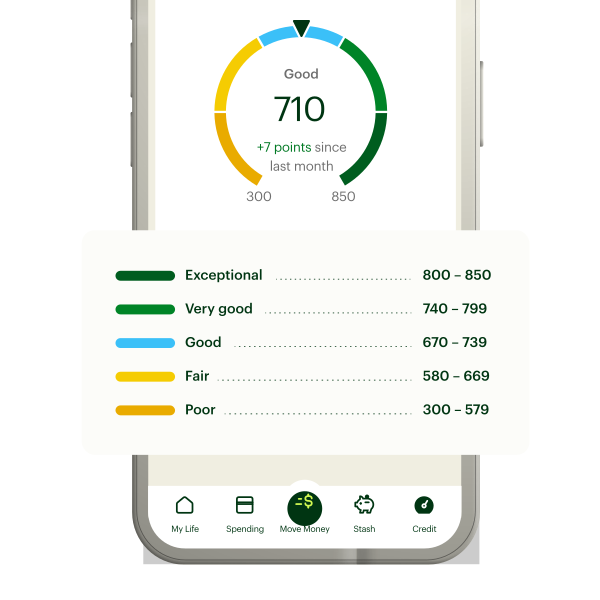
Your credit score is a three-digit number that represents your creditworthiness. Lenders use it to assess the risk of lending you money. A higher credit score generally means you're a lower-risk borrower, which can translate to better interest rates on loans and credit cards. Checking your credit score regularly is crucial for maintaining good financial health. It allows you to identify any errors or fraudulent activity on your credit report and take steps to improve your score if needed.
The Importance of Monitoring Your Credit Score
Ignoring your credit score is like driving a car without looking at the dashboard. You might be heading for trouble without even realizing it. Regularly monitoring your credit score offers several key benefits:
- Early Detection of Identity Theft: Unexplained changes in your credit score could be a sign of identity theft. Monitoring helps you catch fraudulent activity early, minimizing the damage.
- Negotiating Better Interest Rates: A good credit score empowers you to negotiate lower interest rates on loans, mortgages, and credit cards, saving you significant money over time.
- Improving Your Financial Health: Tracking your credit score allows you to identify areas where you can improve your financial habits, such as paying bills on time and keeping credit card balances low.
- Qualifying for Loans and Credit Cards: A strong credit score increases your chances of being approved for loans, credit cards, and other financial products.
Legitimate Ways to Check Your Credit Score for Free
There are several reliable and free ways to check your credit score without impacting it (known as a "soft inquiry"). Avoid websites that promise "instant" or "guaranteed" credit scores without proper authentication, as these may be scams.
1. Through Credit Karma
Credit Karma is a popular website and app that provides free credit scores and credit reports from TransUnion and Equifax. It offers a user-friendly interface and provides insights into the factors affecting your score. Credit Karma is ad-supported, meaning you'll see offers for credit cards and loans based on your credit profile. However, you're not obligated to accept any of these offers.
How it works:
- Create a free account on Credit Karma.
- Provide your personal information, including your name, address, date of birth, and Social Security number (SSN).
- Verify your identity.
- Access your free credit scores and credit reports.
2. Through Credit Sesame
Credit Sesame is another reputable platform that offers free credit scores and credit monitoring. It provides your VantageScore 3.0 based on Experian data. Similar to Credit Karma, Credit Sesame is ad-supported.
How it works:
- Sign up for a free Credit Sesame account.
- Enter your personal information, including your SSN.
- Verify your identity.
- View your free credit score and credit report summary.
3. Through Your Credit Card Issuer
Many credit card issuers now offer free credit scores to their cardholders as a perk. Check your credit card statement or log in to your online account to see if this service is available. Common providers include Discover, Capital One, and Chase. The score provided is usually a VantageScore 3.0 or a FICO score.
How it works:
- Log in to your credit card account online.
- Look for a section labeled "Credit Score," "Credit Monitoring," or similar.
- Enroll in the free service if you haven't already.
- View your credit score and any related information.
4. Through Your Bank or Credit Union
Similar to credit card issuers, some banks and credit unions also offer free credit scores to their customers. Contact your bank or check their website for more information.
How it works:
- Log in to your bank account online.
- Navigate to the section related to credit scores or financial wellness.
- Follow the instructions to access your free credit score.
5. AnnualCreditReport.com
While AnnualCreditReport.com doesn't provide a credit *score*, it's the official website to obtain your free credit *reports* from each of the three major credit bureaus (Equifax, Experian, and TransUnion) once per year. Reviewing your credit reports is essential for identifying errors or fraudulent activity that could be affecting your credit score.
How it works:
- Visit AnnualCreditReport.com.
- Request your free credit reports from Equifax, Experian, and TransUnion. You can request all three at once or spread them out throughout the year.
- Carefully review each report for any inaccuracies or suspicious activity.
Understanding the Different Credit Scoring Models: FICO vs. VantageScore
It's important to understand that there are different credit scoring models. The two most common are FICO and VantageScore. While both are used by lenders, they weigh different factors differently and may result in slightly different scores. FICO is generally considered the industry standard, but VantageScore is gaining popularity.
Key Differences:
- FICO: Developed by Fair Isaac Corporation, FICO scores are widely used by lenders. They consider payment history, amounts owed, length of credit history, credit mix, and new credit.
- VantageScore: Created by the three major credit bureaus (Equifax, Experian, and TransUnion), VantageScore uses a similar range of factors but may weigh them differently. It also has a shorter credit history requirement than FICO.
What to Do if You Find Errors on Your Credit Report
If you find errors on your credit report, it's crucial to dispute them immediately. Here's how:
- Gather Documentation: Collect any documents that support your claim, such as bank statements, payment confirmations, or letters from creditors.
- File a Dispute: Contact the credit bureau that issued the report and file a dispute online, by mail, or by phone.
- Provide Details: Clearly explain the error and provide copies of your supporting documentation.
- Follow Up: The credit bureau has 30 days to investigate your dispute. Follow up with them to ensure they are addressing the issue.
Tips for Improving Your Credit Score
Improving your credit score takes time and effort, but it's well worth it. Here are some key strategies:
- Pay Bills on Time: Payment history is the most important factor in your credit score.
- Keep Credit Card Balances Low: Aim to keep your credit utilization ratio (the amount of credit you're using compared to your credit limit) below 30%.
- Don't Open Too Many New Accounts at Once: Opening several new accounts in a short period of time can lower your credit score.
- Maintain a Mix of Credit Accounts: Having a mix of credit cards, loans, and other types of credit can demonstrate responsible credit management.
- Monitor Your Credit Report Regularly: As mentioned earlier, monitoring your credit report allows you to identify and correct any errors.

0 Comments