
Understanding Cap Rate: A Key Metric for Rental Property Investment
When evaluating potential rental property investments, the capitalization rate, or cap rate, is a crucial metric to understand. It provides a quick and easy way to compare the potential return on investment (ROI) of different properties, regardless of their size or price. Essentially, the cap rate represents the potential annual rate of return you can expect on a property if you bought it with all cash, before considering financing costs or income taxes.
What is Cap Rate and Why Does It Matter?
The cap rate is a fundamental tool for real estate investors because it offers a simplified view of a property's profitability. It helps you assess the inherent risk and potential reward associated with a particular investment. A higher cap rate generally indicates a higher potential return but also potentially higher risk, while a lower cap rate suggests a lower return with potentially lower risk. Knowing how to calculate cap rate allows you to:
- Compare investment opportunities: Quickly assess and compare the profitability of different rental properties.
- Determine if a property is overpriced or underpriced: Compare the cap rate of a property to the average cap rate in its area to identify potential deals.
- Estimate the potential return on investment: Get a sense of the potential annual return you can expect from a rental property.
- Assess the risk associated with an investment: Understand the potential risks involved based on the cap rate and market conditions.
The Cap Rate Formula: A Step-by-Step Guide
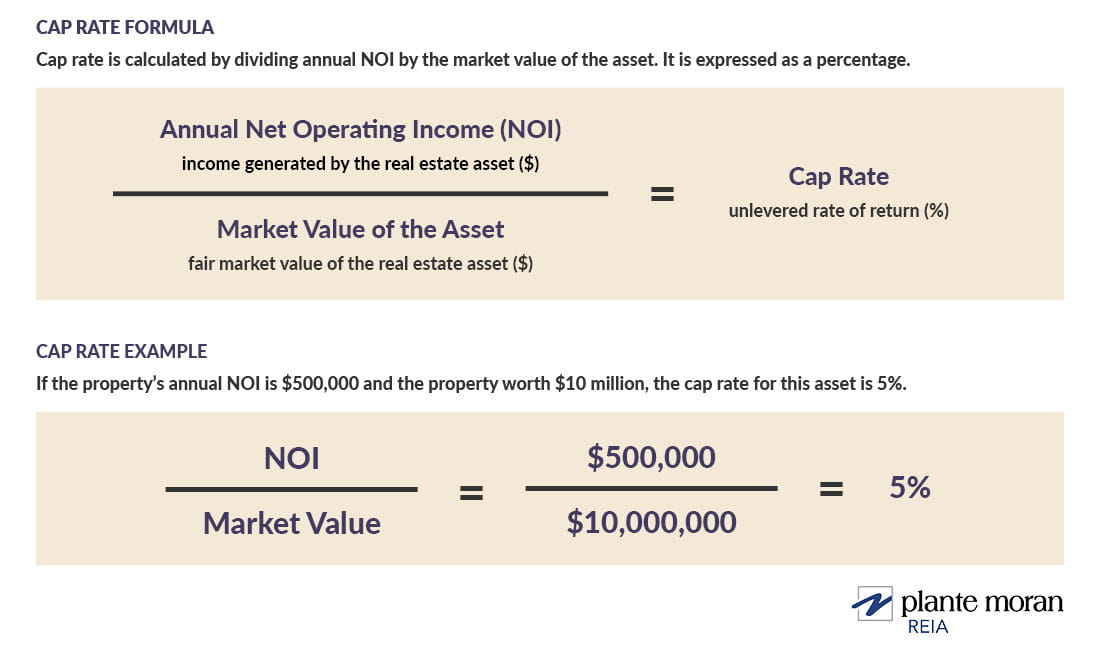
The cap rate formula is relatively simple, but understanding the components is crucial for accurate calculation. The formula is:
Cap Rate = Net Operating Income (NOI) / Current Market Value of the Property
Let's break down each component:
Net Operating Income (NOI)
NOI represents the property's annual income after deducting all operating expenses. It's important to note that NOI does *not* include mortgage payments or income taxes. It focuses solely on the income and expenses directly related to operating the property.
How to Calculate NOI:
- Calculate Gross Rental Income: This is the total income you expect to receive from rent each year, assuming 100% occupancy.
- Calculate Other Income: Include any other income generated by the property, such as laundry fees, parking fees, or vending machine income.
- Calculate Total Revenue: Add Gross Rental Income and Other Income to get your Total Revenue.
- Calculate Operating Expenses: Operating expenses include all costs associated with running the property, such as property taxes, insurance, property management fees, maintenance and repairs, utilities (if paid by the landlord), and vacancy allowance. Vacancy allowance is an estimated percentage of potential rental income lost due to vacancies.
- Calculate NOI: Subtract Operating Expenses from Total Revenue: NOI = Total Revenue - Operating Expenses
Example:
- Gross Rental Income: $60,000
- Other Income: $0
- Total Revenue: $60,000
- Property Taxes: $5,000
- Insurance: $2,000
- Property Management Fees: $6,000
- Maintenance and Repairs: $3,000
- Utilities (Landlord Paid): $1,000
- Vacancy Allowance (5%): $3,000 (5% of $60,000)
- Total Operating Expenses: $20,000
- NOI = $60,000 - $20,000 = $40,000
Current Market Value of the Property
The current market value is the price you would realistically expect to pay for the property in the current market. This can be determined through various methods, including:
- Comparable Sales (Comps): Analyzing recent sales prices of similar properties in the same area. This is the most common and reliable method. A real estate agent or appraiser can help you find and analyze comps.
- Appraisal: Hiring a professional appraiser to provide an independent valuation of the property.
- Market Analysis: Researching market trends and conditions to estimate the property's value.
It's crucial to use an accurate market value to get a reliable cap rate. Overestimating or underestimating the property's value will skew the results.
Putting it All Together: Calculating the Cap Rate
Once you have calculated the NOI and determined the current market value, you can plug the numbers into the cap rate formula.
Example (Continuing from above):
- NOI: $40,000
- Current Market Value: $500,000
- Cap Rate = $40,000 / $500,000 = 0.08 or 8%
In this example, the cap rate is 8%. This means that the property is expected to generate an 8% annual return on investment if purchased with all cash.
Factors Affecting Cap Rate
Several factors can influence the cap rate of a rental property, including:
Location
Location is a primary driver of cap rates. Properties in desirable locations with strong rental demand typically have lower cap rates because investors are willing to accept a lower return for the stability and potential for appreciation. Properties in less desirable locations with higher risk often have higher cap rates to compensate investors for the increased risk.
Property Type
Different property types (e.g., single-family homes, apartment buildings, commercial properties) tend to have different cap rates. Apartment buildings often have higher cap rates than single-family homes due to the potential for higher rental income and economies of scale.
Market Conditions
Overall market conditions, such as interest rates, economic growth, and rental demand, can significantly impact cap rates. In a strong market with low interest rates, cap rates tend to be lower, while in a weaker market with high interest rates, cap rates tend to be higher.
Property Condition
The condition of the property also affects the cap rate. Properties in good condition with minimal deferred maintenance tend to have lower cap rates than properties in poor condition requiring significant repairs.
Lease Terms
The terms of the leases in place can also impact the cap rate. Properties with long-term leases to creditworthy tenants typically have lower cap rates than properties with short-term leases or high tenant turnover.
Using Cap Rate for Investment Decisions
While the cap rate is a valuable tool, it's important to use it in conjunction with other metrics and consider the specific characteristics of each property. Don't rely solely on cap rate to make investment decisions. Consider factors such as:
- Cash Flow: The actual cash flow generated by the property after all expenses, including mortgage payments.
- Appreciation Potential: The potential for the property to increase in value over time.
- Tax Benefits: The tax advantages associated with owning rental property, such as depreciation.
- Your Investment Goals: Your individual investment goals and risk tolerance.
By understanding how to calculate cap rate and considering it alongside other relevant factors, you can make more informed and profitable investment decisions in the rental property market.

0 Comments