
Understanding Your Credit and Why It Matters
Your credit score is a three-digit number that lenders use to assess your creditworthiness. This score plays a crucial role in various aspects of your life, from securing loans and mortgages to renting an apartment and even getting a job. A good credit score opens doors to better interest rates, favorable loan terms, and overall financial flexibility. Conversely, a poor credit score can lead to higher interest rates, loan denials, and limited access to financial products and services. Understanding the factors that influence your credit score is the first step towards taking control of your financial health.
What Makes Up Your Credit Score?
Several factors contribute to your credit score. The most common scoring models, like FICO and VantageScore, consider these elements:
- Payment History (35%): This is the most significant factor. Paying your bills on time, every time, is crucial. Late payments, even by a few days, can negatively impact your score.
- Amounts Owed (30%): This refers to the amount of debt you owe compared to your available credit. Keeping your credit utilization low (ideally below 30%) is essential.
- Length of Credit History (15%): A longer credit history generally indicates a more reliable borrower.
- Credit Mix (10%): Having a mix of different types of credit, such as credit cards, installment loans, and mortgages, can positively impact your score.
- New Credit (10%): Opening too many new credit accounts in a short period can lower your score.
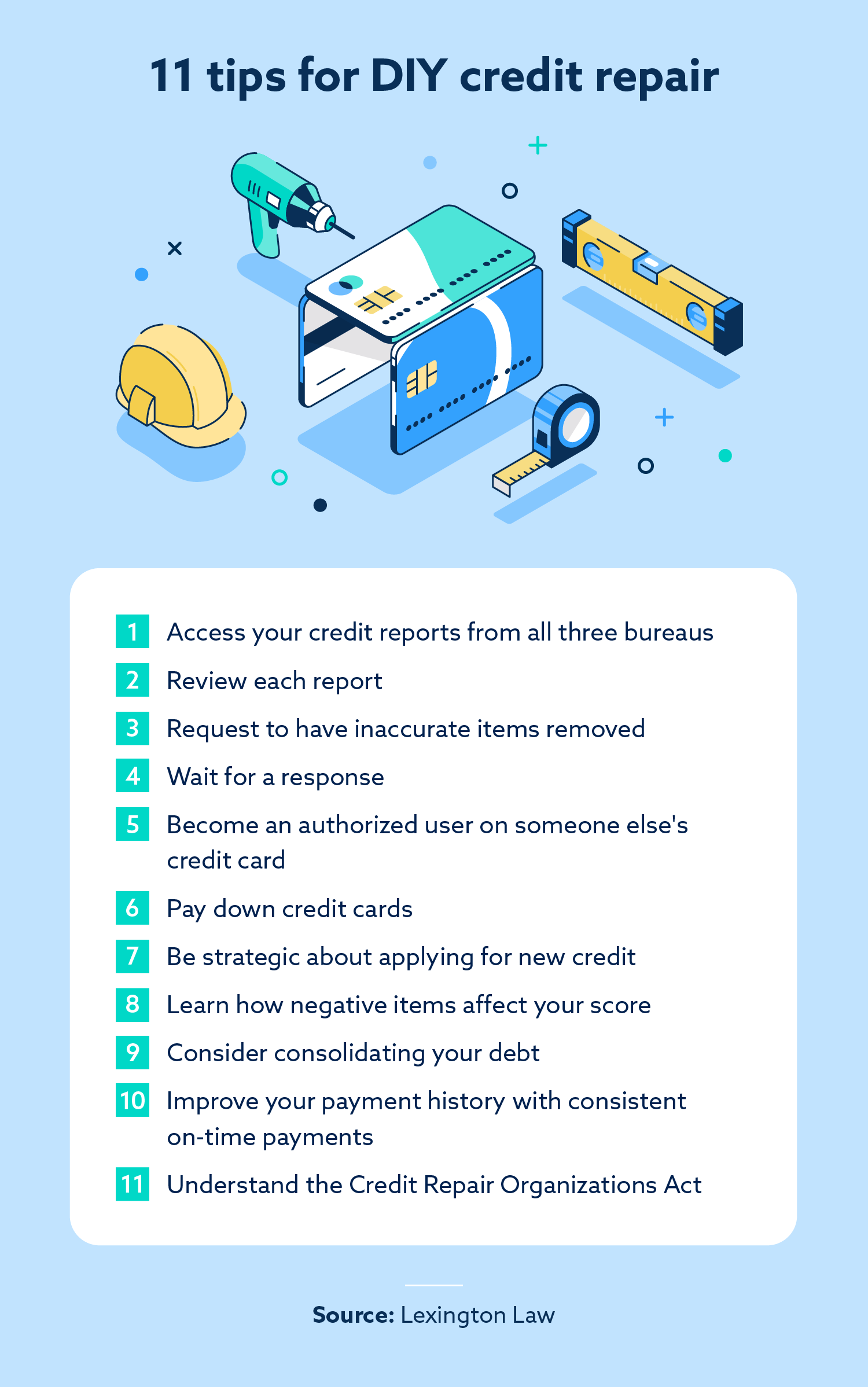
DIY Credit Repair: A Step-by-Step Guide
While professional credit repair services exist, you can often improve your credit score yourself by following these DIY strategies.
1. Obtain and Review Your Credit Reports
The first step in credit repair is to obtain copies of your credit reports from all three major credit bureaus: Equifax, Experian, and TransUnion. You are entitled to a free credit report from each bureau annually through www.annualcreditreport.com. Carefully review each report for errors, inaccuracies, and outdated information. Common errors include:
- Incorrect personal information (name, address, Social Security number)
- Accounts that don't belong to you
- Late payments that were not actually late
- Accounts listed multiple times
- Accounts with incorrect balances
- Accounts that should have been closed but are still listed as open
2. Dispute Errors and Inaccuracies
If you find any errors or inaccuracies on your credit reports, dispute them directly with the credit bureaus. You can typically do this online, by mail, or by phone. When disputing an error, provide clear and concise information, including:
- Your full name, address, and Social Security number
- A copy of your credit report with the error circled or highlighted
- A detailed explanation of the error
- Any supporting documentation that proves the error (e.g., payment records, account statements)
The credit bureaus have 30 days to investigate your dispute. If they find that the information is inaccurate, they must correct or delete it from your credit report.
3. Pay Your Bills On Time, Every Time
As mentioned earlier, payment history is the most significant factor in your credit score. Make sure to pay all your bills on time, every time. Consider setting up automatic payments to avoid missing deadlines. Even one late payment can negatively impact your credit score, so prioritize paying your bills on time.
4. Reduce Your Credit Utilization
Credit utilization is the amount of debt you owe compared to your available credit. For example, if you have a credit card with a $1,000 limit and you owe $300, your credit utilization is 30%. Aim to keep your credit utilization below 30% on each credit card and across all your credit accounts. The lower, the better. To reduce your credit utilization:
- Pay down your credit card balances.
- Request a credit limit increase (but be careful not to overspend).
- Consider transferring balances to a card with a lower interest rate.
5. Become an Authorized User
If you have a friend or family member with a credit card account in good standing, ask if you can become an authorized user. This can help you build credit history and improve your credit score, especially if you have a limited credit history. However, make sure the primary account holder is responsible and pays their bills on time, as their payment behavior will also affect your credit score.
6. Avoid Opening Too Many New Accounts
Opening too many new credit accounts in a short period can lower your credit score. Each time you apply for credit, it triggers a hard inquiry on your credit report, which can slightly lower your score. Additionally, having too many new accounts can make you appear riskier to lenders.
7. Monitor Your Credit Regularly
Even after you've taken steps to improve your credit, it's important to monitor your credit reports and scores regularly. This will help you identify any new errors or inaccuracies and track your progress over time. You can use free credit monitoring services offered by many banks and credit card companies, or you can purchase a credit monitoring subscription.
Dealing with Negative Items on Your Credit Report
Negative items on your credit report, such as late payments, collections accounts, and charge-offs, can significantly lower your credit score. Here's how to address them:
Late Payments
If you have late payments on your credit report, try to negotiate with the creditor to have them removed. You can write a goodwill letter explaining the circumstances surrounding the late payments and asking them to remove the negative information as a gesture of goodwill. While there's no guarantee they'll agree, it's worth a try.
Collections Accounts
Collections accounts can stay on your credit report for up to seven years. If you have a collections account, consider negotiating a "pay-for-delete" agreement with the collection agency. This means you agree to pay the debt in exchange for the collection agency removing the account from your credit report. Get the agreement in writing before making any payments.
Charge-Offs
A charge-off occurs when a creditor writes off a debt as uncollectible. Charge-offs can also stay on your credit report for up to seven years. Similar to collections accounts, you can try to negotiate a pay-for-delete agreement with the creditor. Alternatively, you can try to dispute the charge-off if you believe it's inaccurate or if the creditor violated any laws when attempting to collect the debt.
Bankruptcy
Bankruptcy can have a significant negative impact on your credit score. Chapter 7 bankruptcy can stay on your credit report for up to 10 years, while Chapter 13 bankruptcy can stay on your credit report for up to seven years. While bankruptcy can be difficult to overcome, it's possible to rebuild your credit after bankruptcy by following the tips outlined above.
Important Considerations
DIY credit repair takes time and effort. It's not a quick fix, and results may vary. Be patient and persistent, and don't get discouraged if you don't see immediate results. Also, be wary of credit repair companies that make unrealistic promises or charge upfront fees. These companies may be scams, and they may not be able to deliver on their promises.

0 Comments