
Understanding Debt Relief Options: Debt Settlement vs. Debt Consolidation
Facing overwhelming debt can be stressful and lead to significant financial hardship. Fortunately, there are strategies available to help you regain control of your finances. Two common options are debt settlement and debt consolidation. While both aim to alleviate debt burdens, they operate differently and have distinct advantages and disadvantages. Understanding these differences is crucial for choosing the right path for your specific financial situation. This article will explore debt settlement and debt consolidation, helping you determine which option might be the better fit for you.
What is Debt Settlement?
Debt settlement involves negotiating with your creditors to pay off your debts for less than the full amount owed. This typically involves a debt settlement company that acts as an intermediary between you and your creditors. The goal is to convince creditors that accepting a reduced payment is better than receiving nothing at all, especially if you are facing significant financial difficulties.
How Debt Settlement Works
The process generally unfolds as follows:
- Assessment: You'll consult with a debt settlement company to assess your financial situation and determine if debt settlement is a viable option.
- Savings: Instead of paying your creditors directly, you'll make monthly payments into a dedicated savings account managed by the debt settlement company.
- Negotiation: Once a sufficient amount has accumulated in your savings account, the debt settlement company will begin negotiating with your creditors to settle your debts for a reduced amount.
- Settlement: If an agreement is reached, you'll use the funds in your savings account to pay the agreed-upon settlement amount.
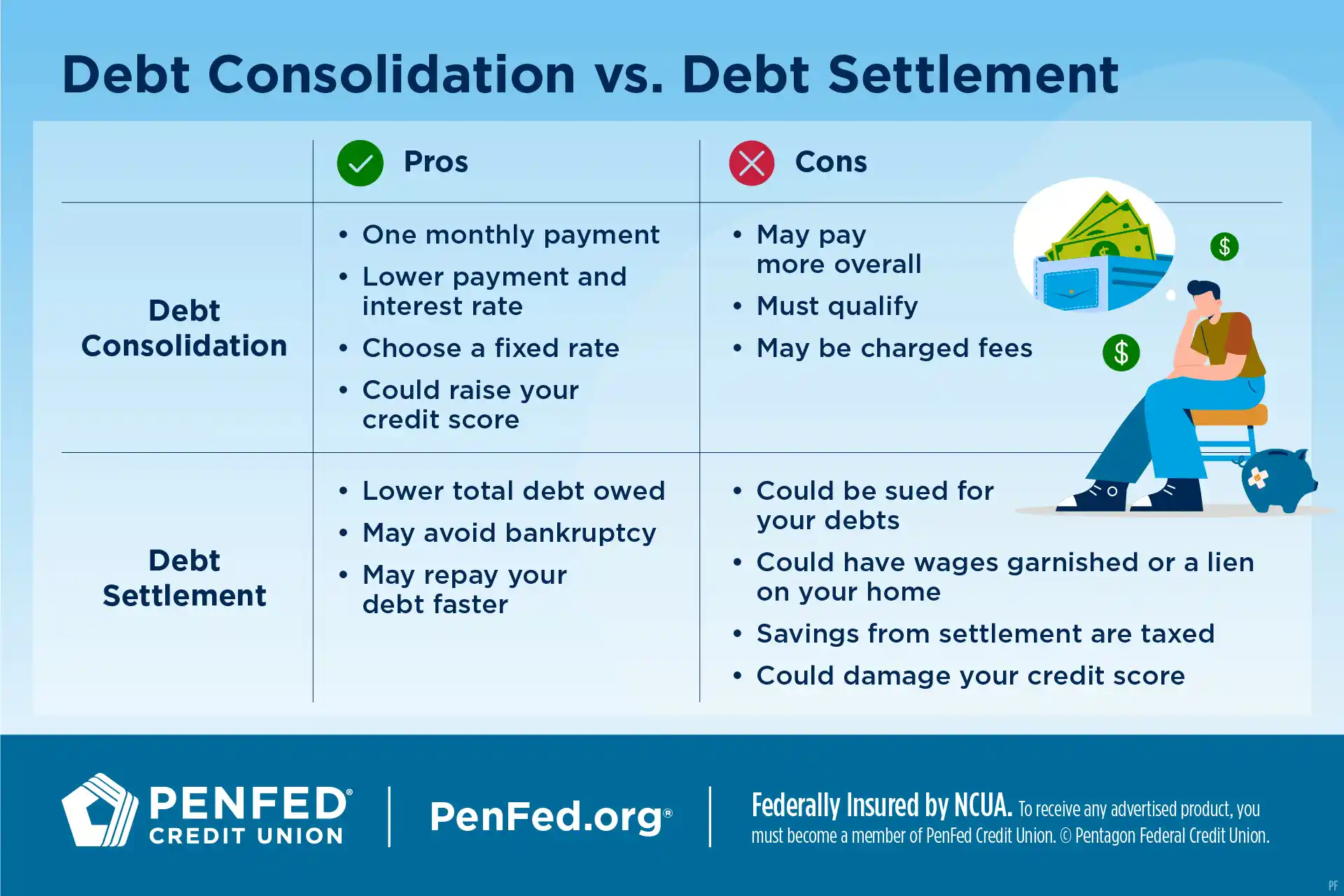
Pros of Debt Settlement
- Potential for Significant Savings: Debt settlement can potentially reduce the total amount you owe, sometimes by a substantial percentage.
- One Lump Sum Payment: Once a settlement is reached, you pay a lump sum, which can feel liberating.
Cons of Debt Settlement
- Damage to Credit Score: Debt settlement typically involves stopping payments to your creditors, which can severely damage your credit score. This can make it difficult to obtain loans, credit cards, or even rent an apartment in the future.
- Creditor Lawsuits: Creditors are not obligated to negotiate or accept a settlement offer. They may choose to pursue legal action, such as filing a lawsuit, to recover the full amount owed.
- Fees: Debt settlement companies typically charge fees, often a percentage of the total debt settled. These fees can add to the overall cost of the process.
- Tax Implications: The amount of debt that is forgiven through debt settlement may be considered taxable income by the IRS.
- No Guarantee of Success: There's no guarantee that debt settlement will be successful. Creditors may refuse to negotiate, or you may be unable to save enough money to reach a settlement.
What is Debt Consolidation?
Debt consolidation involves taking out a new loan to pay off multiple existing debts. This simplifies your finances by replacing several debts with varying interest rates and due dates with a single loan and a single monthly payment. The goal is to secure a lower interest rate or more favorable repayment terms, making your debt more manageable.
How Debt Consolidation Works
There are several ways to consolidate debt:
- Personal Loan: Obtain a personal loan from a bank, credit union, or online lender. Use the loan proceeds to pay off your existing debts.
- Balance Transfer Credit Card: Transfer balances from high-interest credit cards to a new credit card with a lower interest rate or a promotional 0% APR period.
- Home Equity Loan or HELOC: If you own a home, you may be able to borrow against your home equity to consolidate your debts.
Pros of Debt Consolidation
- Simplified Payments: Consolidating your debts into a single loan simplifies your finances by reducing the number of payments you need to track.
- Potentially Lower Interest Rate: If you can secure a lower interest rate on your consolidated loan, you can save money on interest charges over the life of the loan.
- Improved Credit Score (Potentially): Making timely payments on your consolidated loan can help improve your credit score over time, especially if you were previously struggling to manage multiple debt payments.
- Fixed Repayment Schedule: A debt consolidation loan typically has a fixed repayment schedule, making it easier to budget and plan for your future.
Cons of Debt Consolidation
- Requires Good Credit (Generally): To qualify for a debt consolidation loan with a favorable interest rate, you typically need a good credit score.
- May Extend Repayment Period: If you choose a longer repayment term to lower your monthly payments, you may end up paying more in interest over the life of the loan.
- Risk of Losing Collateral: If you use a secured loan, such as a home equity loan, to consolidate your debts, you risk losing your collateral (e.g., your home) if you default on the loan.
- Fees: Some debt consolidation loans may come with origination fees or other charges.
Debt Settlement vs. Debt Consolidation: A Head-to-Head Comparison
Here's a table summarizing the key differences between debt settlement and debt consolidation:
| Feature | Debt Settlement | Debt Consolidation |
|---|---|---|
| Goal | Reduce the total amount owed by negotiating with creditors. | Simplify debt management by combining multiple debts into one loan. |
| Impact on Credit Score | Typically damages credit score significantly. | Can improve credit score with timely payments, but requires good credit to qualify for favorable terms. |
| Risk of Lawsuits | Higher risk, as creditors may not agree to settle. | Lower risk, as you are making regular payments on a new loan. |
| Interest Rates | No direct impact on interest rates during the process. | Aims to lower the overall interest rate on your debt. |
| Fees | Typically involves fees charged by the debt settlement company. | May involve origination fees or other charges on the new loan. |
| Tax Implications | Forgiven debt may be considered taxable income. | No immediate tax implications. |
Which Option is Right for You?
The best choice between debt settlement and debt consolidation depends on your individual circumstances, including your credit score, debt level, income, and overall financial goals. Here's a guideline:
- Consider Debt Settlement if: You are facing severe financial hardship, have a significant amount of unsecured debt, and are willing to accept the potential negative impact on your credit score. You have tried other options and they have not worked.
- Consider Debt Consolidation if: You have a good credit score, are able to qualify for a loan with a lower interest rate, and are looking to simplify your debt management and improve your credit over time.
It's important to carefully weigh the pros and cons of each option and to consult with a qualified financial advisor before making a decision. A financial advisor can help you assess your situation and determine the best course of action for achieving your financial goals.

0 Comments