
Why Real Estate Investment Analysis is Crucial
Investing in real estate can be a lucrative venture, but it's not without its risks. Successful real estate investing hinges on thorough analysis. Without the right tools and understanding, you could easily overpay for a property, underestimate expenses, or misjudge the potential return on investment. Real estate investment analysis helps you make informed decisions, minimizing risk and maximizing profit potential. By carefully evaluating properties, you can identify those with the strongest potential for cash flow, appreciation, and long-term wealth building.
Key Factors to Consider in Real Estate Analysis
Before diving into the tools, it's important to understand the key factors you'll be analyzing:
- Cash Flow: The net income generated by a property after all expenses are paid.
- Capitalization Rate (Cap Rate): A rate used to estimate the potential rate of return on a real estate investment.
- Return on Investment (ROI): Measures the profitability of an investment relative to its cost.
- Internal Rate of Return (IRR): A discount rate that makes the net present value (NPV) of all cash flows from a particular project equal to zero.
- Net Operating Income (NOI): Revenue less all operating expenses.
- Vacancy Rate: The percentage of unoccupied units in a property.
- Comparable Sales (Comps): Data from similar properties that have recently sold in the area.
- Market Trends: Understanding the overall economic and demographic trends in the local market.
Top Real Estate Investment Analysis Tools
Now, let's explore some of the best tools available to help you analyze real estate investments efficiently and accurately:
1. Microsoft Excel/Google Sheets
While not specifically designed for real estate, Excel and Google Sheets are powerful and versatile tools for creating your own custom analysis spreadsheets. You can build models to calculate cash flow, ROI, cap rates, and more. Their flexibility allows you to tailor your analysis to specific property types and investment strategies.
Pros: Highly customizable, readily available, relatively inexpensive (often free with existing subscriptions), allows for detailed scenario planning.
Cons: Requires significant manual data entry, can be time-consuming to build complex models, prone to errors if not carefully designed.
2. BiggerPockets Real Estate Investment Calculators
BiggerPockets offers a suite of free calculators designed specifically for real estate investors. These calculators cover various scenarios, including rental property analysis, fix-and-flip analysis, and BRRRR (Buy, Rehab, Rent, Refinance, Repeat) analysis. They are user-friendly and provide quick estimates of key metrics.
Pros: Free, easy to use, designed specifically for real estate investing, provides instant results.
Cons: Less customizable than Excel, may not be suitable for complex investment scenarios, requires internet access.
3. DealCheck
DealCheck is a comprehensive real estate analysis software that helps you quickly evaluate properties and generate professional reports. It automates many of the data entry tasks and provides detailed financial projections. DealCheck integrates with Zillow and other data sources to streamline the analysis process.
Pros: Automates data entry, generates professional reports, integrates with Zillow and other data sources, offers a variety of analysis tools.
Cons: Subscription required, can be overwhelming for beginners, may require a learning curve to master all features.
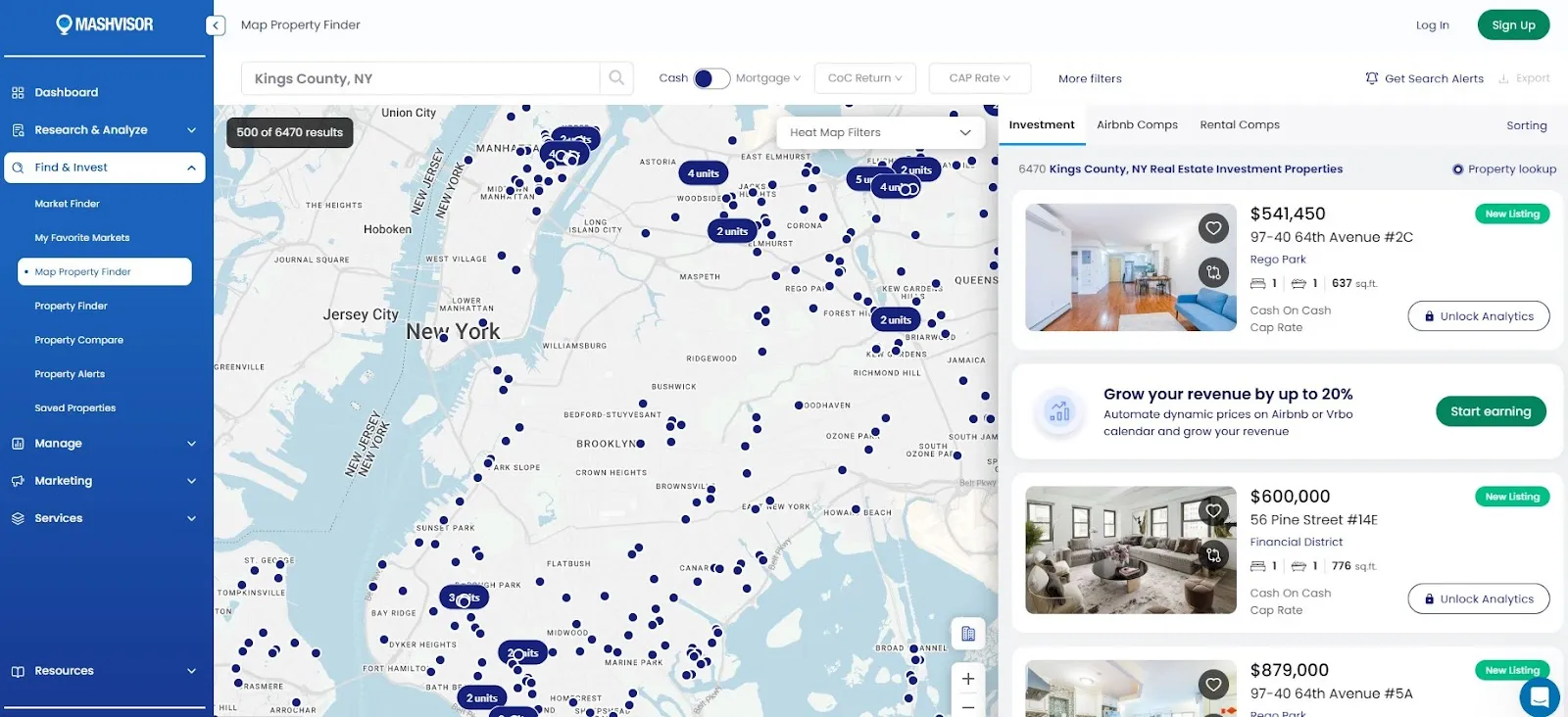
4. Mashvisor
Mashvisor is a real estate data analytics platform that provides insights into rental property performance. It uses data from Airbnb, Zillow, and other sources to estimate occupancy rates, rental income, and expenses. Mashvisor helps you identify profitable rental markets and properties.
Pros: Provides data-driven insights, analyzes rental property performance, identifies profitable markets, integrates with Airbnb and Zillow.
Cons: Subscription required, data accuracy can vary depending on the market, focuses primarily on rental properties.
5. RealData
RealData offers a range of real estate investment analysis software, including programs for commercial real estate, residential rentals, and development projects. Their software provides sophisticated financial modeling capabilities and generates detailed reports.
Pros: Sophisticated financial modeling, detailed reports, suitable for complex projects, offers specialized software for different property types.
Cons: More expensive than other options, requires a strong understanding of real estate finance, can be overwhelming for beginners.
6. PropertyMetrics
PropertyMetrics is a cloud-based platform for commercial real estate analysis and management. It offers tools for property valuation, cash flow analysis, and lease management. PropertyMetrics is designed for real estate professionals and investors who need to manage a portfolio of properties.
Pros: Cloud-based platform, designed for commercial real estate, offers tools for valuation and lease management, suitable for managing a portfolio of properties.
Cons: Subscription required, more focused on commercial properties, may not be suitable for individual investors.
7. CREmodel
CREmodel offers Excel-based templates for commercial real estate analysis. These templates are designed to be user-friendly and provide detailed financial projections. CREmodel covers a variety of property types, including office buildings, retail centers, and apartment complexes.
Pros: User-friendly Excel templates, detailed financial projections, covers a variety of property types, relatively inexpensive.
Cons: Requires Microsoft Excel, may not be as customizable as building your own spreadsheet from scratch, requires manual data entry.
8. Rentometer
Rentometer is a tool specifically designed to help you determine appropriate rental rates for your properties. It provides data on comparable rental rates in your area, allowing you to set competitive prices and maximize your rental income.
Pros: Focuses specifically on rental rates, provides data on comparable properties, helps you set competitive prices, easy to use.
Cons: Limited to rental rate analysis, doesn't provide a comprehensive investment analysis, requires internet access.
Choosing the Right Tool for Your Needs
The best real estate investment analysis tool for you will depend on your experience level, budget, and investment strategy. If you're a beginner, free tools like BiggerPockets calculators or a simple Excel spreadsheet may be a good starting point. As you gain experience and your investment portfolio grows, you may want to consider investing in more sophisticated software like DealCheck or Mashvisor. For commercial real estate professionals, PropertyMetrics or RealData may be more appropriate.
Regardless of the tool you choose, remember that accurate data and a thorough understanding of real estate finance are essential for making informed investment decisions. Take the time to learn how to use your chosen tool effectively and always double-check your assumptions and calculations.

0 Comments