
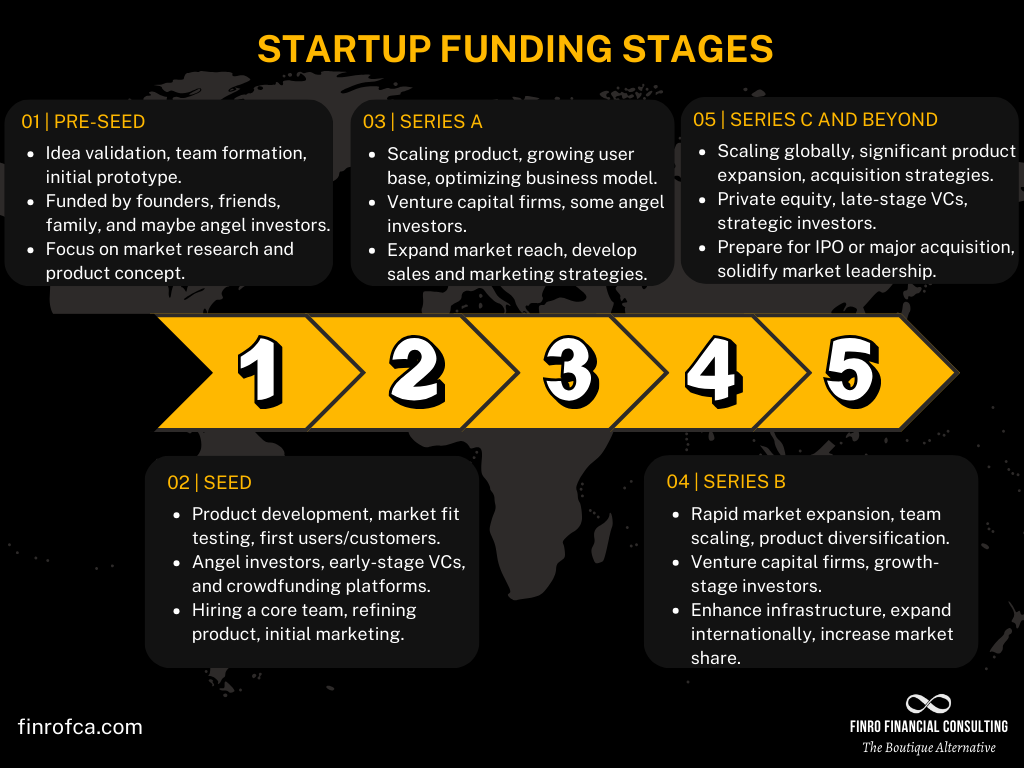
Understanding Angel Investing for Startup Funding
Securing funding is a critical challenge for startups. Angel investing represents a vital source of capital for early-stage companies, offering not only financial support but also valuable mentorship and industry connections. Angel investors are typically high-net-worth individuals who invest their own money in startups in exchange for equity. Understanding the nuances of angel investing is crucial for both startups seeking funding and individuals looking to become angel investors.
Key Angel Investing Strategies for Startups
For startups, attracting angel investors requires a well-defined strategy that highlights the company's potential for growth and profitability. Here are some essential strategies:
1. Craft a Compelling Business Plan
A comprehensive and well-structured business plan is the foundation of any successful fundraising effort. This plan should clearly articulate the problem the startup is solving, the proposed solution, the target market, the competitive landscape, the business model, and the financial projections. Angel investors want to see a clear roadmap for the company's future and a detailed understanding of the market opportunity.
The business plan should include a detailed market analysis, demonstrating a clear understanding of the target audience and the competitive landscape. It should also outline the company's marketing and sales strategies, including how the startup plans to acquire and retain customers. Financial projections should be realistic and supported by data, including revenue forecasts, expense budgets, and cash flow projections. A strong business plan instills confidence in potential investors and demonstrates the startup's commitment to success.
2. Develop a Concise and Engaging Pitch Deck
While a business plan provides a detailed overview of the company, a pitch deck is a concise and visually appealing presentation that summarizes the key aspects of the business. The pitch deck should be designed to capture the attention of angel investors and quickly communicate the startup's value proposition. A typical pitch deck includes slides covering the problem, solution, market opportunity, business model, team, traction, and financial projections. The pitch deck needs to be clear, concise, and visually appealing.
The pitch deck should be designed to be delivered in a short amount of time, typically 10-15 minutes. It's crucial to practice the pitch and be prepared to answer questions from investors. A strong pitch deck can be a powerful tool for attracting angel investors and securing funding.
3. Network and Build Relationships
Finding the right angel investors requires networking and building relationships within the startup ecosystem. Attend industry events, pitch competitions, and networking events to meet potential investors. Leverage online platforms like LinkedIn to connect with angel investors and venture capitalists. Building relationships takes time and effort, but it can significantly increase the chances of finding the right investors for the startup. Joining angel investor networks like AngelList, Gust, and local angel groups can also provide access to a wider pool of potential investors.
Personal introductions are often more effective than cold outreach. Try to get introduced to angel investors through mutual connections. Attend industry events to meet and network with potential investors. Remember to follow up with investors after meeting them to maintain the relationship and keep them updated on the startup's progress.
4. Understand Valuation and Equity
Determining the appropriate valuation for the startup is a critical aspect of angel investing. Valuation is the process of estimating the worth of the company, which is used to determine the amount of equity that will be offered to investors. It's important to understand different valuation methods, such as discounted cash flow analysis, comparable company analysis, and venture capital method. Negotiating the terms of the investment, including the valuation, equity stake, and investor rights, is a crucial part of the fundraising process.
Be prepared to justify the valuation based on the company's potential for growth and profitability. Consider offering convertible notes or SAFEs (Simple Agreements for Future Equity) as an alternative to traditional equity financing. These instruments allow the startup to raise capital quickly and defer the valuation discussion to a later stage.
5. Showcase Traction and Milestones
Angel investors are looking for evidence that the startup is making progress and achieving its goals. Showcase any traction the company has achieved, such as customer growth, revenue generation, product milestones, and partnerships. Demonstrating progress builds confidence in the startup's ability to execute its business plan and achieve its financial projections. Highlighting key milestones and achievements will make the startup more attractive to potential investors.
Track key metrics and use data to demonstrate the company's progress. Provide regular updates to investors, even if they haven't invested yet. This helps build trust and keeps them informed about the company's progress. Be transparent about challenges and setbacks, and explain how the company is addressing them.
Angel Investing Strategies from the Investor Perspective
For individuals considering angel investing, a strategic approach is essential to maximize returns and mitigate risk. Here are some key strategies:
1. Due Diligence is Paramount
Before investing in a startup, conduct thorough due diligence to assess the company's potential. This involves reviewing the business plan, financial projections, market analysis, and management team. It also includes talking to customers, competitors, and industry experts. Due diligence helps investors understand the risks and rewards of investing in a particular startup.
Verify the information provided by the startup and look for any red flags. Assess the market opportunity and the competitive landscape. Evaluate the management team's experience and expertise. Understand the company's intellectual property and legal structure. Thorough due diligence can help investors make informed investment decisions.
2. Diversify Your Portfolio
Angel investing is inherently risky, so it's important to diversify your portfolio by investing in multiple startups. This helps mitigate the risk of losing money on any single investment. A diversified portfolio increases the chances of generating positive returns over the long term. Aim to invest in a variety of industries and stages of development.
Consider investing in a mix of early-stage and later-stage startups. Allocate capital across different sectors and geographies. Diversification is a key risk management strategy for angel investors.
3. Focus on Specific Industries or Areas of Expertise
Investing in industries or areas where you have expertise can provide a competitive advantage. Understanding the market dynamics, technology, and competitive landscape can help you make better investment decisions. Focus on startups that align with your interests and knowledge.
Leverage your industry connections to evaluate potential investments. Provide mentorship and guidance to the startups you invest in. This can help them succeed and increase the chances of generating positive returns.
4. Build a Network of Fellow Investors
Collaborating with other angel investors can provide access to deal flow, expertise, and resources. Join angel investor networks or syndicates to share information and co-invest in startups. Building a network of fellow investors can help you make better investment decisions and increase your chances of success.
Share due diligence findings and investment insights with other investors. Participate in group discussions and learn from their experiences. Co-investing can reduce risk and increase the potential for returns.
5. Be Patient and Prepared for Illiquidity
Angel investing is a long-term investment strategy. It can take several years for a startup to generate a return on investment, and there is no guarantee of success. Be prepared for illiquidity, as it may be difficult to sell your shares in a private company. Angel investing requires patience and a long-term perspective.
Understand the exit strategies for your investments, such as an acquisition or an IPO. Be prepared to hold your shares for several years. Angel investing is not a get-rich-quick scheme.

0 Comments