
Understanding Rental Property Cash Flow: The Key to Investment Success
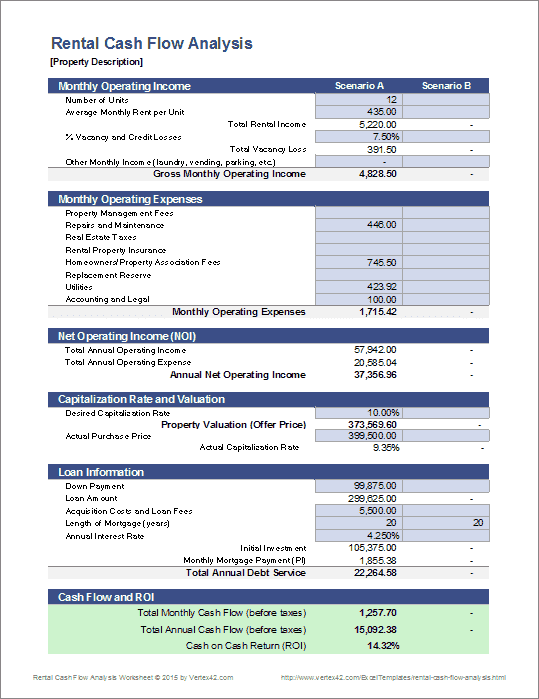
Investing in rental properties can be a lucrative venture, but it's crucial to understand the financial aspects before diving in. One of the most important metrics to track is cash flow. Positive cash flow means your rental income exceeds your expenses, while negative cash flow means the opposite. Accurately calculating your potential cash flow is essential for making informed investment decisions. That's where a rental property cash flow calculator spreadsheet comes in.
Why Use a Rental Property Cash Flow Calculator Spreadsheet?
A rental property cash flow calculator spreadsheet provides a structured and organized way to analyze the potential profitability of a rental property. It helps you:
- Estimate Income and Expenses: Accurately project your rental income and all associated expenses.
- Identify Potential Pitfalls: Spot potential financial problems before they arise.
- Compare Investment Opportunities: Quickly compare the cash flow potential of different properties.
- Secure Financing: Provide lenders with a clear picture of your property's financial viability.
- Make Informed Decisions: Ultimately, make smarter investment choices based on data-driven insights.
Essential Components of a Rental Property Cash Flow Calculator Spreadsheet
A comprehensive rental property cash flow calculator spreadsheet should include the following key components:
Income Section
This section focuses on all sources of income generated by the rental property.
- Rental Income: The amount of rent you expect to receive each month. Research comparable rentals in the area to determine a realistic market rate. Consider seasonality and potential vacancy periods.
- Other Income: Include any other income sources, such as late fees, pet fees, laundry income (if applicable), or parking fees.
Expense Section
This is where you'll detail all the expenses associated with owning and operating the rental property. Be thorough and include everything, even seemingly small expenses.
- Mortgage Payment: The monthly payment for your mortgage loan. This includes principal and interest. Use an amortization schedule to accurately break down the principal and interest portions.
- Property Taxes: The annual property taxes divided by 12 to get the monthly cost. Check with your local assessor's office for accurate tax rates.
- Insurance: The monthly cost of your landlord insurance policy. Get quotes from multiple insurance providers to find the best rate.
- Property Management Fees: If you're using a property manager, include their monthly fees. Typically, property management fees range from 8% to 12% of the monthly rent.
- Maintenance and Repairs: Allocate funds for routine maintenance and unexpected repairs. A general rule of thumb is to budget 1% of the property value annually for maintenance and repairs.
- Vacancy Allowance: Account for potential periods when the property is vacant. A vacancy rate of 5% to 10% is a reasonable estimate in most markets.
- Capital Expenditures (CapEx): Budget for major repairs or replacements that occur infrequently, such as a new roof, HVAC system, or appliances. Spread the cost of these expenses over their expected lifespan.
- Utilities: If you're responsible for paying any utilities (water, gas, electricity), include those costs. Determine which utilities will be paid by you versus the tenant.
- HOA Fees: If the property is part of a homeowner's association, include the monthly HOA fees.
- Landscaping: Include costs for lawn care, gardening, and snow removal (if applicable).
- Pest Control: Budget for regular pest control services.
- Advertising/Marketing: Costs associated with finding new tenants.
Cash Flow Calculation
This section calculates the overall cash flow of the rental property.
- Gross Rental Income: Total rental income before expenses.
- Total Expenses: Sum of all expenses listed in the expense section.
- Net Operating Income (NOI): Gross Rental Income - Total Expenses (excluding mortgage payments).
- Cash Flow: Net Operating Income - Mortgage Payment.
Finding and Using a Rental Property Cash Flow Calculator Spreadsheet
You can find rental property cash flow calculator spreadsheets online through various sources:
- Real Estate Websites: Many real estate websites offer free or paid spreadsheet templates.
- Financial Websites: Some financial websites provide calculators and spreadsheet templates for real estate investing.
- Spreadsheet Software Providers: Microsoft Excel and Google Sheets offer templates for various financial calculations, including rental property analysis.
- Real Estate Professionals: Realtors, lenders, and property managers may have spreadsheet templates they can share.
Once you've found a spreadsheet, download it and customize it with your specific property information. Be sure to carefully review all the formulas and assumptions to ensure they are accurate and appropriate for your situation.
Tips for Accurate Cash Flow Projections
To ensure your cash flow projections are as accurate as possible, consider the following tips:
- Research Local Market Rents: Don't rely on guesswork. Thoroughly research comparable rentals in the area to determine a realistic market rent.
- Be Conservative with Income Estimates: It's better to underestimate income and overestimate expenses.
- Account for All Expenses: Don't forget to include all expenses, even seemingly small ones.
- Factor in Vacancy: Vacancy is inevitable. Be sure to account for potential periods when the property is vacant.
- Regularly Update Your Spreadsheet: As your property ages and market conditions change, update your spreadsheet to reflect the current reality.
- Seek Professional Advice: Consult with a real estate professional or financial advisor for personalized guidance.
Beyond the Spreadsheet: Additional Factors to Consider
While a rental property cash flow calculator spreadsheet is a valuable tool, it's important to remember that it's just one piece of the puzzle. Consider these additional factors before making an investment decision:
- Property Condition: The condition of the property can significantly impact your expenses. A well-maintained property will require less maintenance and repairs.
- Location: The location of the property is crucial for attracting tenants and maintaining high occupancy rates.
- Tenant Quality: Screening tenants thoroughly can help minimize the risk of property damage and late rent payments.
- Market Trends: Stay informed about local market trends and economic conditions.
- Your Financial Goals: Ensure the investment aligns with your overall financial goals and risk tolerance.

0 Comments