
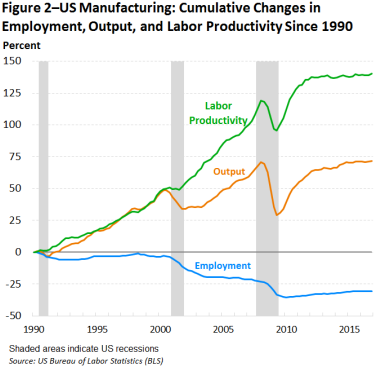
The Rise of Automation in Manufacturing
The manufacturing sector is undergoing a significant transformation driven by the relentless advancement of automation technologies. From robotics and artificial intelligence (AI) to advanced sensors and data analytics, automation is reshaping how products are designed, produced, and delivered. This shift is not merely a technological upgrade; it represents a fundamental change in the nature of work, the skills required, and the overall competitive landscape of manufacturing.
The increasing adoption of automation in manufacturing is fueled by several factors, including the need to improve productivity, reduce costs, enhance quality, and address labor shortages. Companies are increasingly recognizing that automation can provide a competitive edge by enabling them to produce goods more efficiently, consistently, and at a lower cost than traditional methods.
Improved Efficiency and Productivity
One of the most significant impacts of automation on manufacturing is the dramatic improvement in efficiency and productivity. Automated systems can operate 24/7 without breaks or fatigue, consistently performing tasks with speed and precision. This leads to higher output, reduced cycle times, and increased overall throughput.
Reduced Cycle Times
Automation streamlines manufacturing processes, reducing the time it takes to complete each stage of production. Robots can perform repetitive tasks much faster than humans, and automated systems can seamlessly coordinate different aspects of the manufacturing process, minimizing delays and bottlenecks. This results in faster delivery times and increased responsiveness to customer demand.
Increased Throughput
By automating tasks and optimizing workflows, manufacturers can significantly increase their throughput, or the amount of product they can produce in a given period. This allows them to meet growing demand, capitalize on market opportunities, and improve their overall profitability. Automation also enables manufacturers to scale their production capacity more easily and efficiently.
Enhanced Quality and Consistency
Automation not only improves efficiency but also enhances the quality and consistency of manufactured goods. Automated systems are programmed to perform tasks with precision and accuracy, minimizing errors and defects. This leads to higher quality products, reduced waste, and improved customer satisfaction.
Minimizing Errors and Defects
Human error is a common source of defects in manufacturing. Automated systems, on the other hand, are designed to perform tasks with consistent accuracy, eliminating the potential for human mistakes. This leads to a significant reduction in defects and improved overall product quality.
Improved Quality Control
Automation enables manufacturers to implement more rigorous quality control measures throughout the production process. Automated inspection systems can quickly and accurately identify defects, allowing manufacturers to take corrective action before they become widespread. This ensures that only high-quality products reach the market.
Reduced Costs and Waste
While the initial investment in automation can be significant, the long-term cost savings can be substantial. Automation reduces labor costs, minimizes waste, and improves resource utilization, leading to significant cost reductions and increased profitability.
Lower Labor Costs
Automation reduces the need for manual labor, leading to lower labor costs. While some jobs may be displaced by automation, new jobs are also created in areas such as automation maintenance, programming, and system integration. The overall impact on employment is a complex issue that depends on various factors, including the specific industry, the rate of automation adoption, and the availability of retraining programs.
Minimized Waste
Automation helps manufacturers reduce waste by optimizing resource utilization and minimizing defects. Automated systems can precisely control the amount of materials used in each stage of production, reducing waste and improving efficiency. Automated inspection systems can also identify defects early on, allowing manufacturers to take corrective action before they result in significant waste.
Addressing Labor Shortages
Many manufacturing companies are facing labor shortages, particularly in skilled trades. Automation can help address this challenge by automating tasks that are difficult to fill or that require specialized skills. This allows manufacturers to maintain production levels even with a limited workforce.
Automating Difficult or Dangerous Tasks
Automation can be used to automate tasks that are difficult, dangerous, or repetitive for humans. This not only improves worker safety but also frees up human workers to focus on more challenging and rewarding tasks. Examples include welding, painting, and material handling.
Filling Skill Gaps
Automation can also help fill skill gaps by automating tasks that require specialized skills. For example, robots can be programmed to perform complex machining operations, reducing the need for highly skilled machinists. This allows manufacturers to maintain production levels even if they are unable to find enough skilled workers.
The Impact on the Workforce
The impact of automation on the workforce is a complex and often debated topic. While automation can lead to job displacement in some areas, it also creates new opportunities in others. The key is to prepare the workforce for the changing skills landscape by providing training and education programs that focus on the skills needed for the jobs of the future.
Job Displacement
Automation can lead to job displacement in some areas, particularly in repetitive or low-skilled tasks. However, it's important to note that automation also creates new jobs in areas such as automation maintenance, programming, and system integration. The net impact on employment depends on various factors, including the specific industry, the rate of automation adoption, and the availability of retraining programs.
New Job Creation
Automation creates new jobs in areas such as automation maintenance, programming, and system integration. These jobs often require higher levels of skills and education than the jobs that are displaced by automation. This highlights the importance of investing in training and education programs that prepare the workforce for the changing skills landscape.
The Need for Retraining and Upskilling
To mitigate the negative impacts of automation on the workforce, it's essential to provide retraining and upskilling programs that help workers acquire the skills needed for the jobs of the future. These programs should focus on areas such as automation maintenance, programming, data analytics, and advanced manufacturing technologies. Governments, educational institutions, and businesses all have a role to play in providing these programs.
The Future of Manufacturing with Automation
Automation is transforming the manufacturing sector in profound ways, and its impact is only going to increase in the years to come. As automation technologies continue to evolve, manufacturers will need to embrace these changes and adapt their strategies to remain competitive. This includes investing in automation technologies, developing a skilled workforce, and fostering a culture of innovation.
The Rise of Smart Factories
Automation is paving the way for the rise of smart factories, which are highly automated and interconnected manufacturing facilities that use data analytics and artificial intelligence to optimize production processes. Smart factories are more efficient, flexible, and responsive to customer demand than traditional manufacturing facilities.
The Importance of Data Analytics
Data analytics plays a crucial role in automation by providing insights into manufacturing processes and identifying opportunities for improvement. By analyzing data from sensors, machines, and other sources, manufacturers can optimize their operations, reduce waste, and improve product quality.
The Continued Evolution of Automation Technologies
Automation technologies are constantly evolving, with new innovations emerging all the time. This includes advancements in robotics, artificial intelligence, machine learning, and other areas. Manufacturers need to stay abreast of these developments and be prepared to adopt new technologies as they become available.

0 Comments