
Unlocking Real Estate Opportunities with a Self-Directed IRA
Are you looking for ways to diversify your retirement portfolio and potentially achieve higher returns? A self-directed IRA (SDIRA) might be the answer. Unlike traditional IRAs that limit you to stocks, bonds, and mutual funds, an SDIRA opens the door to a wider range of alternative investments, including real estate. This means you can use your retirement funds to purchase properties, potentially building wealth and securing your financial future.
What is a Self-Directed IRA?
A self-directed IRA is a retirement account that gives you more control over your investment choices. While a traditional IRA is managed by a financial institution, an SDIRA allows you, the account holder, to make investment decisions directly. This flexibility empowers you to invest in assets that are not typically available in conventional retirement accounts.
The key difference lies in the custodian. With a traditional IRA, the custodian is a mainstream financial institution that offers a limited selection of investments. With a self-directed IRA, the custodian is a specialized firm that allows you to invest in alternative assets like real estate, private equity, precious metals, and more.
Why Invest in Real Estate with a Self-Directed IRA?
Investing in real estate through a self-directed IRA offers several potential advantages:
- Diversification: Real estate can provide diversification to your retirement portfolio, reducing overall risk. It often has a low correlation with the stock market, meaning it can perform well even when stocks are down.
- Potential for Appreciation: Real estate values tend to appreciate over time, offering the potential for long-term capital gains.
- Rental Income: If you purchase rental properties within your SDIRA, the rental income generated flows directly back into the account, growing your retirement savings.
- Tax Advantages: Depending on whether you choose a traditional or Roth SDIRA, you can benefit from either tax-deferred growth or tax-free withdrawals in retirement.
- Control: You have direct control over your real estate investments, allowing you to choose properties that align with your investment strategy.
Types of Real Estate Investments You Can Make with an SDIRA
An SDIRA allows you to invest in a variety of real estate assets, including:
- Residential Properties: Single-family homes, condos, townhouses.
- Commercial Properties: Office buildings, retail spaces, industrial properties.
- Land: Vacant land for future development.
- Rental Properties: Properties that generate rental income.
- Fix-and-Flip Projects: Properties that are purchased, renovated, and sold for a profit.
- Tax Liens and Deeds: Investing in delinquent property taxes or foreclosed properties.
How to Set Up a Self-Directed IRA for Real Estate Investing
Setting up an SDIRA for real estate investing involves several steps:
- Choose a Custodian: Select a reputable custodian that specializes in self-directed IRAs and real estate investments. Research their fees, services, and track record.
- Open an Account: Complete the necessary paperwork to open an SDIRA account with your chosen custodian.
- Fund Your Account: Transfer funds from an existing retirement account or contribute new funds to your SDIRA. Remember to adhere to annual contribution limits.
- Find a Property: Research and identify a real estate investment that aligns with your investment goals and risk tolerance.
- Conduct Due Diligence: Perform thorough due diligence on the property, including inspections, appraisals, and title searches.
- Make the Purchase: Work with your custodian to purchase the property using funds from your SDIRA. All transactions must be handled through the custodian.
- Manage the Property: If you purchase a rental property, you'll need to manage it, including finding tenants, collecting rent, and handling maintenance. Note that you CANNOT personally manage the property. All management must be handled by a third party.
Rules and Regulations to Follow
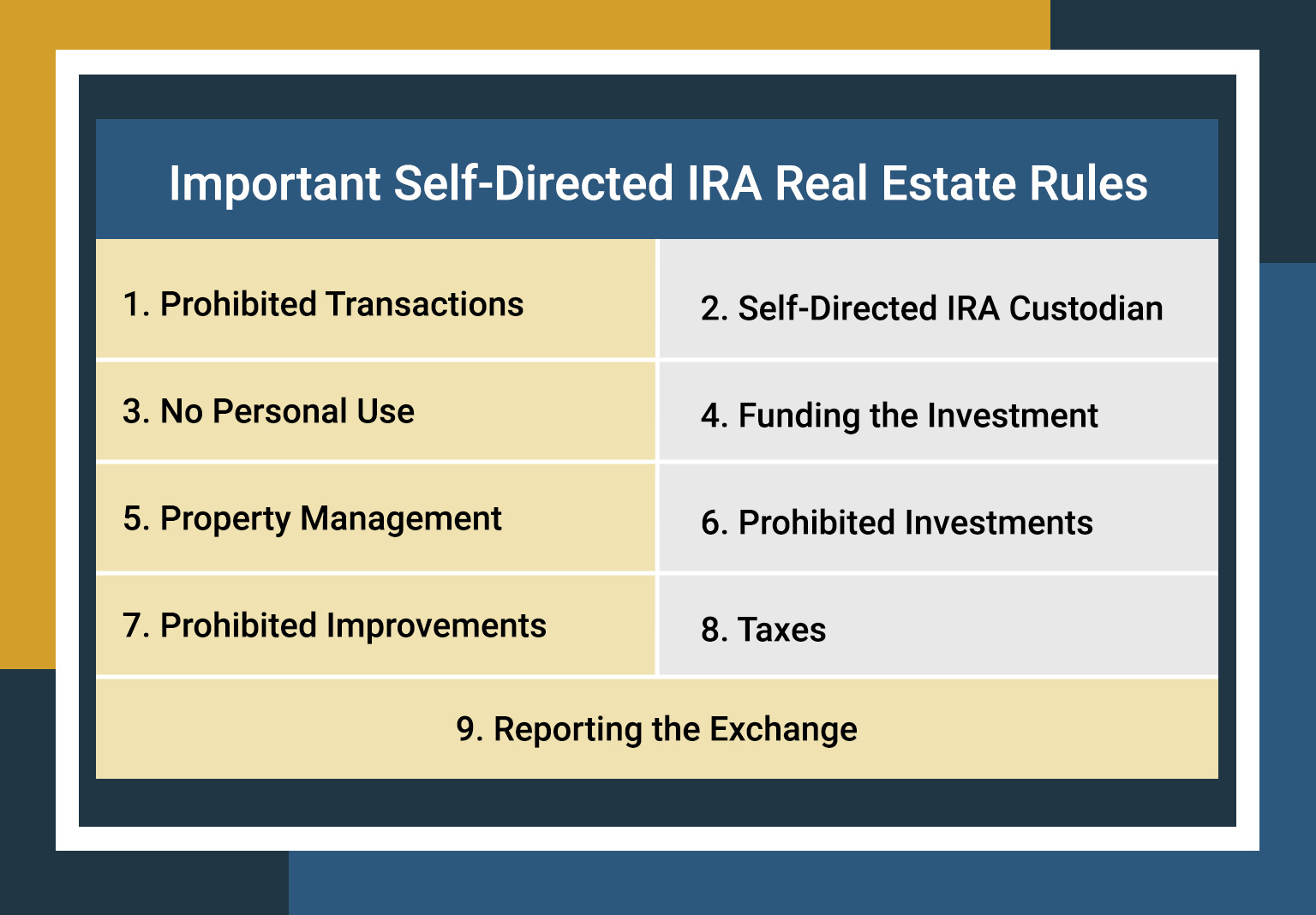
Investing in real estate with an SDIRA comes with specific rules and regulations that you must adhere to:
- Prohibited Transactions: You cannot personally benefit from the real estate held within your SDIRA. This means you cannot live in the property, rent it to family members, or use it for personal use.
- Arm's Length Transactions: All transactions must be conducted at arm's length, meaning they must be fair market value and free from conflicts of interest.
- No Personal Use: You cannot use personal funds to improve or maintain the property held within your SDIRA. All expenses must be paid from the SDIRA account.
- Third-Party Management: You cannot personally manage the property. All management must be handled by a third-party property manager.
- Commingling of Funds: You cannot commingle personal funds with SDIRA funds. All funds must be kept separate.
Understanding Prohibited Transactions
Prohibited transactions are actions that are not allowed within a self-directed IRA. Engaging in a prohibited transaction can result in the disqualification of your IRA, leading to significant tax penalties. Examples include:
- Selling property from your personal holdings to your SDIRA.
- Purchasing property from your SDIRA for personal use.
- Using SDIRA funds for personal expenses.
- Providing services to the property within your SDIRA (e.g., personally doing repairs).
Potential Risks and Challenges
While investing in real estate with an SDIRA can be rewarding, it's important to be aware of the potential risks and challenges:
- Complexity: SDIRA real estate investing can be complex, requiring a thorough understanding of IRS rules and regulations.
- Liquidity: Real estate is not a liquid asset, meaning it can take time to sell a property if you need access to your funds.
- Management: Managing rental properties can be time-consuming and require specialized knowledge.
- Due Diligence: Thorough due diligence is crucial to avoid purchasing a problematic property.
- Fees: SDIRA custodians typically charge higher fees than traditional IRA custodians.
The Importance of Due Diligence
Before investing in any real estate property with your SDIRA, it's crucial to conduct thorough due diligence. This includes:
- Property Inspection: Hire a qualified inspector to assess the condition of the property.
- Appraisal: Obtain a professional appraisal to determine the fair market value of the property.
- Title Search: Conduct a title search to ensure the property is free from liens or encumbrances.
- Market Analysis: Research the local real estate market to assess the potential for appreciation and rental income.
Is a Self-Directed IRA Right for You?
A self-directed IRA for real estate investing is not for everyone. It's best suited for individuals who:
- Are comfortable with making their own investment decisions.
- Have a strong understanding of real estate investing.
- Are willing to dedicate the time and effort required to manage real estate investments.
- Have the resources to pay for due diligence and ongoing property management.
- Seek to diversify their retirement portfolio beyond traditional assets.
Before making any decisions, consult with a qualified financial advisor and tax professional to determine if a self-directed IRA is the right choice for your individual circumstances.

0 Comments