
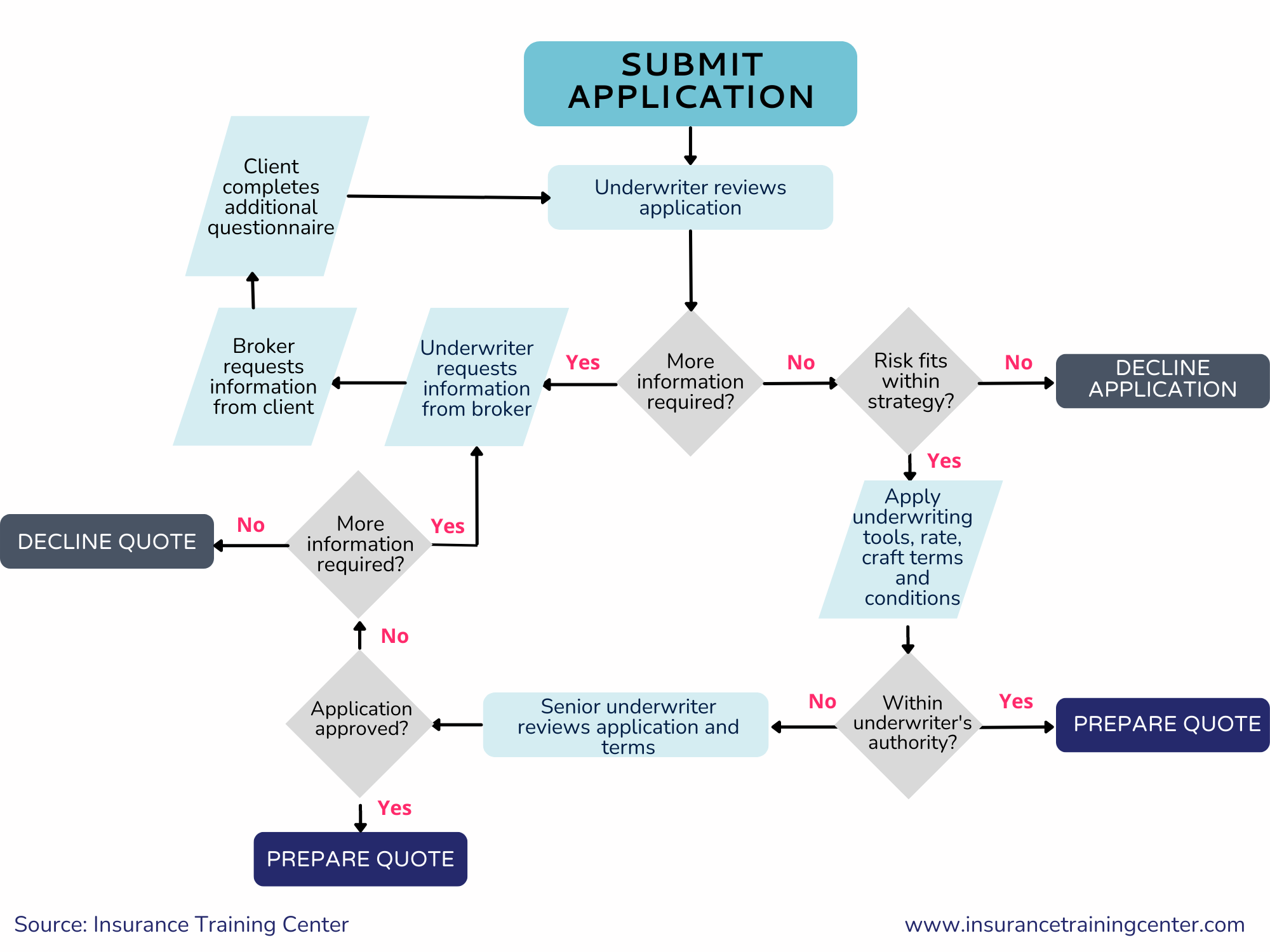
Understanding the Insurance Underwriting Process
The insurance underwriting process is a crucial step in determining whether an insurance company will accept an applicant's request for coverage. It involves a thorough evaluation of the risk associated with insuring an individual or entity. This process helps insurance companies make informed decisions about policy terms, coverage limits, and premiums. A well-defined underwriting process ensures the financial stability of the insurance company while providing fair and accurate pricing for policyholders.
Step-by-Step Breakdown of the Underwriting Process
The underwriting process can seem complex, but it generally follows a structured series of steps. Here's a detailed explanation of each stage:
1. Application Submission and Initial Review
The process begins when an applicant submits an insurance application. This application contains detailed information about the applicant, the assets or activities to be insured, and the desired coverage. The underwriter first conducts an initial review to ensure the application is complete and accurate. Missing information or inconsistencies may require the underwriter to contact the applicant for clarification.
This stage also involves checking for any red flags or potential issues that may warrant further investigation. For example, a history of claims, adverse credit reports, or unusual activity patterns could trigger a more in-depth review.
2. Risk Assessment and Data Gathering
Once the application is deemed complete, the underwriter proceeds with a thorough risk assessment. This involves gathering additional information from various sources to gain a comprehensive understanding of the applicant's risk profile. Common sources of information include:
- Credit reports: Used to assess financial stability and payment history.
- Medical records: Relevant for health and life insurance policies, providing insight into the applicant's health status and history.
- Inspection reports: Used for property insurance to evaluate the condition of the property and identify potential hazards.
- Motor vehicle records: Relevant for auto insurance, providing information on driving history and past accidents.
- Third-party data providers: Offer a wide range of information, including demographic data, property characteristics, and business information.
The underwriter carefully analyzes this data to identify potential risks and assess their severity. This step is crucial for accurately pricing the insurance policy.
3. Risk Evaluation and Analysis
After gathering sufficient data, the underwriter evaluates the overall risk associated with insuring the applicant. This involves considering various factors, such as:
- Probability of loss: The likelihood that a covered event will occur, leading to a claim.
- Severity of loss: The potential financial impact of a covered event.
- Applicant's risk management practices: The measures the applicant takes to mitigate potential risks.
The underwriter may use statistical models, actuarial data, and industry guidelines to quantify the risk. This analysis helps determine the appropriate premium and coverage limits for the policy. For example, an applicant with a high-risk profile may be charged a higher premium or offered lower coverage limits.
4. Decision Making: Accept, Reject, or Modify
Based on the risk evaluation, the underwriter makes a decision regarding the application. There are three possible outcomes:
- Accept: The underwriter approves the application and offers coverage based on the standard terms and conditions. This typically occurs when the risk is deemed acceptable and aligns with the insurance company's underwriting guidelines.
- Reject: The underwriter denies the application due to unacceptable risk. This may occur if the applicant has a history of significant losses, poses a high risk of future losses, or does not meet the insurance company's eligibility criteria.
- Modify: The underwriter offers coverage with modified terms, such as higher premiums, lower coverage limits, or specific exclusions. This option is used when the risk is higher than average but still acceptable with certain adjustments.
5. Policy Pricing and Terms
If the application is accepted or modified, the underwriter determines the appropriate policy pricing and terms. The premium is calculated based on the assessed risk, coverage limits, deductible, and other relevant factors. The underwriter also specifies the terms and conditions of the policy, including exclusions, limitations, and obligations of both the insurer and the insured.
The goal is to provide fair and accurate pricing that reflects the level of risk assumed by the insurance company. The underwriter must balance the need to generate profit with the need to offer competitive rates to attract and retain customers.
6. Policy Issuance and Documentation
Once the policy pricing and terms are finalized, the insurance policy is issued to the applicant. The policy document outlines the coverage details, premium, terms and conditions, and other relevant information. The underwriter also maintains detailed records of the underwriting process, including the application, supporting documentation, risk assessment, and decision-making rationale.
Proper documentation is essential for compliance with regulatory requirements and for resolving potential disputes or claims in the future.
7. Ongoing Monitoring and Review
The underwriting process doesn't end with policy issuance. Insurance companies typically monitor and review policies on an ongoing basis to ensure they remain aligned with the changing risk profile of the insured. This may involve periodic inspections, audits, or reviews of financial statements.
If significant changes occur, such as a change in business operations, property modifications, or an increase in claims activity, the underwriter may need to reassess the risk and adjust the policy terms accordingly. This ensures that the insurance coverage remains appropriate and reflects the current level of risk.
The Role of the Underwriter
The underwriter plays a critical role in the insurance process. They are responsible for evaluating risk, making informed decisions, and ensuring the financial stability of the insurance company. A skilled underwriter possesses a strong understanding of risk management principles, industry trends, and regulatory requirements. They also have excellent analytical, communication, and decision-making skills.
Underwriters work closely with various stakeholders, including insurance agents, brokers, claims adjusters, and actuaries. They collaborate to gather information, assess risk, and develop appropriate insurance solutions for individuals and businesses.

0 Comments