
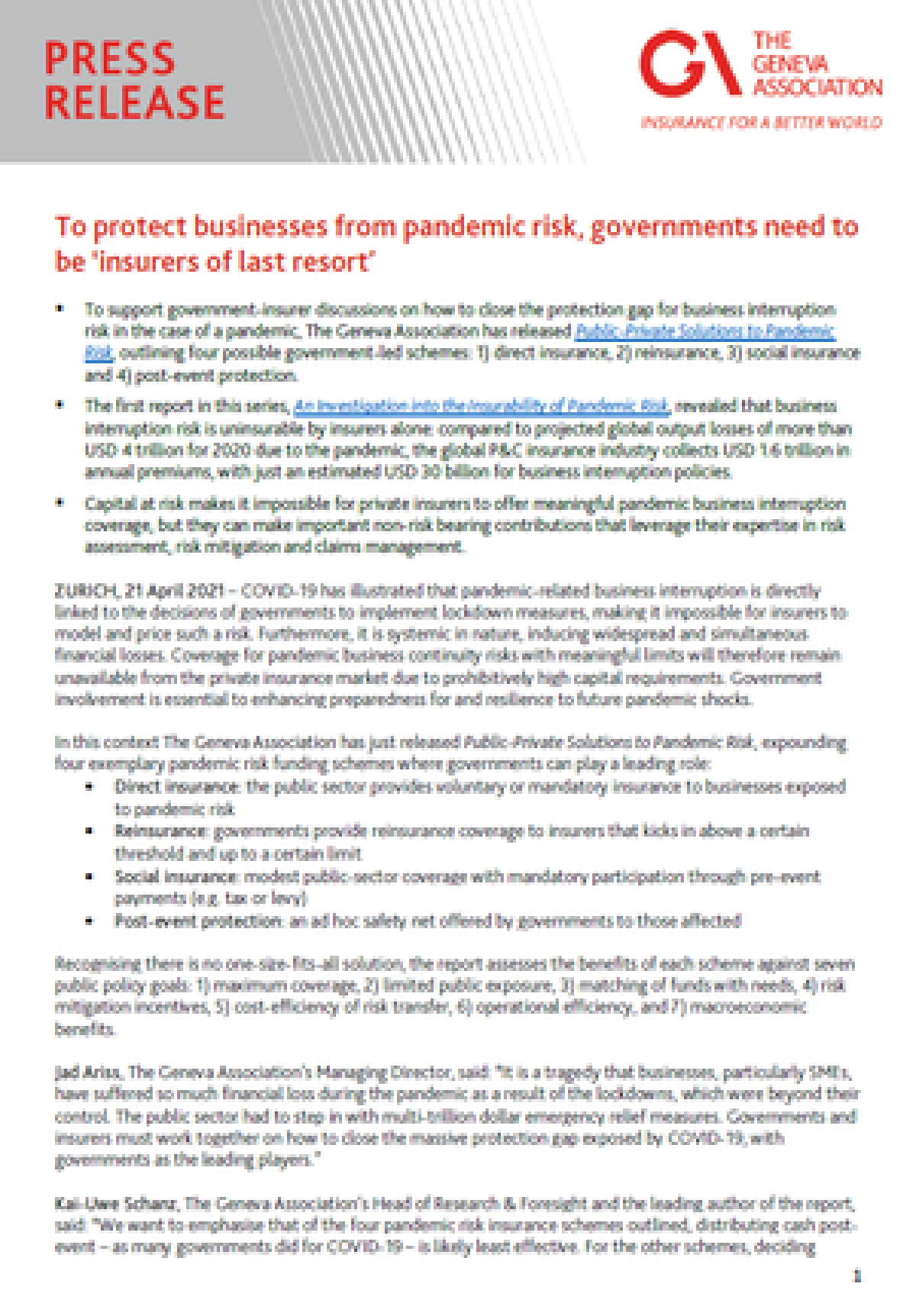
Understanding Pandemic Risk in Insurance
Pandemics, like the recent COVID-19 outbreak, pose a significant and complex challenge to the insurance industry. Unlike traditional risks that can be modeled using historical data, pandemics are characterized by their widespread impact, rapid spread, and profound uncertainty. This makes accurate risk assessment and mitigation particularly difficult for insurers.
The insurance industry faces a multitude of challenges during a pandemic. These challenges include increased claims across various lines of business, disruptions to business operations, and volatility in financial markets. Understanding these risks is the first step towards developing effective mitigation strategies.
The Impact of Pandemics on Different Insurance Sectors
The impact of a pandemic varies significantly across different insurance sectors. Here’s a breakdown of some key areas:
Life and Health Insurance
Life and health insurers face the most direct impact from pandemics. Increased mortality rates lead to higher life insurance claims. Simultaneously, health insurers experience a surge in claims related to testing, treatment, and hospitalization. The long-term health consequences of a pandemic, such as long COVID, can further strain resources and increase future claims.
Property and Casualty Insurance
Property and casualty insurers also experience indirect impacts. Business interruption claims rise as businesses are forced to close due to lockdowns and social distancing measures. Event cancellation insurance faces substantial payouts. Furthermore, supply chain disruptions can lead to increased costs for repairs and replacements, impacting property insurance claims.
Business Interruption Insurance
Business interruption insurance is particularly complex in the context of a pandemic. Policies often require physical damage to trigger coverage. However, a pandemic's impact is primarily economic, leading to disputes over whether coverage applies. Many businesses have argued that government-mandated closures constitute physical damage, leading to legal battles and uncertainty.
Key Pandemic Risk Mitigation Measures for Insurers
To effectively manage pandemic risk, insurers need to implement a range of proactive mitigation measures. These measures should focus on risk assessment, policy design, business continuity planning, and proactive communication.
Enhanced Risk Assessment and Modeling
Traditional actuarial models often fail to capture the complexities of pandemic risk. Insurers need to develop more sophisticated models that incorporate epidemiological data, economic factors, and behavioral responses. These models should consider various scenarios, including different virus strains, vaccination rates, and government interventions. Incorporating machine learning and artificial intelligence can enhance the accuracy and predictive power of these models.
Policy Design and Exclusions
Insurers need to carefully review and revise policy language to clarify coverage for pandemic-related events. Explicit exclusions for losses arising from pandemics can provide greater certainty and reduce the risk of unforeseen claims. However, such exclusions must be carefully balanced against the need to provide valuable coverage to policyholders. Innovative policy designs, such as parametric insurance, can offer a more effective way to manage pandemic risk.
Strengthening Business Continuity Plans
A robust business continuity plan is essential for ensuring operational resilience during a pandemic. This plan should address key areas such as remote work capabilities, supply chain diversification, and cybersecurity. Insurers should regularly test and update their business continuity plans to ensure they remain effective in a rapidly changing environment. This includes simulating pandemic scenarios and assessing the plan's ability to handle various disruptions.
Proactive Communication and Stakeholder Engagement
Effective communication is crucial for managing expectations and maintaining trust during a pandemic. Insurers should proactively communicate with policyholders, employees, and other stakeholders about coverage, claims processes, and business operations. Transparency and clear communication can help to mitigate disputes and maintain positive relationships. Engaging with government agencies and industry associations can facilitate information sharing and coordinated responses.
Investing in Technology and Digitalization
Technology plays a vital role in pandemic risk mitigation. Insurers should invest in digital tools and platforms to enhance efficiency, improve customer service, and enable remote operations. This includes implementing digital claims processing systems, online portals for policy management, and secure communication channels. Leveraging data analytics can provide valuable insights into emerging risks and inform decision-making.
Diversifying Investment Portfolios
Pandemics can have a significant impact on financial markets, affecting insurers' investment portfolios. Diversifying investments across different asset classes and geographic regions can help to mitigate these risks. Insurers should also consider incorporating environmental, social, and governance (ESG) factors into their investment strategies, as these factors can influence long-term financial performance.
Collaboration and Public-Private Partnerships
Addressing pandemic risk requires collaboration between insurers, governments, and other stakeholders. Public-private partnerships can facilitate the development of innovative risk transfer solutions and ensure that adequate resources are available to respond to future pandemics. Sharing data and best practices can also enhance collective preparedness and resilience.
Employee Health and Wellbeing
Protecting the health and wellbeing of employees is paramount during a pandemic. Insurers should implement measures to promote employee safety, such as providing access to vaccinations, implementing remote work policies, and offering mental health support services. A healthy and engaged workforce is essential for maintaining business operations and providing quality service to customers.
The Future of Pandemic Risk Management in Insurance
The COVID-19 pandemic has highlighted the need for a more proactive and comprehensive approach to pandemic risk management in the insurance industry. As the world becomes increasingly interconnected, the risk of future pandemics remains a significant concern. Insurers must continue to adapt and innovate to effectively manage this evolving risk landscape.
Moving forward, insurers should focus on developing more sophisticated risk models, strengthening business continuity plans, and fostering greater collaboration with governments and other stakeholders. By embracing technology, promoting employee wellbeing, and proactively communicating with policyholders, the insurance industry can play a vital role in mitigating the impact of future pandemics and building a more resilient society.

0 Comments