
The Rise of Robotics in Manufacturing
The manufacturing industry has always been at the forefront of technological advancement. From the assembly line to computer-aided design, manufacturers have consistently sought ways to improve efficiency, reduce costs, and enhance product quality. In recent years, robotics has emerged as a transformative force, reshaping the manufacturing landscape and profoundly impacting the workforce.
Increased Efficiency and Productivity
One of the primary drivers behind the adoption of robotics in manufacturing is the potential for significant gains in efficiency and productivity. Robots can perform repetitive tasks with greater speed, accuracy, and consistency than human workers. This leads to increased output, reduced error rates, and improved overall productivity. Moreover, robots can operate continuously, 24 hours a day, 7 days a week, without breaks or fatigue, further boosting production capacity.
Enhanced Quality and Precision
Robotics also contributes to enhanced product quality and precision. Robots are programmed to execute tasks with exacting precision, minimizing variations and defects. This is particularly crucial in industries where tight tolerances and high levels of accuracy are essential, such as aerospace, medical device manufacturing, and electronics. By automating critical processes, manufacturers can ensure consistent quality and reduce the risk of product recalls or failures.
Improved Workplace Safety
Manufacturing environments can often be hazardous, with risks of injury from heavy machinery, exposure to dangerous materials, and repetitive strain injuries. Robots can be deployed to perform tasks that are too dangerous or physically demanding for human workers, thereby improving workplace safety and reducing the incidence of accidents and injuries. Examples include handling hazardous chemicals, welding in confined spaces, and lifting heavy objects.
The Impact on the Workforce
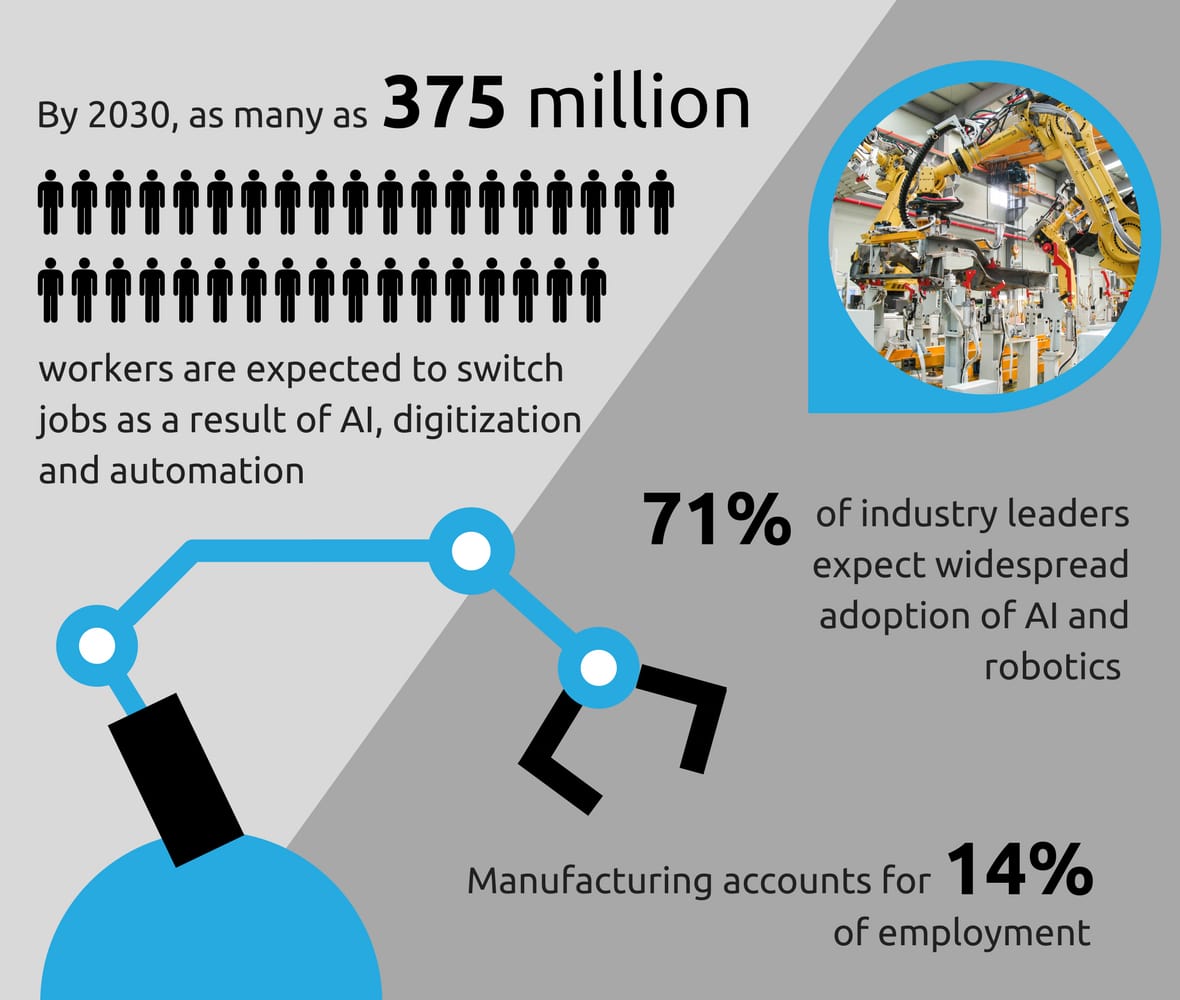
While the benefits of robotics in manufacturing are clear, the impact on the workforce is a complex and often debated issue. The introduction of robots inevitably leads to concerns about job displacement, as robots can automate tasks previously performed by human workers. However, it's important to consider the broader picture and the potential for robotics to create new opportunities and transform the nature of work in manufacturing.
Job Displacement and Reskilling
It's undeniable that some jobs will be displaced by automation. Repetitive, low-skilled tasks are particularly vulnerable. However, the impact is not necessarily widespread unemployment. Instead, it often leads to a shift in the types of jobs available. The focus moves towards roles that require higher-level skills, such as programming, maintenance, and operation of robotic systems. This necessitates investment in reskilling and upskilling programs to equip workers with the skills needed to thrive in the new manufacturing landscape.
New Job Creation and Opportunities
Robotics also creates new jobs and opportunities. The design, development, manufacturing, and maintenance of robots require a skilled workforce. Furthermore, the increased productivity and efficiency enabled by robotics can lead to business growth, creating new demand for workers in areas such as sales, marketing, and customer service. The overall impact on employment depends on factors such as the rate of adoption of robotics, the availability of reskilling programs, and the overall economic climate.
The Changing Nature of Work
Perhaps the most significant impact of robotics on the manufacturing workforce is the changing nature of work itself. As robots take over repetitive and physically demanding tasks, human workers can focus on more creative, strategic, and problem-solving activities. This can lead to increased job satisfaction and a more engaging work environment. The role of the human worker evolves from being a manual laborer to becoming a supervisor, programmer, or problem-solver working in collaboration with robots.
The Importance of Human-Robot Collaboration
The future of manufacturing lies in human-robot collaboration. Rather than replacing humans entirely, robots should be viewed as tools that augment human capabilities and enable workers to perform their jobs more effectively. Collaborative robots, or cobots, are designed to work safely alongside humans, sharing workspaces and tasks. This allows manufacturers to leverage the strengths of both humans and robots, combining human intelligence, creativity, and adaptability with the precision, speed, and endurance of robots.
Addressing the Skills Gap
One of the biggest challenges facing the manufacturing industry is the skills gap. As technology advances, the demand for skilled workers in areas such as robotics, automation, and data analytics is growing rapidly. However, the supply of qualified workers is not keeping pace. To address this gap, manufacturers need to invest in training and education programs, partner with educational institutions, and promote STEM education to attract more young people to the manufacturing industry. Furthermore, they need to create a culture of continuous learning and development to ensure that their workforce is equipped with the skills needed to adapt to the ever-changing technological landscape.
The Future of Manufacturing
Robotics is transforming the manufacturing industry in profound ways, impacting efficiency, quality, safety, and the workforce. While concerns about job displacement are valid, it's important to recognize the potential for robotics to create new opportunities and transform the nature of work. By embracing human-robot collaboration, investing in reskilling and upskilling programs, and addressing the skills gap, manufacturers can harness the power of robotics to create a more productive, innovative, and sustainable future for the industry and its workforce. The key is to view robotics not as a threat, but as a tool that can empower workers and create a more fulfilling and rewarding work experience.

0 Comments