
Introduction: Why Early Retirement Planning is Crucial for Freelancers
Freelancing offers unparalleled freedom and flexibility, but it also comes with unique financial challenges. Unlike traditional employees, freelancers typically don't have access to employer-sponsored retirement plans or benefits. This makes early retirement planning not just a good idea, but an absolute necessity for securing your financial future. Without a proactive strategy, the dream of early retirement can quickly turn into a financial burden.
This guide provides a comprehensive overview of early retirement planning specifically tailored for freelancers. We'll cover key aspects such as calculating your retirement needs, setting realistic savings goals, choosing the right investment vehicles, managing taxes, and mitigating risks. By taking control of your finances early on, you can pave the way for a comfortable and fulfilling retirement, on your own terms.
Calculating Your Retirement Needs
The first step in early retirement planning is to determine how much money you'll need to live comfortably in retirement. This involves estimating your future expenses and factoring in inflation. A common rule of thumb is the "4% rule," which suggests that you can withdraw 4% of your retirement savings each year without depleting your principal. However, this rule may not be suitable for everyone, especially those planning for early retirement.
Estimating Your Retirement Expenses
Start by creating a detailed budget of your current expenses. Then, project how these expenses might change in retirement. Consider factors such as:
- Healthcare costs: These tend to increase as you age, so factor in potential medical expenses.
- Housing costs: Will you downsize, relocate, or stay in your current home?
- Lifestyle expenses: How will your spending on travel, hobbies, and entertainment change?
- Inflation: Account for the rising cost of living by using a reasonable inflation rate (e.g., 2-3%).
Online retirement calculators can be helpful tools for estimating your retirement needs. These calculators typically ask for your current age, income, savings, and desired retirement age, and then project how much you'll need to save to reach your goals.
The 4% Rule and its Limitations
The 4% rule is a guideline, not a guarantee. Its effectiveness depends on various factors, including your investment portfolio, withdrawal rate, and life expectancy. For early retirees, a more conservative withdrawal rate (e.g., 3% or 3.5%) might be more prudent to ensure your savings last longer. Additionally, consider consulting with a financial advisor to personalize your retirement plan based on your specific circumstances.
Setting Realistic Savings Goals
Once you have a clear understanding of your retirement needs, you can set realistic savings goals. This involves determining how much you need to save each month or year to reach your target retirement nest egg. As a freelancer, your income may fluctuate, so it's important to be flexible and adjust your savings strategy as needed.
Automating Your Savings
One of the most effective ways to reach your savings goals is to automate your savings. Set up automatic transfers from your checking account to your retirement accounts each month. This ensures that you consistently save, even when your income is unpredictable.
Prioritizing Retirement Savings
Make retirement savings a top priority in your budget. Treat it as a non-negotiable expense, just like rent or utilities. Even small, consistent contributions can add up significantly over time, thanks to the power of compounding.
Adjusting Your Savings Strategy Based on Income
As a freelancer, your income may vary from month to month. When you have a high-income month, consider putting extra money into your retirement accounts. Conversely, when your income is lower, you may need to temporarily reduce your savings contributions. The key is to maintain a long-term perspective and stay committed to your retirement goals.
Choosing the Right Investment Vehicles
Selecting the right investment vehicles is crucial for maximizing your retirement savings. As a freelancer, you have several options to choose from, each with its own advantages and disadvantages.
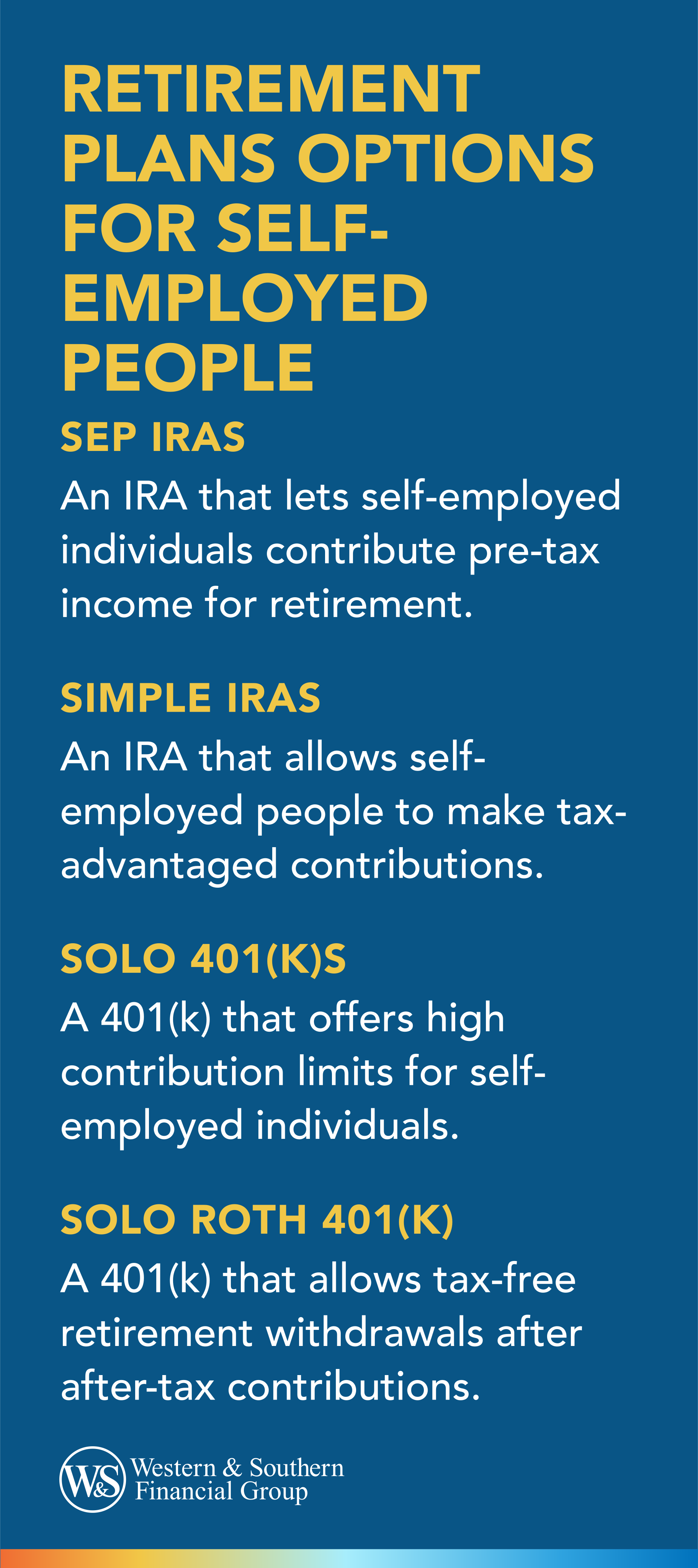
SEP IRA (Simplified Employee Pension Plan)
A SEP IRA is a popular retirement savings option for self-employed individuals. It allows you to contribute a significant portion of your net self-employment income (up to 20% or $66,000 for 2023, whichever is less). Contributions are tax-deductible, and your investments grow tax-deferred.
Solo 401(k)
A Solo 401(k) is another excellent option for freelancers. It allows you to contribute both as an employee and as an employer. As an employee, you can contribute up to $22,500 (for 2023), or $30,000 if you're age 50 or older. As an employer, you can contribute up to 25% of your net self-employment income, with a combined contribution limit of $66,000 for 2023.
Traditional IRA and Roth IRA
Traditional IRAs and Roth IRAs are also viable options. Traditional IRA contributions may be tax-deductible, and your investments grow tax-deferred. Roth IRA contributions are not tax-deductible, but your withdrawals in retirement are tax-free. The choice between a Traditional IRA and a Roth IRA depends on your current and expected future tax bracket.
Taxable Investment Accounts
In addition to tax-advantaged retirement accounts, consider investing in taxable investment accounts. These accounts offer more flexibility and liquidity, but they don't provide the same tax benefits as retirement accounts. They can be useful for saving beyond the contribution limits of your retirement accounts.
Managing Taxes
Taxes are a significant consideration for freelancers, especially when it comes to retirement planning. Understanding the tax implications of different retirement accounts and investment strategies is essential for maximizing your savings.
Tax Deductions for Retirement Contributions
Take advantage of tax deductions for retirement contributions to reduce your taxable income. Contributions to SEP IRAs and Traditional IRAs are typically tax-deductible, which can lower your tax bill.
Tax-Advantaged Investing
Utilize tax-advantaged retirement accounts to minimize taxes on your investment earnings. Investments in retirement accounts grow tax-deferred or tax-free, depending on the type of account.
Working with a Tax Professional
Consider consulting with a tax professional to optimize your tax strategy and ensure you're taking advantage of all available deductions and credits. A tax professional can provide personalized advice based on your specific financial situation.
Mitigating Risks
Retirement planning involves managing various risks, such as market volatility, inflation, and longevity. As a freelancer, it's particularly important to mitigate these risks to ensure your retirement savings last throughout your retirement years.
Diversifying Your Investments
Diversification is key to managing market risk. Spread your investments across different asset classes, such as stocks, bonds, and real estate, to reduce the impact of any single investment on your portfolio.
Planning for Healthcare Costs
Healthcare costs can be a significant expense in retirement. Consider purchasing long-term care insurance or setting aside funds specifically for healthcare expenses.
Adjusting Your Retirement Plan as Needed
Your retirement plan is not set in stone. Regularly review and adjust your plan based on changes in your income, expenses, and investment performance. Stay informed about market trends and economic conditions, and be prepared to make adjustments as needed.

0 Comments