
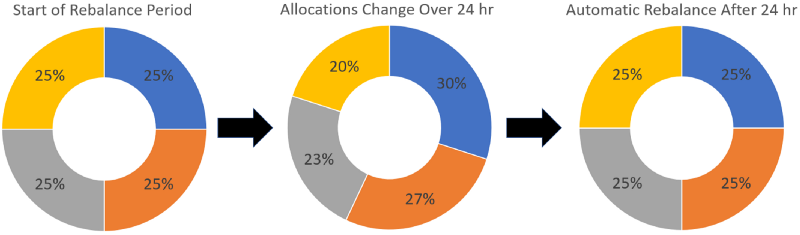
Understanding Cryptocurrency Portfolio Rebalancing
In the volatile world of cryptocurrency, maintaining a well-balanced portfolio is crucial for long-term success. Cryptocurrency portfolio rebalancing is the process of periodically adjusting your asset allocation to maintain your desired risk profile and investment goals. It's a proactive strategy that helps you manage risk, capitalize on market opportunities, and avoid emotional decision-making.
Unlike traditional asset classes, cryptocurrencies experience extreme price swings. What might be a well-balanced portfolio today can quickly become unbalanced due to significant price fluctuations in various cryptocurrencies. Rebalancing helps to counteract this volatility and keep your portfolio aligned with your investment strategy.
Why Rebalance Your Crypto Portfolio?
There are several compelling reasons to implement a cryptocurrency portfolio rebalancing strategy:
Risk Management
Perhaps the most important reason is risk management. By maintaining a target asset allocation, you prevent any single cryptocurrency from becoming overly dominant in your portfolio. This reduces your exposure to the potential downside of that specific asset. For example, if Bitcoin suddenly surges in value, it might become a disproportionately large percentage of your portfolio. Rebalancing would involve selling some Bitcoin and reinvesting in other assets, thereby reducing your risk exposure to Bitcoin's future performance.
Profit Taking
Rebalancing forces you to sell assets that have performed well and buy assets that have underperformed. This allows you to take profits on winning positions and reinvest them into potentially undervalued assets. This "buy low, sell high" approach is a cornerstone of successful investing.
Disciplined Investing
The cryptocurrency market can be driven by hype and fear. Rebalancing provides a disciplined framework for making investment decisions, removing emotional biases that can lead to poor choices. By sticking to a pre-determined rebalancing schedule and target allocation, you avoid making impulsive decisions based on market sentiment.
Maintaining Target Allocation
Over time, the performance of different cryptocurrencies will diverge. This can lead to a significant deviation from your original target asset allocation. Rebalancing ensures that your portfolio remains aligned with your investment goals and risk tolerance. It helps you stay on track and avoid drifting into a risk profile that you're not comfortable with.
Types of Rebalancing Strategies
There are several different approaches to cryptocurrency portfolio rebalancing, each with its own advantages and disadvantages:
Time-Based Rebalancing
This involves rebalancing your portfolio at regular intervals, such as monthly, quarterly, or annually. The advantage of time-based rebalancing is its simplicity and predictability. You set a schedule and stick to it, regardless of market conditions. However, it may not be the most efficient strategy, as it doesn't take into account market volatility or portfolio drift.
Threshold-Based Rebalancing
This approach triggers a rebalance when a specific asset's weight in your portfolio deviates from its target allocation by a certain percentage. For example, you might decide to rebalance whenever any asset exceeds or falls below its target allocation by 5%. Threshold-based rebalancing is more responsive to market fluctuations than time-based rebalancing, but it requires more monitoring and may result in more frequent trades.
Hybrid Rebalancing
This combines elements of both time-based and threshold-based rebalancing. For example, you might rebalance your portfolio quarterly, but also trigger a rebalance if any asset deviates from its target allocation by more than 10%. This approach aims to strike a balance between simplicity and responsiveness.
Steps to Implement a Cryptocurrency Portfolio Rebalancing Strategy
Implementing a successful cryptocurrency portfolio rebalancing strategy involves several key steps:
1. Define Your Investment Goals and Risk Tolerance
Before you start investing in cryptocurrency, it's essential to define your investment goals and risk tolerance. Are you investing for long-term growth, income generation, or short-term speculation? How much risk are you willing to take to achieve your goals? Your answers to these questions will help you determine your target asset allocation.
2. Determine Your Target Asset Allocation
Based on your investment goals and risk tolerance, decide on your target asset allocation. This is the percentage of your portfolio that you want to allocate to each cryptocurrency. Consider factors such as market capitalization, volatility, and potential growth when making your allocation decisions. A common approach is to allocate a larger percentage to more established cryptocurrencies like Bitcoin and Ethereum, and a smaller percentage to altcoins with higher growth potential but also higher risk.
3. Choose a Rebalancing Strategy
Select the rebalancing strategy that best suits your needs and preferences. Consider the advantages and disadvantages of time-based, threshold-based, and hybrid rebalancing strategies. Choose a strategy that you can consistently implement and that aligns with your investment style.
4. Monitor Your Portfolio
Regularly monitor your portfolio to track the performance of your assets and identify any deviations from your target allocation. Use a cryptocurrency portfolio tracker or exchange platform to monitor your holdings and calculate your current asset allocation.
5. Execute Your Rebalancing Trades
When your portfolio drifts out of alignment with your target allocation, execute the necessary trades to bring it back into balance. This involves selling assets that have exceeded their target allocation and buying assets that have fallen below their target allocation. Consider using limit orders to minimize slippage and ensure that you get your desired prices.
6. Track Your Performance
Track your portfolio's performance over time to assess the effectiveness of your rebalancing strategy. Compare your returns to a benchmark index, such as the Bitcoin Dominance Index or a cryptocurrency market capitalization index. This will help you determine whether your rebalancing strategy is adding value to your portfolio.
Tools for Cryptocurrency Portfolio Rebalancing
Several tools can help you simplify and automate the process of cryptocurrency portfolio rebalancing:
Cryptocurrency Portfolio Trackers
These platforms allow you to track your cryptocurrency holdings across multiple exchanges and wallets. Many portfolio trackers offer features such as asset allocation analysis, performance tracking, and rebalancing alerts.
Cryptocurrency Exchanges with Rebalancing Features
Some cryptocurrency exchanges offer built-in rebalancing tools that allow you to automate the rebalancing process. These tools typically allow you to set your target asset allocation and rebalancing frequency, and the exchange will automatically execute the necessary trades to keep your portfolio in balance.
Robo-Advisors for Cryptocurrency
These platforms use algorithms to manage your cryptocurrency portfolio based on your investment goals and risk tolerance. Robo-advisors typically offer automated rebalancing, tax-loss harvesting, and other advanced investment strategies.
Potential Challenges and Considerations
While cryptocurrency portfolio rebalancing can be a valuable strategy, it's important to be aware of the potential challenges and considerations:
Transaction Fees
Transaction fees can eat into your profits, especially if you're rebalancing frequently. Choose an exchange with low fees and consider using limit orders to minimize slippage.
Tax Implications
Selling cryptocurrencies can trigger capital gains taxes. Be aware of the tax implications of rebalancing and consult with a tax professional if necessary.
Slippage
Slippage is the difference between the expected price of a trade and the actual price at which it's executed. Slippage can occur when there's not enough liquidity in the market, especially for smaller altcoins. Use limit orders to minimize slippage.
Choosing the Right Assets
The success of your rebalancing strategy depends on the quality of the assets you choose to include in your portfolio. Do your research and invest in cryptocurrencies with strong fundamentals and long-term growth potential.

0 Comments