
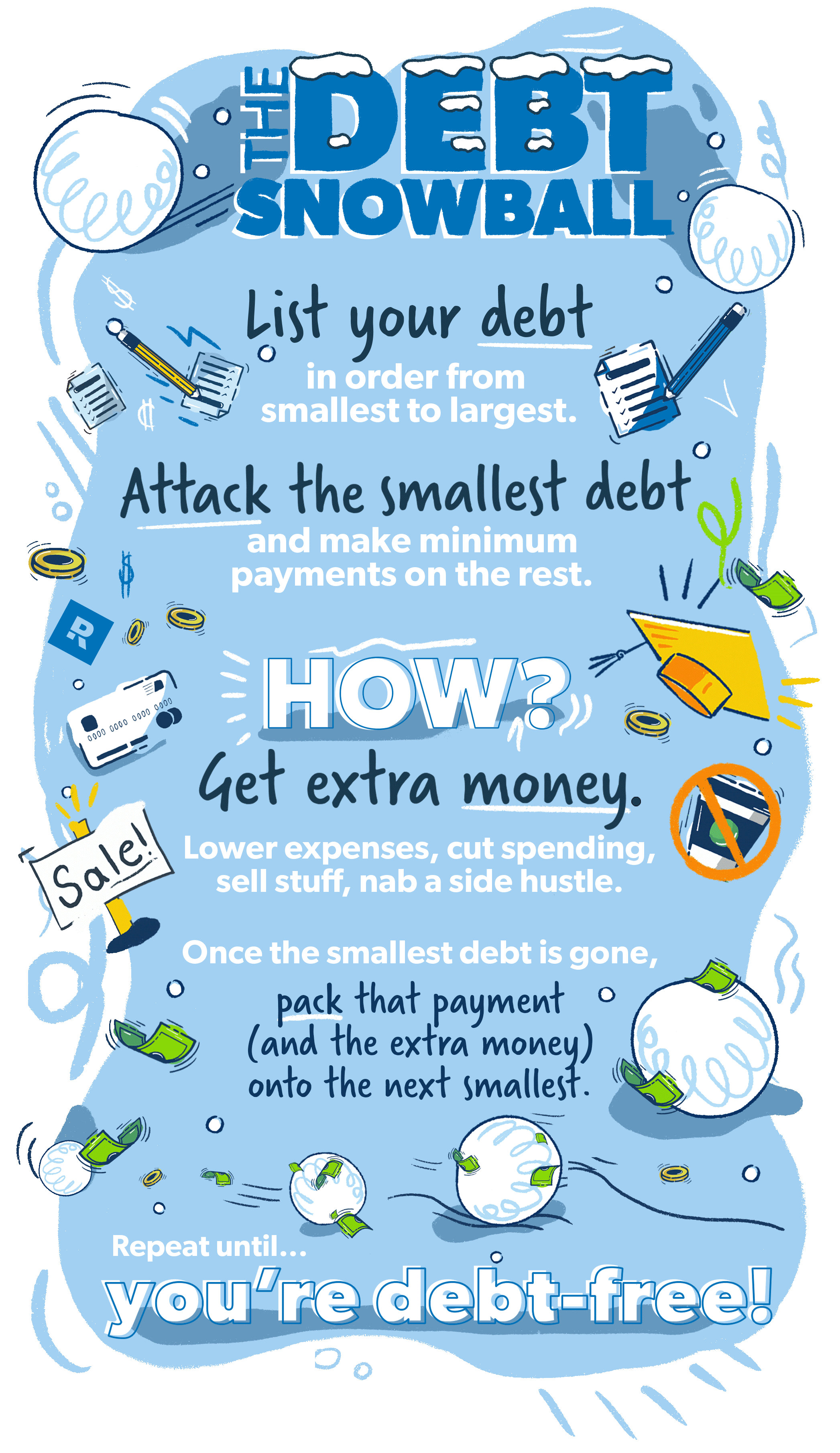
What is the Debt Snowball Method?
The debt snowball method is a debt reduction strategy where you pay off your debts in order from smallest to largest, regardless of the interest rate. You focus all your extra money on paying off the smallest debt first, while making minimum payments on all other debts. Once the smallest debt is paid off, you take the money you were using to pay that debt and apply it to the next smallest debt. This creates a "snowball" effect, as the amount of money you have available to pay off debts grows larger and larger.
Why Choose the Debt Snowball Method?
While mathematically, the debt avalanche method (paying off debts with the highest interest rates first) might seem like the most efficient way to get out of debt, the debt snowball method offers a powerful psychological advantage. Seeing quick wins by paying off smaller debts can provide a significant boost in motivation and keep you on track with your debt repayment plan. This sense of accomplishment can be crucial, especially if you're feeling overwhelmed by debt.
The Psychological Power of Small Wins
Human beings are motivated by progress. The debt snowball method provides a series of small victories that keep you engaged and motivated throughout the debt repayment process. Each time you eliminate a debt, you experience a sense of accomplishment that fuels your determination to tackle the next one. This psychological boost can be incredibly powerful in overcoming the challenges of debt repayment.
How to Implement the Debt Snowball Method: A Step-by-Step Guide
Ready to start your journey to financial freedom using the debt snowball method? Here's a detailed guide to help you get started:
Step 1: List All Your Debts
The first step is to create a comprehensive list of all your debts. Include everything from credit cards and personal loans to student loans and medical bills. For each debt, note the following:
- Creditor name
- Outstanding balance
- Minimum payment
- Interest rate
Organizing your debts in a spreadsheet can be helpful for tracking your progress.
Step 2: Order Your Debts by Balance (Smallest to Largest)
Now, arrange your debts in order from smallest balance to largest balance, regardless of the interest rate. This is the core principle of the debt snowball method. The debt with the smallest balance will be your first target.
Step 3: Determine Your Minimum Payments
Identify the minimum payment required for each of your debts. You'll need to continue making these minimum payments on all debts except the one you're focusing on paying off.
Step 4: Find Extra Money to Throw at Your Smallest Debt
This is where the real work begins. Look for ways to free up extra money in your budget to put towards your smallest debt. This might involve:
- Cutting unnecessary expenses (eating out, entertainment, subscriptions)
- Selling unwanted items
- Taking on a side hustle (freelancing, driving for a rideshare service)
- Negotiating lower bills (cable, internet, insurance)
Every extra dollar you can find will accelerate your debt repayment process.
Step 5: Attack Your Smallest Debt with Intensity
Once you've identified your extra money, dedicate it entirely to paying off your smallest debt. Continue making minimum payments on all your other debts. Stay focused and disciplined, and you'll see progress quickly.
Step 6: Celebrate Your Wins!
Once you've paid off your smallest debt, take a moment to celebrate your accomplishment! This is a crucial step for maintaining motivation. Acknowledge your hard work and the progress you've made. This positive reinforcement will help you stay committed to your debt repayment plan.
Step 7: Roll the Payment into the Next Debt (Snowball Effect)
Now, take the money you were using to pay off your smallest debt and add it to the minimum payment of your next smallest debt. This creates the "snowball" effect. You'll now have a larger amount of money to dedicate to paying off your second debt, accelerating your progress.
Step 8: Repeat the Process
Continue this process of paying off your debts one by one, from smallest to largest, until you're completely debt-free. Each time you eliminate a debt, roll the payment into the next one, creating a larger and larger "snowball" of money to attack your remaining debts.
Example of the Debt Snowball Method in Action
Let's say you have the following debts:
- Credit Card 1: Balance $500, Minimum Payment $25
- Credit Card 2: Balance $1,000, Minimum Payment $50
- Student Loan: Balance $5,000, Minimum Payment $100
Using the debt snowball method, you would focus on paying off Credit Card 1 first. Let's say you find an extra $200 per month to put towards debt repayment. You would pay $225 (minimum payment + extra money) towards Credit Card 1, while making minimum payments on Credit Card 2 and the Student Loan.
Once Credit Card 1 is paid off, you would roll the $225 into Credit Card 2, making a total payment of $275 per month. This accelerated payment will help you pay off Credit Card 2 much faster.
After Credit Card 2 is paid off, you would roll the $275 into the Student Loan, making a total payment of $375 per month. This continues until all debts are paid off.
Potential Drawbacks of the Debt Snowball Method
While the debt snowball method is highly effective for many people, it's important to be aware of its potential drawbacks:
Higher Overall Interest Paid
Because the debt snowball method prioritizes balance size over interest rate, you may end up paying more in overall interest compared to the debt avalanche method. This is because you're not necessarily targeting the debts with the highest interest rates first.
Requires Discipline
The debt snowball method requires discipline and commitment. It's important to stick to your plan and avoid taking on new debt while you're working on paying off your existing debts.
Is the Debt Snowball Method Right for You?
The debt snowball method is a great option for individuals who:
- Need a boost in motivation to stay on track with their debt repayment plan
- Are easily discouraged by slow progress
- Prefer a simple and straightforward approach to debt management
If you value psychological wins and need a system that keeps you motivated, the debt snowball method might be the perfect solution for you. Remember to assess your individual financial situation and choose the debt repayment strategy that best aligns with your goals and preferences.

0 Comments