
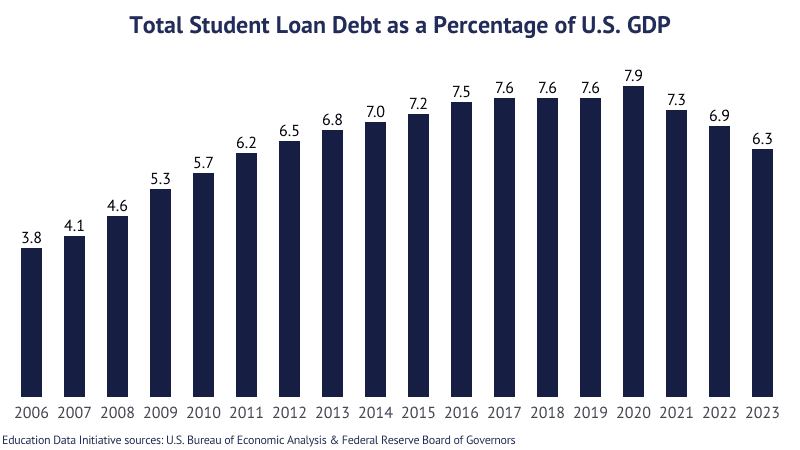
The Growing Burden of Student Loan Debt
Student loan debt in the United States has ballooned into a significant economic concern, affecting millions of individuals and potentially hindering overall economic growth. Understanding the impact of this debt is crucial for policymakers, economists, and individuals alike. This article delves into the multifaceted ways student loan debt influences various aspects of the economy, examining its effects on consumer spending, homeownership, entrepreneurship, and the labor market.
Impact on Consumer Spending
One of the most direct impacts of student loan debt is its constraint on consumer spending. Graduates burdened with substantial loan payments have less disposable income, limiting their ability to purchase goods and services. This reduced spending can ripple through various sectors of the economy, from retail and entertainment to travel and leisure. The cumulative effect of millions of individuals cutting back on discretionary spending can significantly dampen economic activity.
Reduced Demand for Goods and Services
When a significant portion of young adults' income is allocated to student loan repayments, they have less money available for other purchases. This decreased demand can lead to lower sales for businesses, potentially resulting in slower growth or even job losses. Sectors that heavily rely on young consumers, such as the restaurant and entertainment industries, are particularly vulnerable.
Delayed Purchases of Big-Ticket Items
Student loan debt can also delay or prevent young adults from making significant purchases, such as cars or appliances. These big-ticket items often require financing, and individuals with high debt-to-income ratios may struggle to qualify for loans or may be hesitant to take on additional debt. This delayed consumption further contributes to the slowdown in economic activity.
Impact on Homeownership
Homeownership is a cornerstone of the American dream and a significant driver of economic growth. However, student loan debt can pose a significant barrier to homeownership for many young adults. High debt burdens can make it difficult to save for a down payment, qualify for a mortgage, and afford monthly mortgage payments.
Difficulty Saving for a Down Payment
Saving for a down payment is often the biggest hurdle for first-time homebuyers. Student loan payments can significantly reduce the amount of money available for saving, making it take longer to accumulate the necessary funds. This delay can push back homeownership for several years, potentially impacting the housing market and related industries.
Challenges in Qualifying for a Mortgage
Mortgage lenders consider debt-to-income (DTI) ratio as a key factor in determining loan eligibility. High student loan debt can increase an individual's DTI, making it more difficult to qualify for a mortgage. Even if an individual is approved for a mortgage, they may be offered less favorable terms, such as higher interest rates, increasing the overall cost of homeownership.
Impact on Entrepreneurship
Entrepreneurship is a vital engine of economic growth, creating jobs and driving innovation. However, student loan debt can discourage young adults from starting their own businesses. The financial risk associated with entrepreneurship, coupled with the burden of student loan payments, can make it a less attractive option.
Reduced Access to Capital
Starting a business often requires access to capital, whether through personal savings, loans, or investments. Individuals with high student loan debt may have limited access to these resources. They may be less likely to have savings to invest in their business, and lenders may be hesitant to provide loans due to their existing debt obligations. This lack of capital can hinder the growth and development of new businesses.
Increased Risk Aversion
Entrepreneurship inherently involves risk. Individuals with student loan debt may be more risk-averse, preferring the stability of a traditional job over the uncertainty of starting their own business. The fear of failing and being unable to repay their loans can deter them from pursuing their entrepreneurial aspirations. This reduced entrepreneurial activity can stifle innovation and economic growth.
Impact on the Labor Market
Student loan debt can also influence individuals' career choices and their participation in the labor market. Graduates with high debt burdens may feel pressured to choose higher-paying jobs, even if they are not passionate about them. This can lead to job dissatisfaction and decreased productivity. Furthermore, student loan debt can discourage individuals from pursuing further education or training, potentially limiting their career advancement opportunities.
Career Choices and Job Satisfaction
The pressure to repay student loans can lead graduates to prioritize high salaries over job satisfaction. They may choose careers that offer higher earning potential, even if they are not aligned with their interests or skills. This can result in a less engaged and less productive workforce. Furthermore, individuals may be less likely to take risks, such as changing careers or pursuing further education, due to the financial burden of their student loans.
Underemployment and Wage Stagnation
The increasing cost of higher education has led to a situation where many graduates are underemployed, working in jobs that do not fully utilize their skills and education. This underemployment can contribute to wage stagnation, as individuals are unable to command higher salaries commensurate with their qualifications. Student loan debt exacerbates this problem, as graduates may be forced to accept lower-paying jobs simply to make their loan payments.

0 Comments