
Why Retirement Planning is Crucial for Freelancers
Freelancing offers incredible freedom and flexibility, but it also comes with unique financial challenges. Unlike traditional employees, freelancers typically don't have access to employer-sponsored retirement plans like 401(k)s with matching contributions. This means retirement planning falls squarely on your shoulders. Ignoring this responsibility can lead to financial insecurity in your later years. Proactive retirement planning is not just a good idea; it's essential for a comfortable and stress-free future.
Thinking about retirement might seem daunting, especially when you're juggling client projects, marketing your services, and managing your finances. However, starting early, even with small contributions, can make a significant difference thanks to the power of compounding. This guide will provide you with practical steps and strategies to build a solid retirement plan as a freelancer.
Understanding Your Retirement Needs
Before diving into specific retirement plans, it's crucial to assess your individual needs and goals. This involves estimating your future expenses and determining how much income you'll need to maintain your desired lifestyle in retirement.
Estimating Retirement Expenses
Start by considering your current expenses and how they might change in retirement. Some expenses, like commuting costs, might decrease, while others, such as healthcare, could increase. Factor in inflation, which erodes the purchasing power of your savings over time. Online retirement calculators can be helpful tools for estimating your future expenses, but remember to personalize the inputs to reflect your unique circumstances.
Consider these factors when estimating your retirement expenses:
- Housing: Will you own your home outright, rent, or downsize?
- Healthcare: Factor in rising healthcare costs and potential long-term care expenses.
- Lifestyle: Consider your desired travel, hobbies, and entertainment.
- Taxes: Account for income taxes on withdrawals from retirement accounts.
- Inflation: Use a realistic inflation rate to project future costs.
Setting Retirement Goals
Think about what you want your retirement to look like. Do you envision traveling the world, pursuing hobbies, or spending time with family? Setting clear retirement goals will help you stay motivated and focused on your savings strategy. Quantify your goals whenever possible. For example, instead of "I want to travel," aim for "I want to take two international trips per year."
Retirement Savings Options for Freelancers
Freelancers have several retirement savings options available, each with its own advantages and disadvantages. It's essential to understand these options to choose the ones that best fit your needs and financial situation.
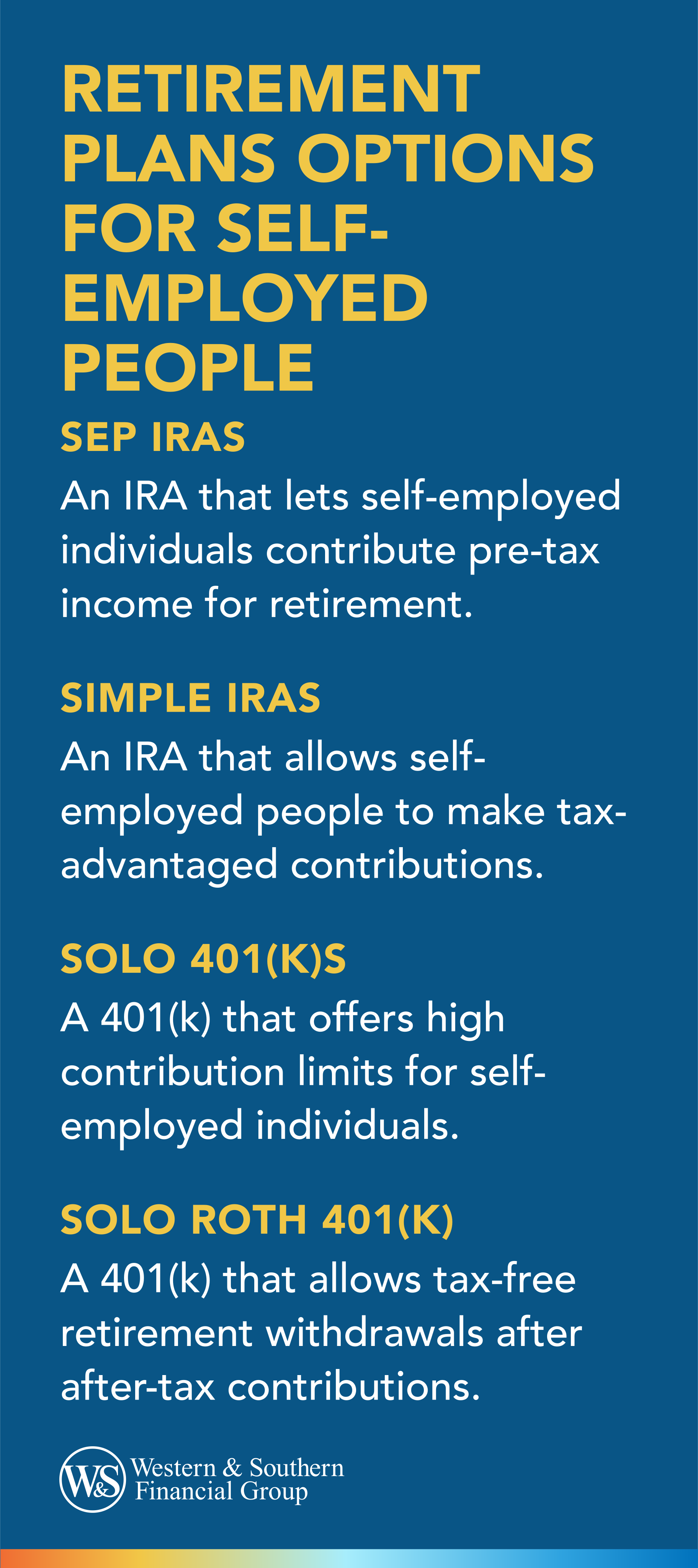
Solo 401(k)
A Solo 401(k) is a retirement plan specifically designed for self-employed individuals and small business owners. It offers both employee and employer contribution options, allowing for potentially higher contribution limits than other retirement plans. As the employee, you can contribute up to $23,000 in 2024 (with an additional $7,500 catch-up contribution if you're age 50 or older). As the employer, you can contribute up to 25% of your net adjusted self-employment income. The combined employee and employer contributions cannot exceed $69,000 in 2024 (or $76,500 with the catch-up contribution). Solo 401(k)s can be either traditional (tax-deferred) or Roth (tax-free withdrawals in retirement).
SEP IRA
A Simplified Employee Pension (SEP) IRA is another popular retirement savings option for freelancers. It's easy to set up and administer, making it a convenient choice for those who want a straightforward retirement plan. With a SEP IRA, you can contribute up to 20% of your net adjusted self-employment income, but the contribution cannot exceed $69,000 in 2024. SEP IRAs are always tax-deferred, meaning your contributions are tax-deductible, and your earnings grow tax-deferred until retirement.
SIMPLE IRA
A Savings Incentive Match Plan for Employees (SIMPLE) IRA is a retirement plan that allows both employee and employer contributions. As a freelancer, you can contribute up to $16,000 in 2024 (with an additional $3,500 catch-up contribution if you're age 50 or older). You, as the employer, are required to either match employee contributions up to 3% of their compensation or make a non-elective contribution of 2% of their compensation (even if they don't contribute). SIMPLE IRAs are generally easier to administer than Solo 401(k)s, but they have lower contribution limits.
Traditional IRA and Roth IRA
Even as a freelancer with a Solo 401(k), SEP IRA, or SIMPLE IRA, you can still contribute to a Traditional IRA or Roth IRA. Traditional IRAs offer tax-deductible contributions (depending on your income and whether you're covered by a retirement plan at work), and earnings grow tax-deferred. Roth IRAs offer no upfront tax deduction, but qualified withdrawals in retirement are tax-free. The contribution limit for both Traditional and Roth IRAs is $7,000 in 2024 (with an additional $1,000 catch-up contribution if you're age 50 or older). Income limits apply to Roth IRA contributions.
Taxable Investment Accounts
While tax-advantaged retirement accounts are ideal, taxable investment accounts can also play a role in your retirement planning. These accounts offer flexibility and access to your funds at any time without penalty (although taxes will be due on any gains). Taxable accounts can be used to supplement your retirement savings or to invest in assets that aren't available within retirement accounts.
Developing a Retirement Savings Strategy
Once you understand your retirement needs and the available savings options, it's time to develop a comprehensive retirement savings strategy. This involves setting a savings goal, choosing your investments, and regularly reviewing your progress.
Setting a Savings Goal
Based on your estimated retirement expenses and desired lifestyle, determine how much you need to save by retirement. Use online retirement calculators or consult with a financial advisor to get a more precise estimate. Divide your total savings goal by the number of years until retirement to determine your annual savings target. Break down your annual target into monthly or weekly savings goals to make it more manageable.
Choosing Your Investments
Your investment choices will significantly impact your retirement savings. Consider your risk tolerance, time horizon, and investment goals when selecting your investments. A diversified portfolio typically includes a mix of stocks, bonds, and other asset classes. As you get closer to retirement, you may want to shift towards a more conservative portfolio with a higher allocation to bonds.
Automating Your Savings
Automating your retirement savings can help you stay on track and avoid the temptation to spend your money elsewhere. Set up automatic transfers from your checking account to your retirement accounts each month. Even small, consistent contributions can add up over time.
Regularly Reviewing Your Progress
Review your retirement savings progress at least once a year to ensure you're on track to meet your goals. Adjust your savings rate or investment allocation as needed based on your performance and changing circumstances. Consider consulting with a financial advisor for personalized guidance.
The Importance of Catch-Up Contributions
If you're behind on your retirement savings, take advantage of catch-up contributions. Individuals age 50 or older can contribute an additional amount to their retirement accounts each year. This can significantly boost your savings and help you catch up on your retirement goals.
Seeking Professional Advice
Retirement planning can be complex, and it's often beneficial to seek professional advice from a qualified financial advisor. A financial advisor can help you assess your needs, develop a personalized retirement plan, and choose the right investments. They can also provide ongoing support and guidance to help you stay on track.

0 Comments