
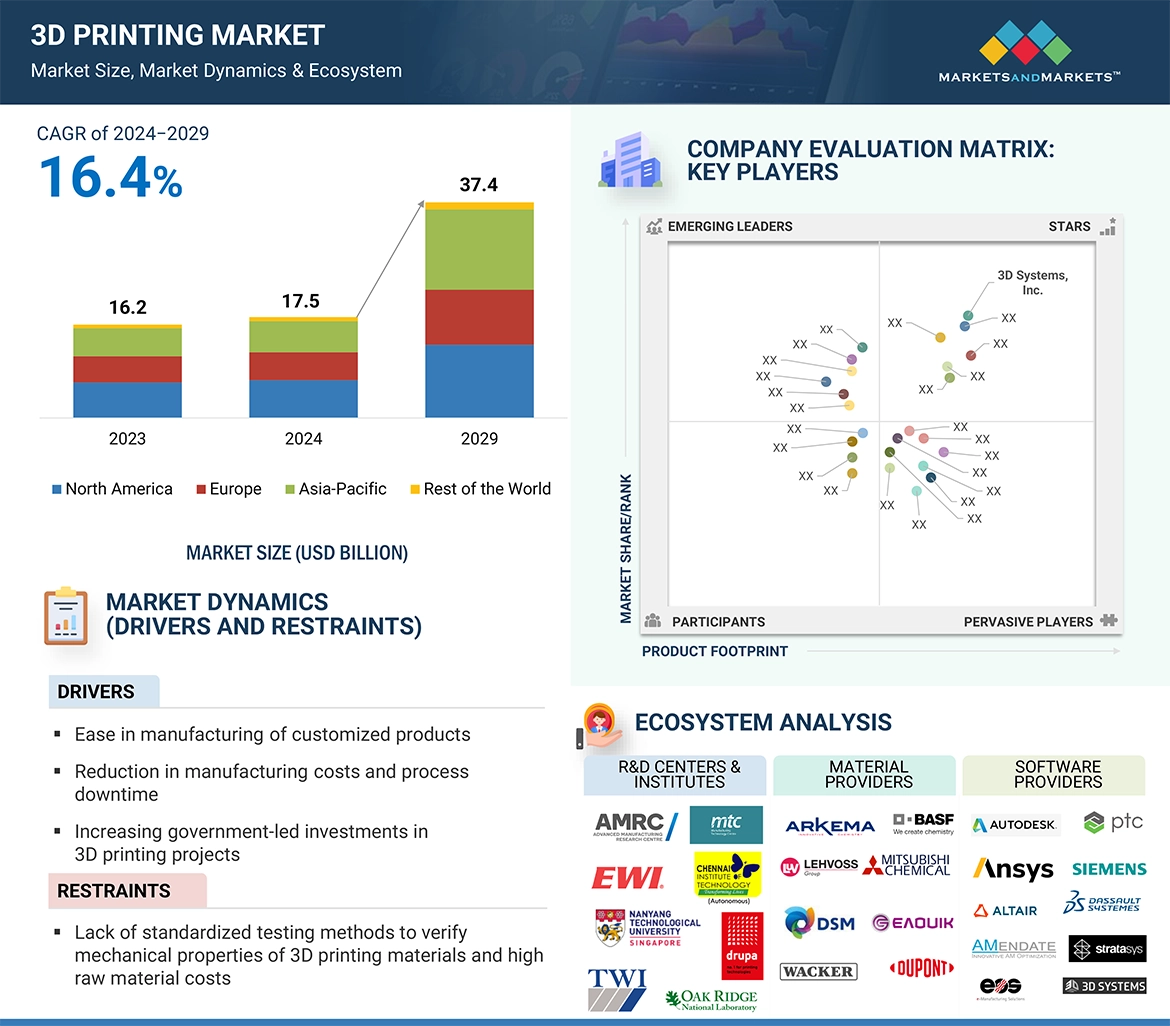
The Rise of 3D Printing and its Investment Potential
3D printing, also known as additive manufacturing, is revolutionizing industries across the globe. From aerospace and healthcare to consumer goods and construction, the ability to create three-dimensional objects from digital designs is transforming how products are conceived, designed, and manufactured. This innovative technology has opened up a wealth of opportunities for investors looking to capitalize on the future of manufacturing.
Investing in 3D printing stocks can be a potentially lucrative venture, but it's essential to understand the industry's nuances and the specific companies involved before diving in. This guide provides a comprehensive overview of 3D printing stocks, covering key players, industry trends, and crucial considerations for making informed investment decisions.
Understanding the 3D Printing Landscape
The 3D printing market is diverse, encompassing various technologies, materials, and applications. Before investing, it's crucial to grasp the different segments within the industry.
Key 3D Printing Technologies
Several core technologies drive the 3D printing industry. Understanding these technologies is essential for assessing the competitive landscape and the potential of different companies.
- Fused Deposition Modeling (FDM): This is one of the most common and affordable 3D printing technologies, involving the extrusion of thermoplastic filaments layer by layer.
- Stereolithography (SLA): SLA uses a laser to cure liquid resin, creating highly detailed and accurate parts.
- Selective Laser Sintering (SLS): SLS uses a laser to fuse powdered materials, such as nylon or metal, into solid objects.
- Direct Metal Laser Sintering (DMLS): A variation of SLS specifically for metal powders, DMLS is used to create complex metal parts for aerospace, medical, and automotive applications.
- Material Jetting: This technology jets droplets of liquid photopolymers onto a build platform, which are then cured with UV light.
Major Applications of 3D Printing
3D printing finds applications in a wide range of industries, each with its unique demands and opportunities.
- Aerospace: 3D printing is used to create lightweight and complex parts for aircraft, reducing fuel consumption and improving performance.
- Healthcare: Applications include custom prosthetics, implants, surgical guides, and bioprinting of tissues and organs.
- Automotive: 3D printing is used for prototyping, tooling, and the production of customized car parts.
- Consumer Goods: From personalized products to customized footwear, 3D printing enables mass customization and on-demand manufacturing.
- Manufacturing: 3D printing is used to create tooling, fixtures, and jigs, streamlining production processes and reducing lead times.
Key Players in the 3D Printing Stock Market
The 3D printing stock market includes companies that manufacture 3D printers, develop 3D printing materials, and provide 3D printing services. Here are some of the key players:
- 3D Systems (DDD): One of the pioneers in the 3D printing industry, 3D Systems offers a wide range of 3D printers, materials, and services for various applications.
- Stratasys (SSYS): Another major player, Stratasys focuses on FDM and PolyJet technologies, serving industries such as aerospace, automotive, and healthcare.
- Materialise (MTLS): Materialise provides 3D printing software and services, enabling businesses to optimize their 3D printing workflows.
- Desktop Metal (DM): Desktop Metal specializes in metal 3D printing solutions, targeting industries such as automotive, aerospace, and manufacturing.
- Velo3D (VLD): Velo3D focuses on metal additive manufacturing solutions for mission-critical parts, particularly in the aerospace and energy industries.
- Protolabs (PRLB): While not exclusively a 3D printing company, Protolabs offers 3D printing services alongside other manufacturing processes, providing rapid prototyping and on-demand production.
Factors to Consider Before Investing in 3D Printing Stocks
Investing in 3D printing stocks requires careful consideration of various factors. Here are some key aspects to evaluate:
Company Financial Performance
Analyze the company's revenue growth, profitability, and cash flow. Look for companies with a strong track record of financial performance and a sustainable business model. Scrutinize their balance sheets, income statements, and cash flow statements to understand their financial health.
Technology and Innovation
Assess the company's technological capabilities and its commitment to innovation. Does the company have a competitive advantage in its chosen technology or application area? Are they investing in research and development to stay ahead of the curve? Patents and proprietary technologies are important indicators of innovation.
Market Position and Competition
Evaluate the company's market position and its competitive landscape. Is the company a leader in its niche? What are its main competitors? How does the company differentiate itself from its rivals? A strong market position and a clear competitive advantage are crucial for long-term success.
Industry Trends and Growth Potential
Stay informed about the latest industry trends and the overall growth potential of the 3D printing market. Consider factors such as the adoption rate of 3D printing in different industries, the development of new materials and applications, and the impact of macroeconomic factors. Look for companies that are well-positioned to capitalize on these trends.
Management Team and Strategy
Assess the quality of the company's management team and its overall strategy. Does the management team have a proven track record of success? Does the company have a clear vision for the future? Is the company's strategy aligned with the industry's trends and opportunities? A strong management team and a well-defined strategy are essential for navigating the challenges and opportunities in the 3D printing market.
Risks and Challenges of Investing in 3D Printing Stocks
While 3D printing offers significant investment potential, it's important to be aware of the risks and challenges associated with investing in this sector.
Technological Disruption
The 3D printing industry is constantly evolving, with new technologies and materials emerging regularly. Companies that fail to adapt to these changes risk becoming obsolete. Investors need to be aware of the potential for technological disruption and its impact on their investments.
Competition
The 3D printing market is becoming increasingly competitive, with new players entering the market and established companies expanding their offerings. This increased competition can put pressure on prices and margins, impacting the profitability of 3D printing companies.
Economic Cycles
The demand for 3D printing products and services can be affected by economic cycles. During economic downturns, businesses may reduce their investments in new technologies, impacting the growth of the 3D printing market. Investors need to be aware of the potential impact of economic cycles on their investments.
Valuation
Some 3D printing stocks may be overvalued, particularly those with high growth expectations. Investors need to carefully evaluate the valuation of 3D printing stocks and ensure that they are not paying too much for future growth. A thorough analysis of the company's fundamentals and its growth prospects is essential.

0 Comments