
Why It's Crucial to Review Your Credit Report Regularly
Your credit report is a detailed record of your credit history. It's used by lenders, landlords, employers, and insurance companies to assess your creditworthiness. Errors on your credit report can negatively impact your credit score, making it harder to get approved for loans, rent an apartment, or even get a job. A lower credit score translates to higher interest rates on loans and credit cards, costing you significant money over time. Therefore, regularly reviewing your credit report and disputing any inaccuracies is crucial for maintaining a healthy financial profile.
Understanding the Common Types of Credit Report Errors
Before you start disputing errors, it's important to know what to look for. Common credit report errors include:
- Incorrect Personal Information: This could be a misspelled name, incorrect address, or an outdated phone number.
- Incorrect Account Information: This includes accounts that don't belong to you, accounts listed more than once, closed accounts listed as open, or incorrect credit limits and balances.
- Late Payments Incorrectly Reported: Even if you made a payment on time, it could be incorrectly reported as late.
- Duplicate Accounts: Sometimes, the same account appears multiple times on your credit report.
- Accounts Resulting from Identity Theft: If you've been a victim of identity theft, fraudulent accounts may appear on your credit report.
- Incorrect Public Records Information: This includes errors related to bankruptcies, tax liens, or judgments.
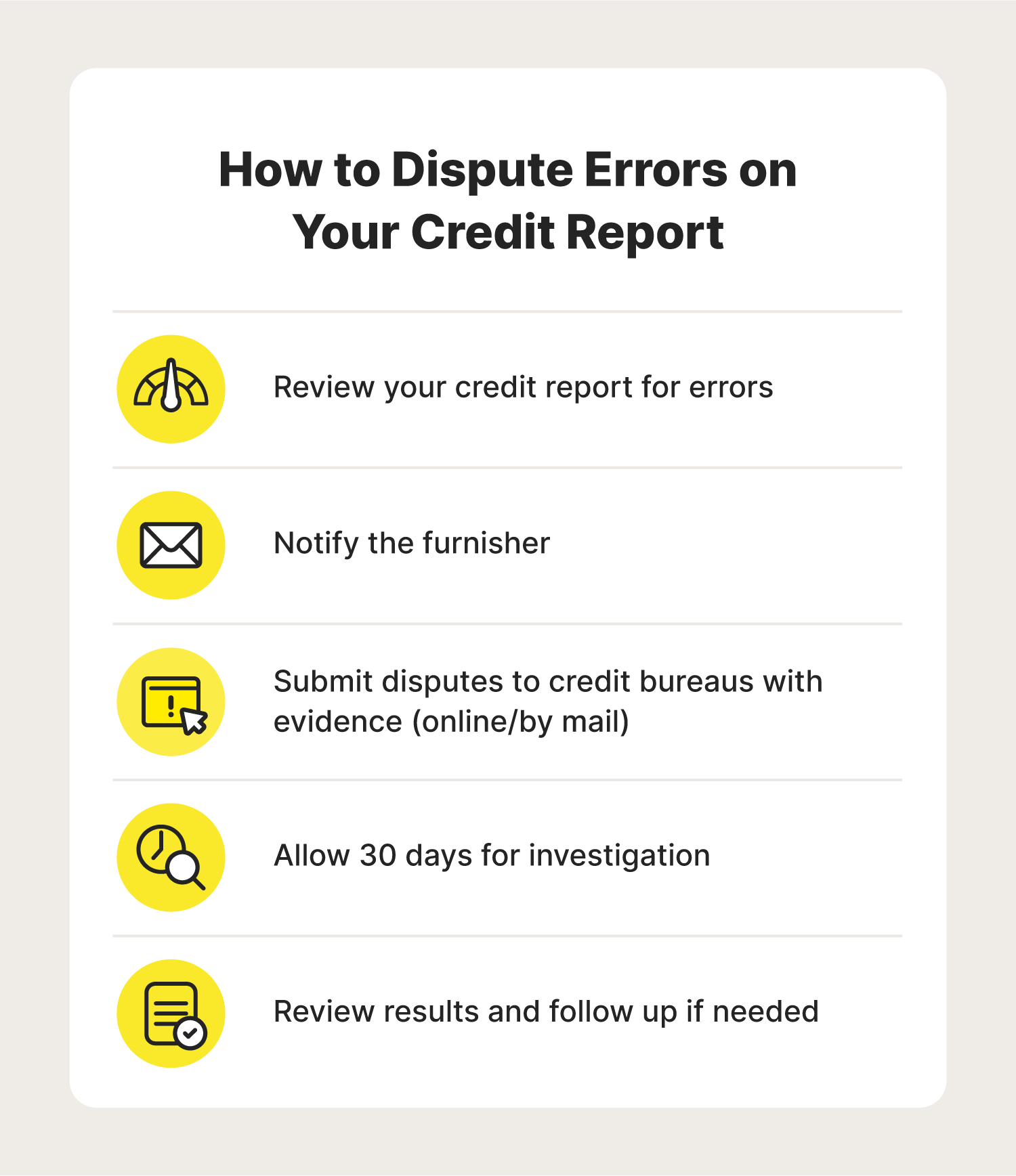
Step-by-Step Guide to Disputing Credit Report Errors
Here's a detailed guide on how to effectively dispute errors on your credit report:
1. Obtain Your Credit Reports
You're entitled to a free credit report from each of the three major credit bureaus – Equifax, Experian, and TransUnion – once every 12 months. You can request these reports at AnnualCreditReport.com. It's advisable to stagger your requests throughout the year to monitor your credit report more frequently. For example, you could request a report from Equifax in January, Experian in May, and TransUnion in September.
2. Carefully Review Each Credit Report
Go through each credit report line by line, paying close attention to the details mentioned above. Look for any discrepancies or inaccuracies. Make a list of all the errors you find, noting the account name, the credit bureau reporting the error, and a detailed description of the inaccuracy.
3. Gather Supporting Documentation
The more documentation you have to support your dispute, the stronger your case will be. Gather any documents that can prove the error, such as:
- Account Statements: These can verify your payment history, credit limits, and account balances.
- Cancelled Checks: These can prove that you made a payment on time.
- Letters from Creditors: These can confirm account closures or payment arrangements.
- Police Reports: If the error is due to identity theft, a police report is essential.
- Court Documents: These can help correct errors related to public records.
4. Write a Dispute Letter
For each error you want to dispute, write a separate dispute letter to the credit bureau that is reporting the inaccurate information. A well-written dispute letter should include:
- Your full name, address, and date of birth.
- Your Social Security number (optional, but recommended for identification purposes).
- A clear and concise description of the error. Be specific about what information is incorrect and why.
- The account number associated with the error.
- A request that the credit bureau investigate the error and correct it.
- Copies of your supporting documentation (never send originals).
- A statement that you are requesting a correction under the Fair Credit Reporting Act (FCRA).
You can find sample dispute letters online, but it's best to customize the letter to reflect your specific situation. Be polite and professional in your tone.
5. Send Your Dispute Letter via Certified Mail
Send your dispute letter to the credit bureau via certified mail with return receipt requested. This provides proof that the credit bureau received your letter. Keep a copy of the letter and the certified mail receipt for your records.
Here are the addresses for the three major credit bureaus:
- Equifax: P.O. Box 740256, Atlanta, GA 30374
- Experian: P.O. Box 4500, Allen, TX 75013
- TransUnion: P.O. Box 2000, Chester, PA 19016
6. Follow Up with the Credit Bureaus
The credit bureaus have 30 days to investigate your dispute. Within this timeframe, they must contact the creditor or source of the information to verify its accuracy. After the investigation, the credit bureau must notify you of the results in writing. If the investigation confirms the error, the credit bureau must correct or delete the inaccurate information from your credit report.
If you haven't heard back from the credit bureau within 30 days, follow up to inquire about the status of your dispute. You can also check your credit report online to see if the error has been corrected.
7. If the Error Persists, Escalate Your Dispute
If the credit bureau refuses to correct the error, even after you've provided supporting documentation, you have several options:
- File a Complaint with the Consumer Financial Protection Bureau (CFPB): The CFPB is a government agency that helps consumers resolve disputes with financial institutions. You can file a complaint online at ConsumerFinance.gov.
- Contact the Creditor Directly: If the error relates to a specific account, contact the creditor directly and explain the issue. Provide them with the same documentation you sent to the credit bureau.
- Add a Statement to Your Credit Report: You have the right to add a 100-word statement to your credit report explaining the error. This statement will be included whenever your credit report is accessed.
- Consider Legal Action: In some cases, you may need to consult with an attorney to explore your legal options.
Tips for Maintaining an Accurate Credit Report
Preventing errors from appearing on your credit report in the first place is the best approach. Here are some tips:
- Monitor Your Credit Report Regularly: Don't wait for errors to appear. Check your credit report at least once a year, or more frequently if you suspect fraud or identity theft.
- Review Your Account Statements Carefully: Look for any unauthorized charges or discrepancies.
- Keep Your Personal Information Secure: Protect your Social Security number, credit card numbers, and other sensitive information.
- Be Wary of Phishing Scams: Don't click on suspicious links or provide personal information to unknown sources.
- Report Identity Theft Immediately: If you suspect you've been a victim of identity theft, file a police report and contact the credit bureaus immediately.
The Importance of Patience and Persistence
Disputing credit report errors can be a time-consuming process. It requires patience and persistence. Don't get discouraged if your initial dispute is unsuccessful. Continue to gather documentation, follow up with the credit bureaus, and escalate your dispute if necessary. Correcting errors on your credit report is an investment in your financial future, and it's well worth the effort.

0 Comments