
Understanding Growth Investing for Aggressive Investors
Growth investing is an investment strategy focused on companies expected to grow at an above-average rate compared to the overall market. Aggressive growth investors, however, take this a step further. They seek companies with the potential for exponential growth, often accepting higher levels of risk in pursuit of substantial returns. This approach isn't for the faint of heart; it requires thorough research, a strong understanding of market dynamics, and the ability to stomach volatility.
Key Characteristics of Growth Stocks for Aggressive Investors
Identifying the right growth stocks is crucial. Aggressive investors look for specific characteristics that indicate high-growth potential:
- High Revenue Growth: Companies consistently demonstrating significant year-over-year revenue increases.
- Innovative Products or Services: Businesses disrupting established markets with new technologies or unique solutions.
- Strong Management Team: Experienced leaders with a proven track record of executing growth strategies.
- Large Addressable Market (TAM): Companies operating in markets with significant untapped potential.
- High Price-to-Earnings (P/E) Ratio: While potentially overvalued, a high P/E ratio can reflect investor confidence in future growth. However, aggressive investors look for companies where the *PEG* ratio (Price/Earnings to Growth) is more reasonable, suggesting that the P/E is justified by the growth rate.
It's important to remember that these characteristics are not guarantees of success. Due diligence is paramount.
Aggressive Growth Investing Strategies
Several strategies can be employed when pursuing aggressive growth investing:
1. Investing in Emerging Industries
Emerging industries, such as artificial intelligence, renewable energy, and biotechnology, offer significant growth opportunities. These sectors are often characterized by rapid innovation and high potential returns. However, they also come with considerable risk due to regulatory uncertainty, technological advancements, and intense competition. Aggressive investors need to stay informed about industry trends and be prepared to adapt their strategies as the landscape evolves.
Example: Investing in a small, innovative company developing a novel AI-powered healthcare diagnostic tool.
2. Focusing on Small-Cap and Micro-Cap Stocks
Small-cap and micro-cap stocks, generally defined as companies with market capitalizations below $2 billion and $300 million respectively, tend to be more volatile than larger, more established companies. However, they also have the potential for higher growth rates. Aggressive investors may allocate a portion of their portfolio to these stocks, recognizing the increased risk but hoping for outsized returns. Thorough research is crucial, as information on these companies can be limited.
Example: Investing in a micro-cap software company disrupting a niche market with a specialized SaaS solution.
3. Utilizing Leverage (with Caution)
Leverage, such as margin trading, can amplify returns (and losses). Aggressive investors may use leverage to increase their exposure to growth stocks, but this strategy should be approached with extreme caution. Leverage significantly increases the risk of substantial losses, and it's essential to understand the terms and conditions of margin accounts before using them. Only experienced investors with a high risk tolerance should consider using leverage.
Example: Using margin to purchase more shares of a high-growth tech company.
4. Concentrated Portfolio Approach
Instead of diversifying across a large number of stocks, aggressive growth investors may choose to concentrate their portfolio in a smaller number of high-conviction growth stocks. This strategy can lead to higher returns if the selected stocks perform well, but it also increases the risk of significant losses if those stocks underperform. This requires very deep research and a strong belief in the chosen companies' potential. It's not suitable for risk-averse investors.
Example: Investing a large percentage of your portfolio in just 3-5 high-growth companies.
5. Active Trading and Short-Term Investing
Aggressive growth investors often engage in active trading, frequently buying and selling stocks to capitalize on short-term market movements and earnings announcements. This approach requires a significant time commitment and a deep understanding of technical analysis and market psychology. It's also important to be aware of the costs associated with frequent trading, such as commissions and capital gains taxes.
Example: Day trading high-growth stocks based on technical indicators and news events.
Risk Management for Aggressive Growth Investing
While the potential rewards of aggressive growth investing can be substantial, it's crucial to implement robust risk management strategies to protect capital.
1. Setting Stop-Loss Orders
Stop-loss orders automatically sell a stock when it reaches a predetermined price, limiting potential losses. Aggressive investors should use stop-loss orders to protect their investments from significant declines. The placement of stop-loss orders should be based on the stock's volatility and the investor's risk tolerance.
2. Diversification (Within the Growth Sector)
While a concentrated portfolio can be effective, it's still important to diversify within the growth sector. Investing in companies across different industries and market segments can help mitigate the risk of being overly exposed to any one particular area.
3. Regularly Reviewing and Rebalancing Your Portfolio
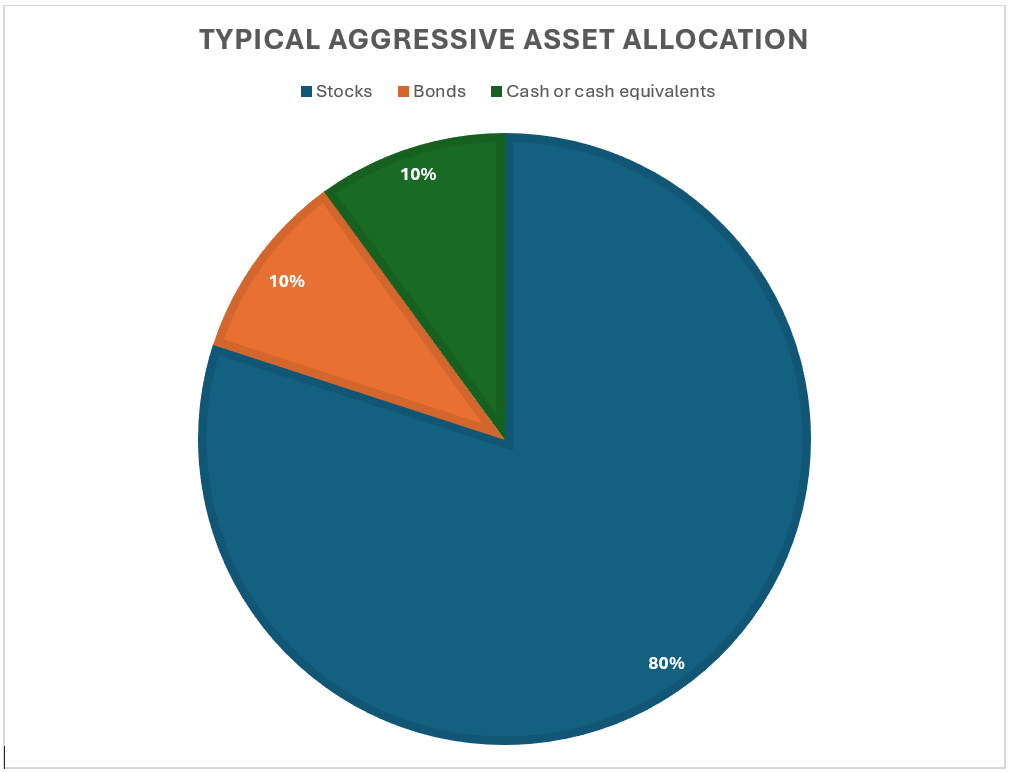
The market is constantly changing, and it's essential to regularly review and rebalance your portfolio to ensure that it aligns with your investment goals and risk tolerance. This involves selling stocks that have performed well and buying stocks that have underperformed, maintaining the desired asset allocation.
4. Staying Informed and Adapting to Market Changes
Aggressive growth investors need to stay informed about market trends, economic conditions, and company-specific news. This requires continuous research and analysis. It's also important to be prepared to adapt your strategies as the market evolves. This includes understanding macro-economic factors that could affect the growth trajectory of your chosen investments.
5. Understanding Your Risk Tolerance
Perhaps the most important aspect of risk management is understanding your own risk tolerance. Aggressive growth investing is not suitable for everyone. It requires a high tolerance for volatility and the ability to withstand potential losses. Before embarking on this strategy, carefully assess your financial situation, investment goals, and risk appetite. Don't invest money you can't afford to lose.
Due Diligence is Paramount
Regardless of the specific strategy employed, thorough due diligence is essential for aggressive growth investors. This includes:
- Analyzing financial statements
- Reading company reports
- Following industry news
- Evaluating the management team
- Understanding the competitive landscape
Remember, investing in growth stocks is inherently risky, and there are no guarantees of success. However, by following these strategies and implementing robust risk management techniques, aggressive investors can increase their chances of achieving significant returns.

0 Comments