
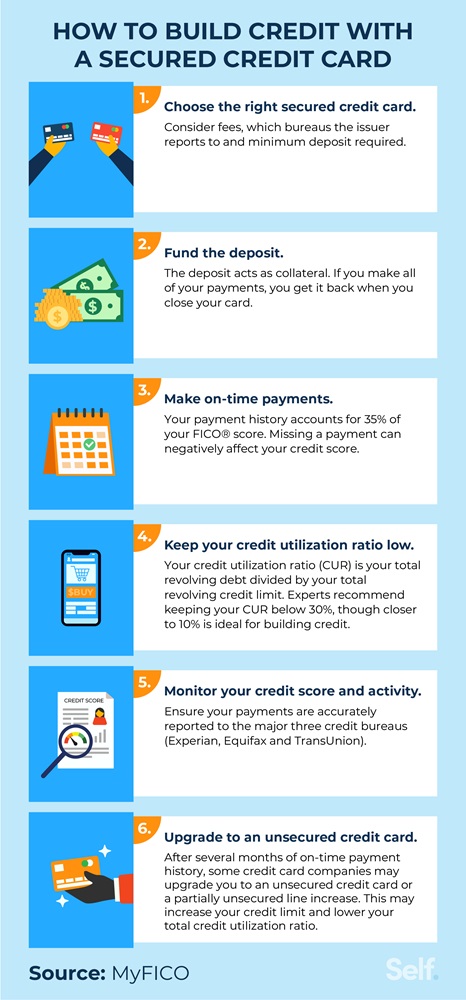
Understanding Secured Credit Cards
A secured credit card is a type of credit card that requires you to provide a cash deposit as collateral. This deposit typically serves as your credit limit. Unlike unsecured credit cards, which rely on your credit history to determine approval and credit limit, secured cards are easier to obtain, even if you have bad credit or no credit history at all. The security deposit reduces the risk for the lender, making them more willing to extend credit to individuals who might otherwise be denied.
Why Choose a Secured Credit Card for Building Credit?
Secured credit cards are a powerful tool for building or rebuilding credit. Here's why:
- Accessibility: They are easier to qualify for than unsecured credit cards, particularly for those with limited or poor credit history.
- Credit Reporting: Most secured credit card issuers report your payment activity to the major credit bureaus (Equifax, Experian, and TransUnion). This reporting is crucial for establishing a positive credit history.
- Responsible Credit Use: They encourage responsible credit card usage, as you are spending your own money (the security deposit). This helps you learn good credit habits.
- Graduation to Unsecured Cards: Many issuers offer the opportunity to "graduate" to an unsecured credit card after a period of responsible use, meaning you'll get your deposit back and continue building credit with a traditional card.
How Secured Credit Cards Help Build Credit
Your credit score is calculated based on several factors, and using a secured credit card responsibly can positively impact these factors:
- Payment History (35%): This is the most important factor. Making timely payments on your secured credit card demonstrates your ability to manage credit responsibly.
- Amounts Owed (30%): Keeping your credit utilization low (the amount of credit you're using compared to your credit limit) is crucial. Aim to use less than 30% of your credit limit each month.
- Length of Credit History (15%): The longer you've had credit accounts open, the better. While a secured card starts your credit history, it contributes to the overall length over time.
- Credit Mix (10%): Having a mix of credit accounts (credit cards, loans, etc.) can positively impact your score. A secured card adds to your credit mix.
- New Credit (10%): Opening too many new accounts in a short period can negatively impact your score. Focus on managing your secured card responsibly rather than opening multiple accounts.
Choosing the Right Secured Credit Card
Not all secured credit cards are created equal. Here's what to consider when choosing a secured card:
Fees and Interest Rates
Look for cards with low annual fees, no hidden fees, and competitive interest rates (APR). While you ideally want to pay off your balance in full each month to avoid interest charges, it's still important to consider the APR in case you need to carry a balance.
Reporting to Credit Bureaus
Ensure the card issuer reports your payment activity to all three major credit bureaus (Equifax, Experian, and TransUnion). This is essential for building a comprehensive credit history.
Minimum and Maximum Security Deposit
Understand the minimum and maximum security deposit requirements. The deposit typically determines your credit limit, so choose a card that allows you to deposit an amount you're comfortable with.
Graduation Opportunities
Check if the issuer offers a path to upgrade to an unsecured credit card after a period of responsible use. This allows you to get your deposit back and continue building credit.
Other Benefits
Some secured credit cards offer rewards programs or other benefits similar to unsecured cards. While building credit should be your primary goal, these perks can be a bonus.
Tips for Using a Secured Credit Card Effectively
To maximize the benefits of a secured credit card for credit building, follow these tips:
Make Timely Payments
This is the most important factor. Always pay your bill on time, every time. Consider setting up automatic payments to avoid missing deadlines.
Keep Credit Utilization Low
Aim to use less than 30% of your credit limit each month. For example, if your credit limit is $500, try to keep your balance below $150.
Pay Off Your Balance in Full Each Month
While it's okay to carry a balance occasionally, paying off your balance in full each month avoids interest charges and demonstrates responsible credit management.
Monitor Your Credit Report
Regularly check your credit report to ensure accuracy and track your progress. You can get a free credit report from each of the major credit bureaus once a year at AnnualCreditReport.com.
Avoid Cash Advances
Cash advances typically come with high fees and interest rates, and they don't contribute to building credit. Avoid using your secured credit card for cash advances.
Use the Card Regularly
Make small purchases with your secured credit card each month and pay them off promptly. This demonstrates active use of the card and helps build your credit history.
Alternatives to Secured Credit Cards
While secured credit cards are a great option for many, there are other ways to build credit:
- Credit Builder Loans: These loans are designed to help you build credit. You make payments over time, and the lender reports your payment activity to the credit bureaus.
- Authorized User on a Credit Card: Ask a friend or family member with good credit to add you as an authorized user on their credit card. Their positive payment history can help boost your credit score.
- Rent and Utility Reporting Services: Some services report your rent and utility payments to the credit bureaus, helping you build credit based on your existing payment history.
When to Consider Graduating to an Unsecured Card
After a period of responsible use (typically 6-12 months), you may be eligible to upgrade to an unsecured credit card. Here are some signs you're ready:
- Improved Credit Score: Your credit score has increased significantly since you opened the secured card.
- Consistent On-Time Payments: You've consistently made on-time payments on your secured card.
- Low Credit Utilization: You've consistently kept your credit utilization low.
Contact your card issuer to inquire about upgrading to an unsecured card. If approved, you'll receive your security deposit back and continue building credit with a traditional credit card.

0 Comments